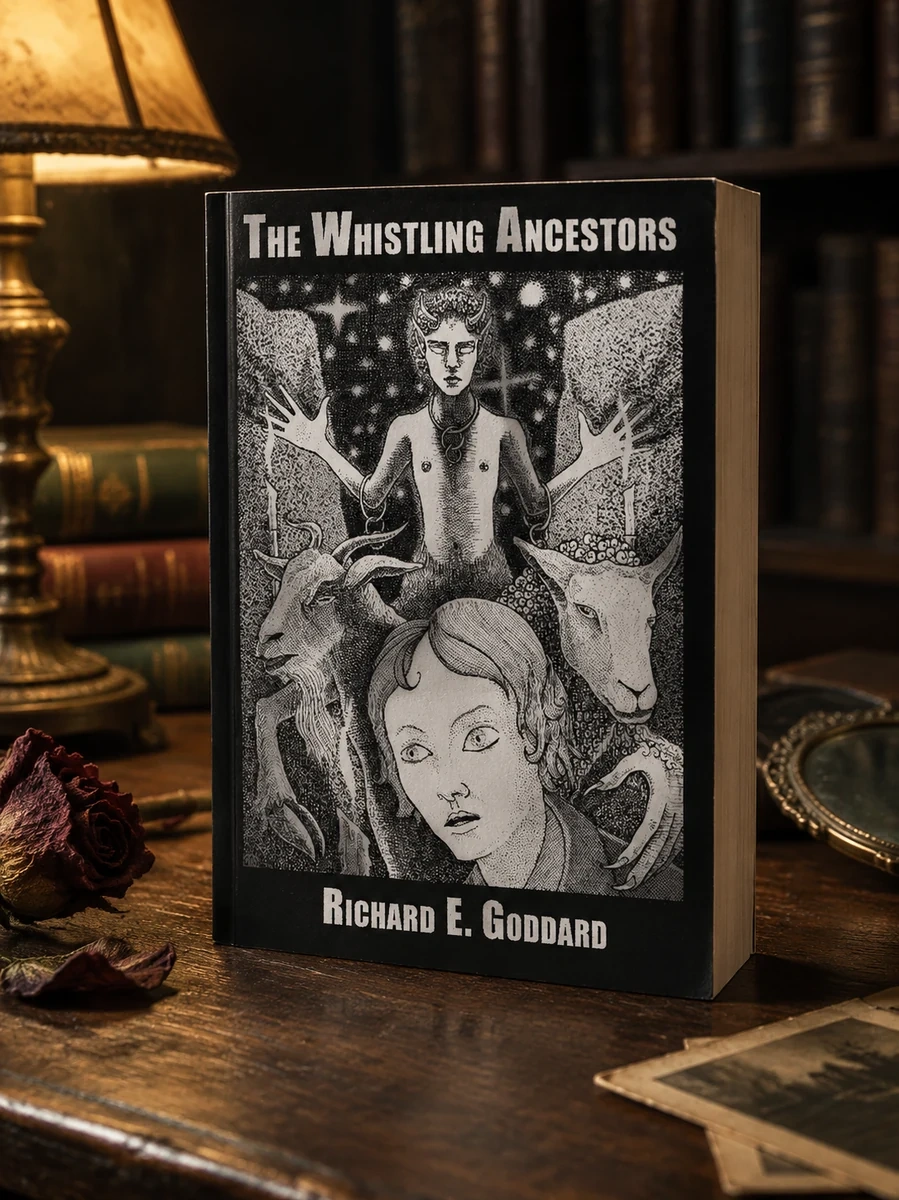

The Whistling Ancestors
A pulp novel about a villain using voodoo and vivisection to create demigods.
Goddard constructs a tale where Caspar Pettifranc combines artistic skill with dark magic. He aims to dominate the world while targeting white people for death. His methods involve bringing zombies and loas into play through voodoo rituals. The narrative does not explain why he wants to create demigods or kill specific groups. This obscurity is a deliberate choice by the author. The book appeals to fans of American pulp history and those who enjoy complex, albeit vague, villain profiles. It offers a look at how traditional myths are twisted in horror fiction.
This 2009 release from Ramble House revives the spirit of American pulp fiction. It references classic villains like Doctor Death and John Sunlight. The text draws on Greek, Roman, and voodoo traditions to create its unique horror atmosphere.


📝 Description: The Whistling Ancestors
💎 Our verdict on The Whistling Ancestors
📖 Why choose it
Why this book is worth reading
Readers interested in the history of American pulp will find this narrative compelling for its depiction of a villain combining artistic skill with dark magic. The book appeals to those who enjoy complex, albeit vague, villain profiles and the exploration of twisted traditional myths. It is suitable for fans of supernatural horror who appreciate the atmosphere of voodoo rituals and the auditory mystery of whistling loas. Those seeking clear motivations may find the obscurity frustrating, but others will value the deliberate lack of explanation as an element of mystery. The text offers a unique look at how classic figures like nymphs and satyrs are reimagined through the lens of vivisection and world domination plots.
⭐ Reader reviews
Reader rating
Goddard constructs a tale where Caspar Pettifranc serves as a sidewalk artist and voodoo master, aiming for world domination. The work stands out for its integration of the loas pantheon, characterized by odd whistling noises that explain the title. While the reasons behind the villain's actions remain obscure, this is a deliberate choice that adds to the mystery rather than detracting from it. The narrative effectively places Pettifranc among great pulp villains, utilizing Greek and Roman mythology alongside voodoo practices. It suits readers who enjoy classic pulp antagonists and supernatural horror over those needing explicit character motivations.
📖 Read on the blog
🏛 Books from this publisher Ramble House




You might also like
See more →



Have a question about this item?
Ask about the edition, condition, delivery or anything else — we reply by email or phone, usually within a day.
