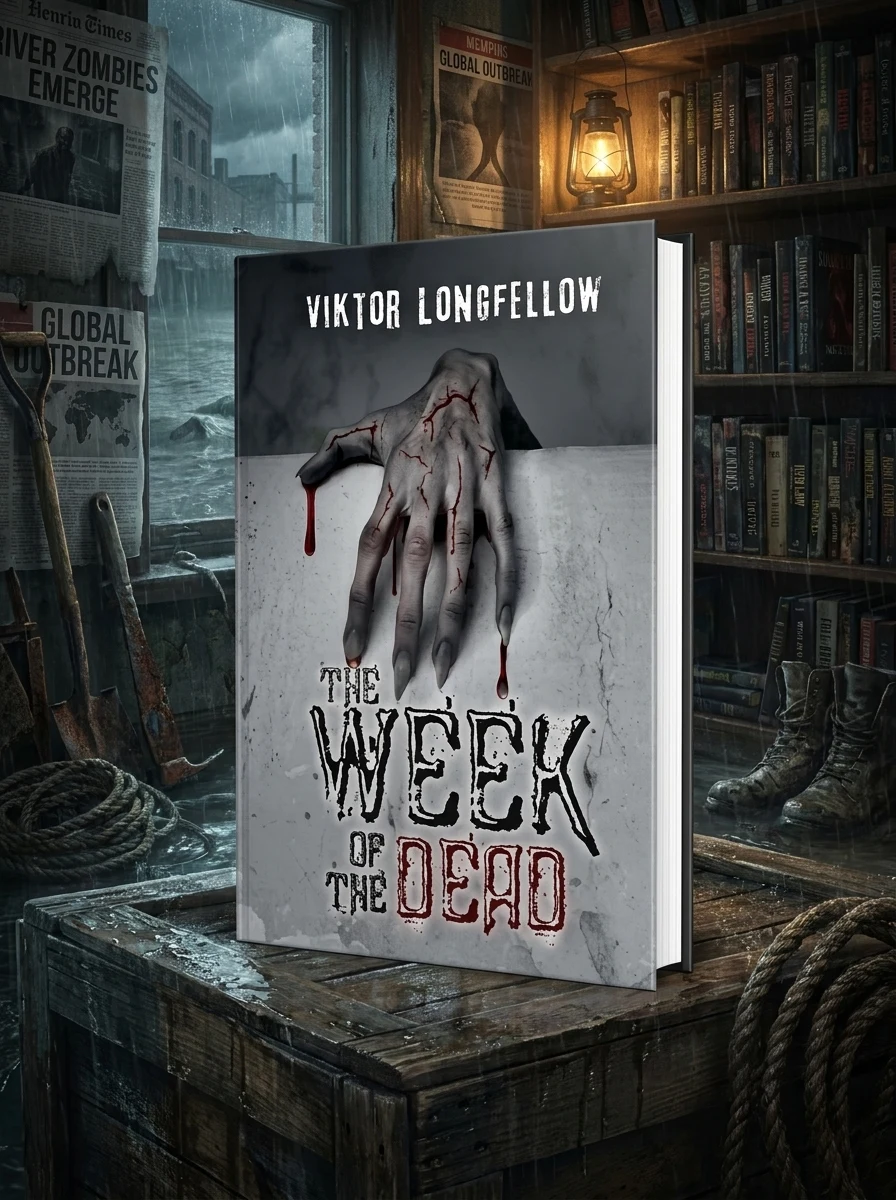
The Week of the Dead
A salvage worker and a suicidal man survive a zombie outbreak in this horror novel.
The narrative follows Devin and Erica as they escape Memphis, while Mr. Harrison finds purpose in Philadelphia during the collapse. Both groups face feral zombies emerging from oceans worldwide. The plot tracks their journey toward discovering the origin of the infection. Longfellow uses dual perspectives to show how crisis alters human behavior. The text examines survival instincts against a backdrop of societal failure.
Set in Memphis and Philadelphia, the story reflects American urban anxiety. It draws on the zombie apocalypse tradition popularized in late twentieth-century fiction. The narrative engages with themes of isolation and community breakdown in modern society.


📝 Description: The Week of the Dead
💎 Our verdict on The Week of the Dead
📖 Why choose it
Why this book is worth reading
Readers who enjoy character-driven survival narratives set against global catastrophes will find this novel compelling. It appeals to those interested in the psychological shift from despair to action during societal failure. The dual perspective structure offers insight into how crisis alters human behavior, contrasting a salvage worker’s immediate physical danger with a suicidal man’s search for purpose. Those seeking complex literary analysis or historical non-fiction may find it lacking, as the focus remains on immediate survival and supernatural horror tropes. It is ideal for fans of apocalyptic fiction who value emotional resonance and the examination of survival instincts over intricate world-building or academic depth.
⭐ Reader reviews
Reader rating
Longfellow effectively blends survival fiction with supernatural horror by using dual perspectives to illustrate the collapse of order. The narrative contrasts Devin’s physical struggle against feral zombies emerging from global waters with Mr. Harrison’s psychological journey from suicidal despair to renewed purpose. This approach highlights how crisis forces a shift in human behavior, making the story emotionally resonant rather than just action-oriented. While it lacks the complexity expected by readers seeking literary analysis or historical depth, it succeeds as an accessible exploration of societal fragility. The book suits audiences who prefer immediate physical danger and character development over intricate plotting.
📖 Read on the blog
🏛 Books from this publisher Createspace Independent Publishing Platform








You might also like
See more →

Have a question about this item?
Ask about the edition, condition, delivery or anything else — we reply by email or phone, usually within a day.
