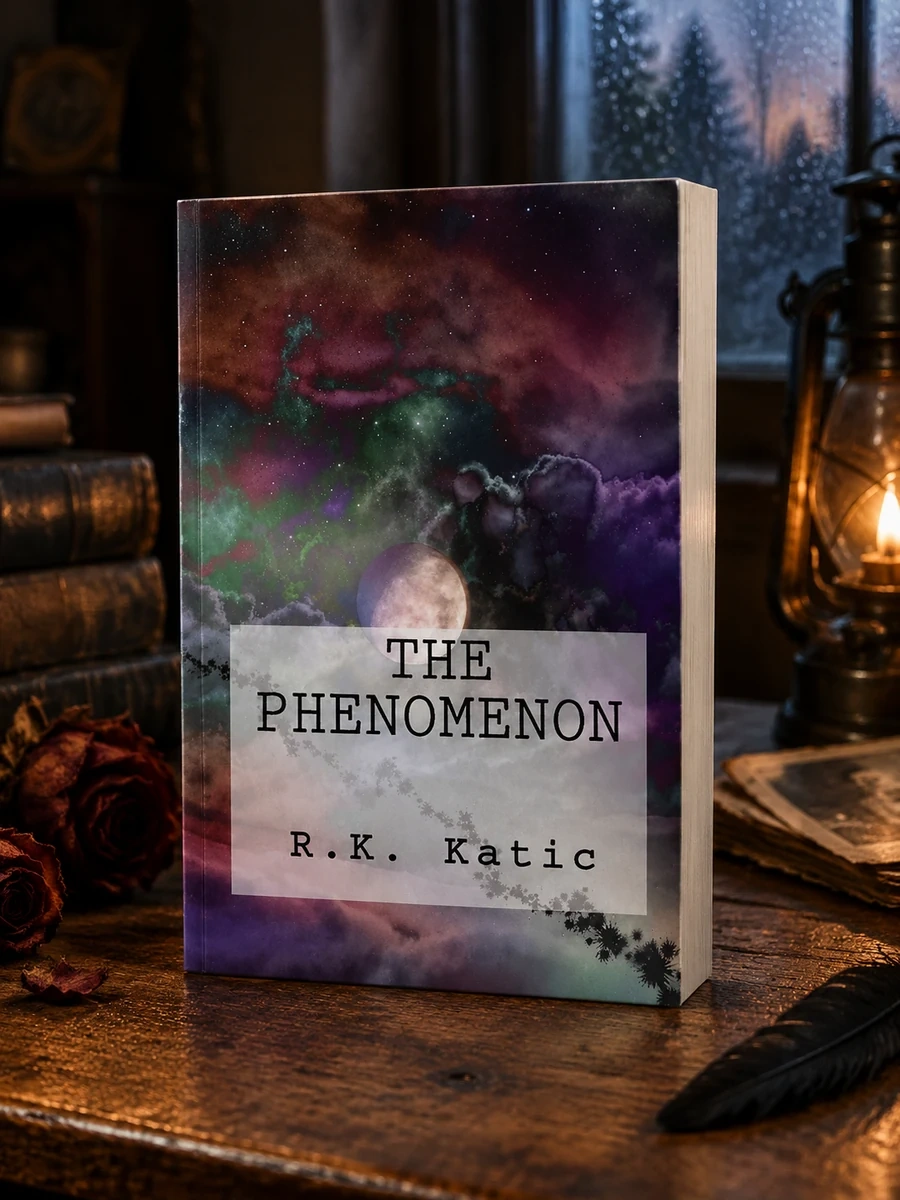

The Phenomenon
A silent apocalypse where looking at the sky means death.
The narrative centers on a group of survivors navigating a world where visibility and sound are lethal. Katic explores how the arrival of space entities forces people to confront their own capacity for cruelty. The plot emphasizes the psychological weight of following arbitrary survival rules while an unseen enemy exploits the chaos. This approach highlights the fragility of human order when faced with incomprehensible cosmic forces.
Published in 2017 by Createspace Independent Publishing Platform, this title fits into the contemporary wave of independent horror fiction. It reflects a period where authors explored quiet, atmospheric dread rather than overt gore, appealing to readers interested in modern interpretations of classic supernatural terror.


📝 Description: The Phenomenon
💎 Our verdict on The Phenomenon
📖 Why choose it
Why this book is worth reading
Readers who crave intense, atmospheric horror will find this narrative deeply compelling. It appeals to those interested in the psychological toll of isolation and the moral decay that occurs when societal norms collapse under pressure. Fans of cosmic horror appreciate the focus on existential dread rather than traditional monster hunts. The book offers a bleak, tense exploration of human fragility against incomprehensible forces. It is ideal for audiences who prefer silence over loud action and want to examine how arbitrary survival rules impact human cruelty. Those seeking hopeful resolutions may find it too stark, but lovers of post-apocalyptic tension will appreciate the rigorous constraints placed on the survivors.
⭐ Reader reviews
Reader rating
R K Katic delivers a masterclass in atmospheric tension by stripping away conventional horror tropes for silence and invisibility. The narrative effectively utilizes the 'silent apocalypse' concept to explore the fragility of human order when faced with cosmic indifference. By enforcing strict survival rules, the author heightens the psychological stakes, making every potential sound or glance a matter of life and death. The focus on moral decay among survivors provides a compelling secondary conflict that complements the external threat. This work suits readers who enjoy bleak, existential tales without easy answers. It is best for those who appreciate slow-burn dread and the examination of humanity's capacity for cruelty under extreme duress.