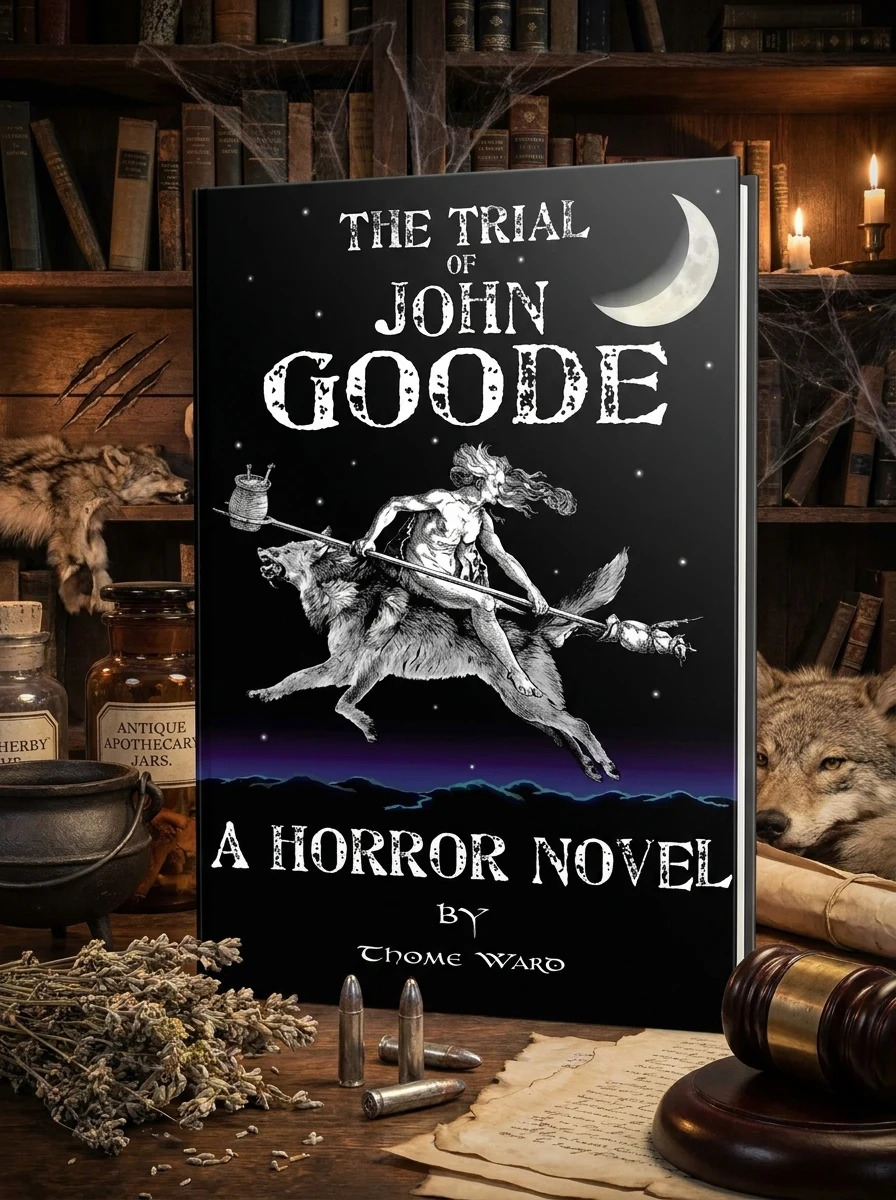
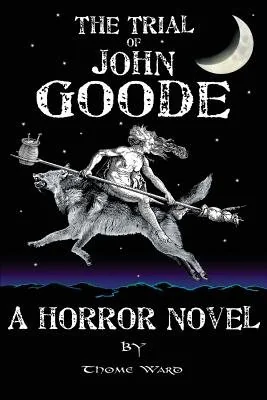
The Trial of John Goode
A historical horror tale about a witch's plot and a werewolf's hunger in Ormswell.
The narrative examines the intersection of personal vendetta and supernatural terror within a failing community. Ward explores how individual malice, specifically a witch's desire for power, triggers catastrophic events that overwhelm societal structures. The constable's struggle highlights the inadequacy of secular authority against infernal forces. Meanwhile, John Goode becomes an unwitting pawn in a larger tragedy, facing justice while unaware of his role. The text emphasizes the collapse of order as religious and medical leaders lose their grip on reality. This approach grounds the supernatural elements in tangible human suffering and institutional failure.
The book is set in an age of severity, superstition, and starvation. It draws on traditions of lycanthropy and witchcraft, reflecting the fears of a time when demagogues of state, medicine, and religion held sway over a peasantry gripped by panic and evil.


📝 Description: The Trial of John Goode
💎 Our verdict on The Trial of John Goode
📖 Why choose it
Why this book is worth reading
Readers interested in gothic fiction and supernatural tales rooted in specific historical anxieties will find this work compelling. It offers a grim narrative where the horror is grounded in tangible human suffering and institutional failure rather than mere spectacle. The book suits those who appreciate the intersection of personal vendetta and supernatural terror, particularly within a failing community context. By framing the horror through the lens of a historical trial, it provides a unique perspective on how religious and medical leaders lose their grip on reality. It is ideal for audiences seeking depth in themes of power, justice, and the collapse of order, rather than lighthearted or modern paranormal romances.
⭐ Reader reviews
Reader rating
Thome Ward crafts a grim narrative set in Ormswell, effectively blending historical severity with supernatural terror. The story excels in portraying the inadequacy of secular authority against infernal forces, highlighting the constable's struggle as a symbol of societal collapse. Ward successfully grounds abstract horror in tangible human suffering, making the witch's plot and the werewolf's hunger feel visceral and consequential. The examination of how individual malice triggers catastrophic events is particularly strong, offering a critique of religious and medical leadership. This approach appeals to readers who enjoy complex character dynamics within high-stakes supernatural scenarios. While not for those seeking easy resolutions, it provides a rich, atmospheric experience for fans of dark, historically rooted horror fiction.
📖 Read on the blog
🏛 Books from this publisher Createspace Independent Publishing Platform








You might also like
See more →


Have a question about this item?
Ask about the edition, condition, delivery or anything else — we reply by email or phone, usually within a day.
