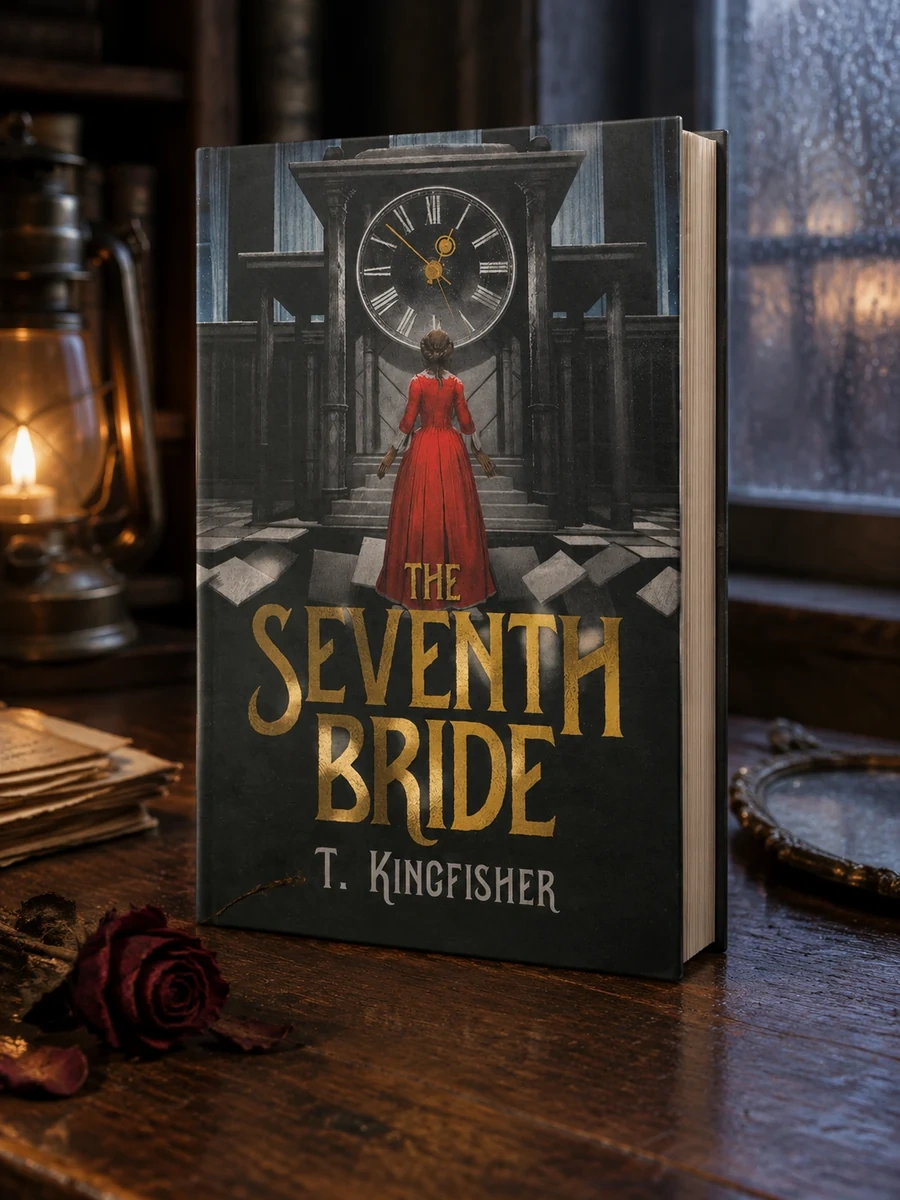

The Seventh Bride
✍️ T. KingfisherA miller's daughter fights a sorcerer lord to save herself and six imprisoned wives.
The novel examines the mechanics of magical coercion and female solidarity within a confined setting. Rhea’s engagement serves as the catalyst for her confrontation with Crevan’s curse. The text focuses on the psychological weight of forced marriage and the strategic alliances formed among the captive brides. Kingfisher uses the enchanted castle as a microcosm for patriarchal control, where magic acts as both prison and weapon. The story does not romanticize the relationship but instead treats the engagement as a life-threatening legal trap. Readers interested in subverted fairy tale tropes will appreciate the focus on practical survival skills rather than romantic resolution. The narrative avoids traditional heroics, relying instead on wit and collective action to dismantle the antagonist’s power.
The story sits within the American independent fantasy market of 2015. It draws on gothic fiction traditions and European folklore motifs regarding sorcerers and enchanted dwellings. The setting reflects a class-stratified society where nobility holds absolute power over commoners, mirroring historical feudal dynamics adapted for supernatural conflict.


📝 Description: The Seventh Bride
💎 Our verdict on The Seventh Bride
📖 Why choose it
Why this book is worth reading
Readers who appreciate subverted fairy tale tropes and the dismantling of traditional romance narratives will find this text particularly rewarding. The novel offers a refreshing focus on practical survival skills, female solidarity, and collective action rather than heroic individualism or sentimental resolution. It appeals to those interested in the mechanics of magical coercion and the psychological weight of forced marriage within a confined setting. Fans of dark fantasy and gothic horror will enjoy the microcosm of patriarchal control represented by the enchanted castle. The story is ideal for audiences seeking strong female protagonists who utilize wit and resourcefulness to resist oppressive power structures, providing a compelling alternative to lighthearted romance or historical accuracy in favor of thematic depth and resistance.
⭐ Reader reviews
Reader rating
Been meaning to get this one for a while. Genuinely unsettling in places, and it earns it without cheap tricks. Highly recommend.
Finished it over a stormy weekend, which helped. Some chapters are hard to read in the best possible way. The ending is bleak and honest, not a twist for the sake of one.
Bought this for my brother and ended up reading it first. The monster is scarier for how little you see of it. A few scenes I will not forget, whether I want to or not. It assumes some familiarity with the genre's tropes. Happy enough with the purchase.
Finished it over a stormy weekend, which helped. The monster is scarier for how little you see of it. Not a jump-scare book; it gets under the skin and stays there. Will be gifting a copy to a friend.
Got it as a gift for a friend who loves the genre. It leans on old gothic bones and makes them creak convincingly. Gorier than the description lets on, if that matters to you. Recommended with reservations.
Was skeptical at first. Genuinely unsettling in places, and it earns it without cheap tricks. It pairs well with the classics it is clearly in conversation with. Highly recommend.
❓ Frequently asked questions
📖 Who should read this
Readers craving dark, gothic fairy tales with strong female leads will love this tale of resistance against oppressive power structures. Avoid if you seek lighthearted romance or strict historical accuracy, as the tone is intentionally bleak and magical.
📜 Historical context
📖 Read on the blog
✍️ More books by this author T. Kingfisher
All books by this author →


🏛 Books from this publisher 47north
All books from this publisher →
You might also like
See more →



Have a question about this item?
Ask about the edition, condition, delivery or anything else — we reply by email or phone, usually within a day.
