
The Seasons of Sam Rock
A 1940s noir detective faces ravens and a mysterious French woman in Hollywood.
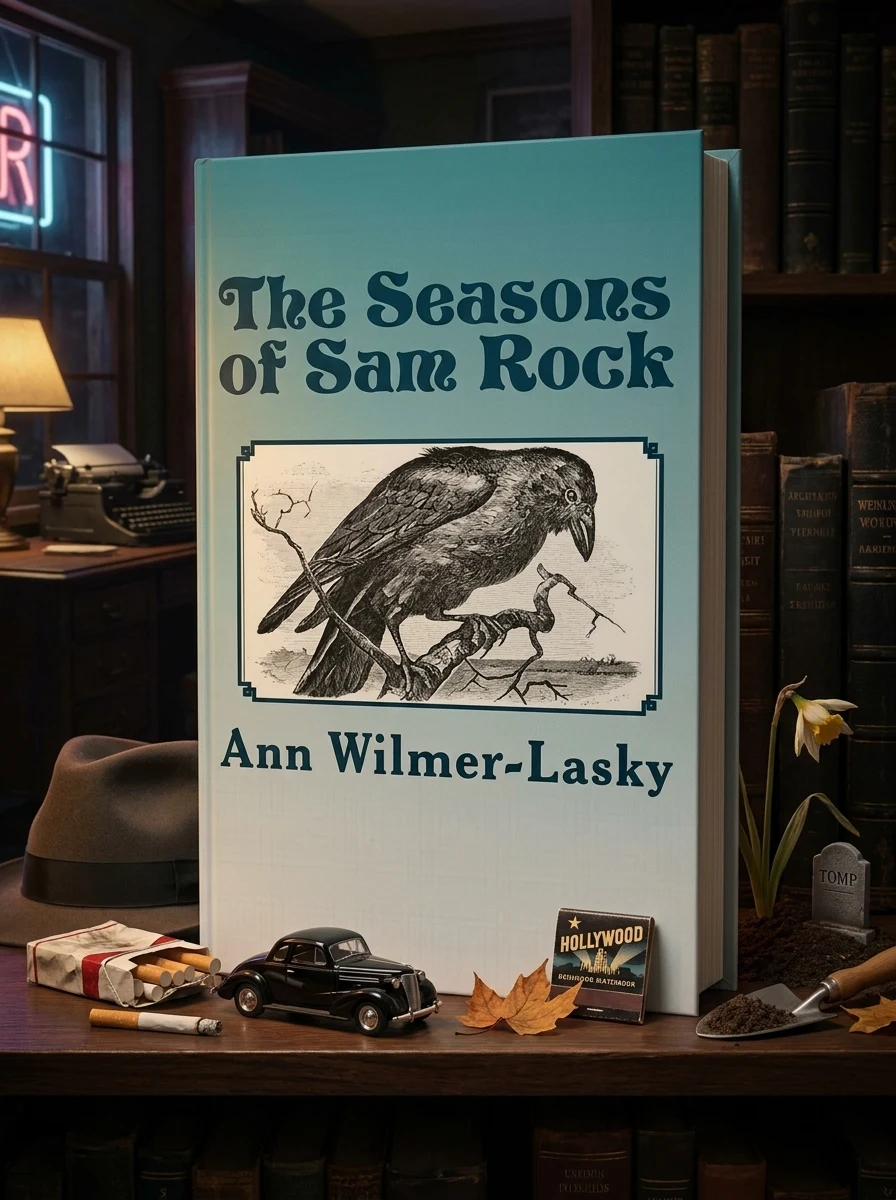
Wilmer-Lasky constructs a story where the seasons dictate the mystery's progression. Sam Rock navigates from Summer's lure through Autumn's violence to Winter's grave. The narrative structure relies on these temporal shifts to frame each case. The author uses the specific imagery of a black coupe and a fedora to establish the protagonist's identity. The inclusion of Madame Delacroix adds a layer of personal danger beyond standard criminal investigations. Her obsession with ravens ties directly into the physical threats Sam faces. This approach creates a unique blend of hard-boiled fiction and supernatural horror.
The book is set in 1940s Hollywood, drawing on the era's detective fiction traditions. It utilizes the specific cultural backdrop of the glamorous film industry to contrast with the seamy underworld Sam explores. The narrative reflects the period's aesthetic through details like the 1938 Chevy coupe and fedora.


📝 Description: The Seasons of Sam Rock
💎 Our verdict on The Seasons of Sam Rock
📖 Why choose it
Why this book is worth reading
Readers who appreciate the intersection of hard-boiled detective fiction and supernatural horror will find this narrative compelling. It appeals to those drawn to atmospheric settings where the seamy underbelly of glamorous Hollywood contrasts sharply with eerie, unseen threats. The book is ideal for enthusiasts of gothic elements woven into crime stories, particularly those interested in symbolic imagery like ravens and mysterious figures such as Madame Delacroix. It offers a unique blend of wry humor and dark intrigue, satisfying audiences who enjoy complex character dynamics driven by personal danger rather than standard police procedures.
⭐ Reader reviews
Reader rating
Wilmer-Lasky successfully merges the gritty realism of noir with supernatural horror, creating a distinct subgenre experience. The seasonal structure provides a compelling framework for the mystery, while the imagery of the black coupe and fedora effectively establishes the protagonist's identity. The inclusion of Madame Delacroix adds necessary complexity, moving beyond simple criminal investigations into personal danger. This approach suits readers who enjoy period pieces with gothic twists. However, those expecting straightforward police procedurals may find the tone disjointed due to the magical realism elements.