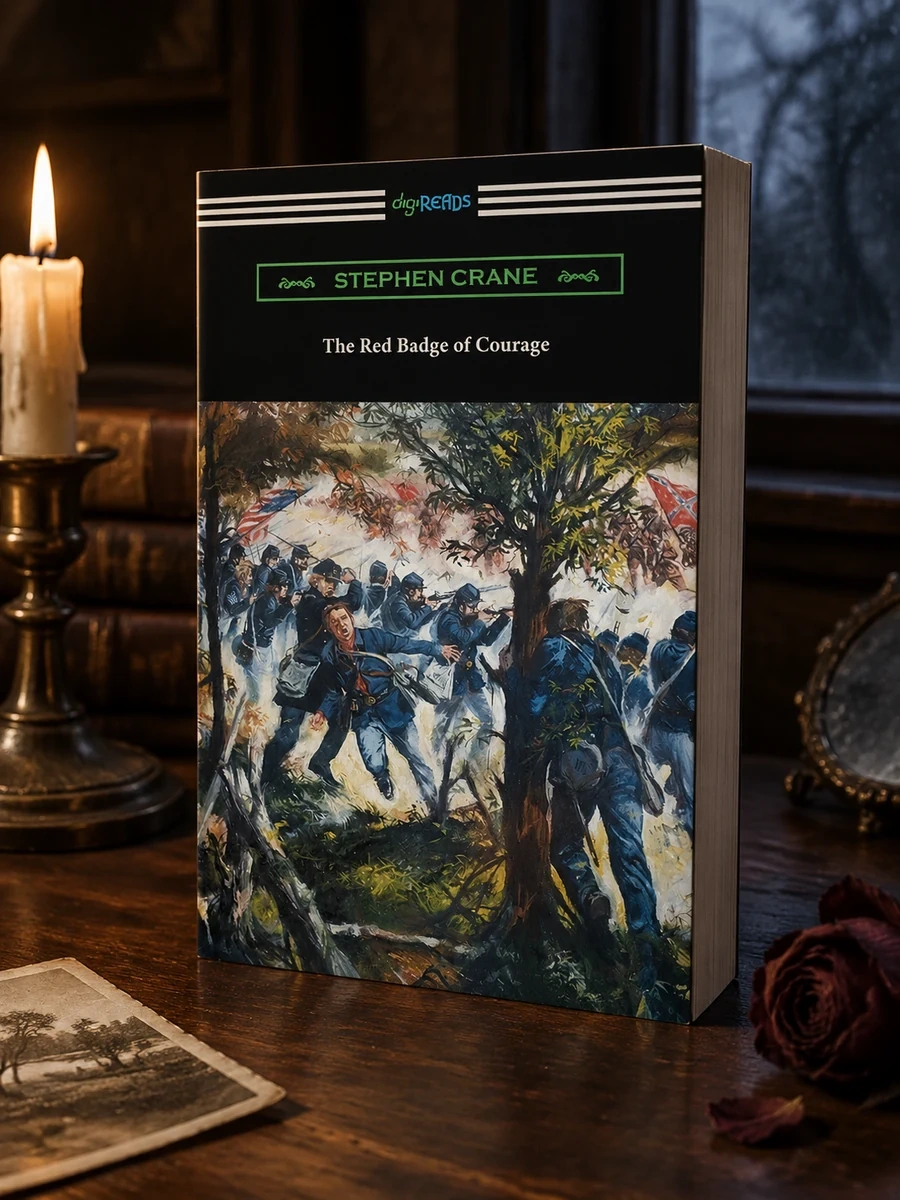
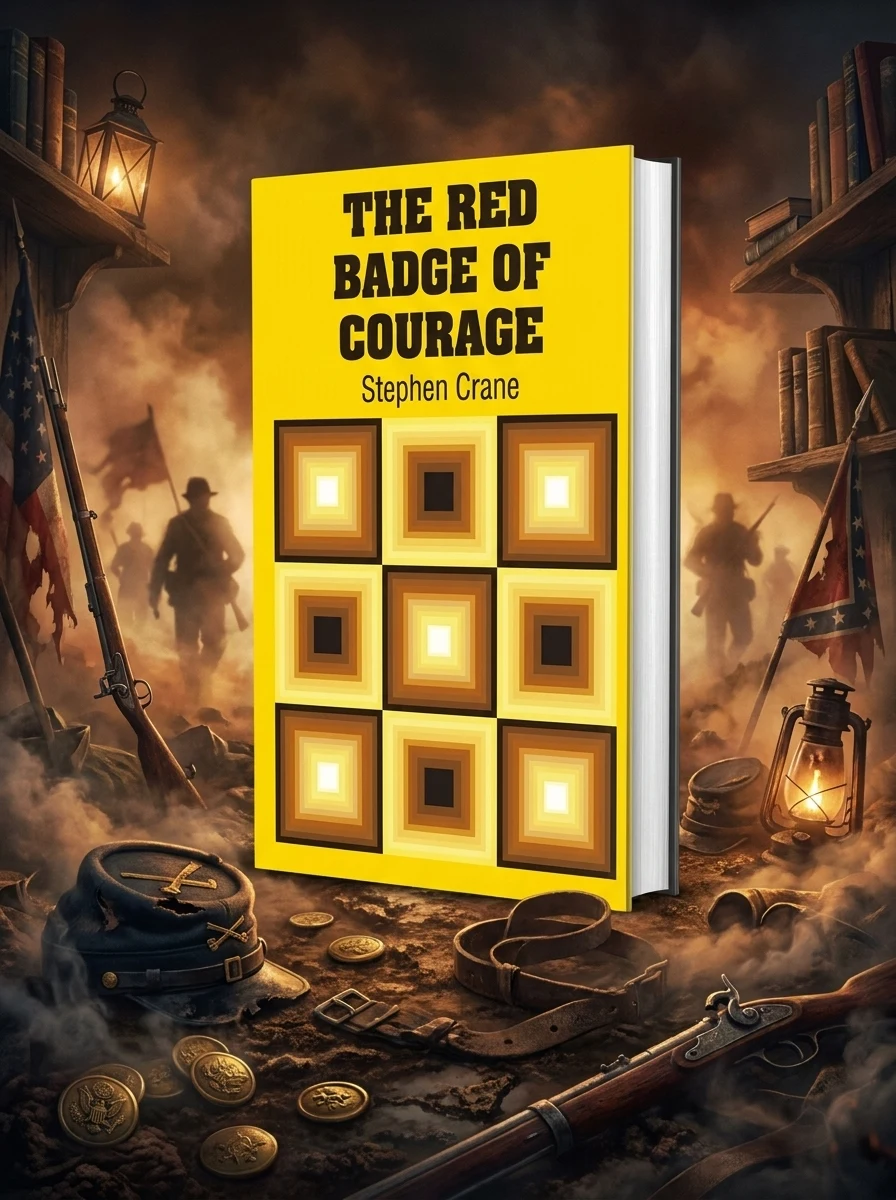
The Red Badge of Courage
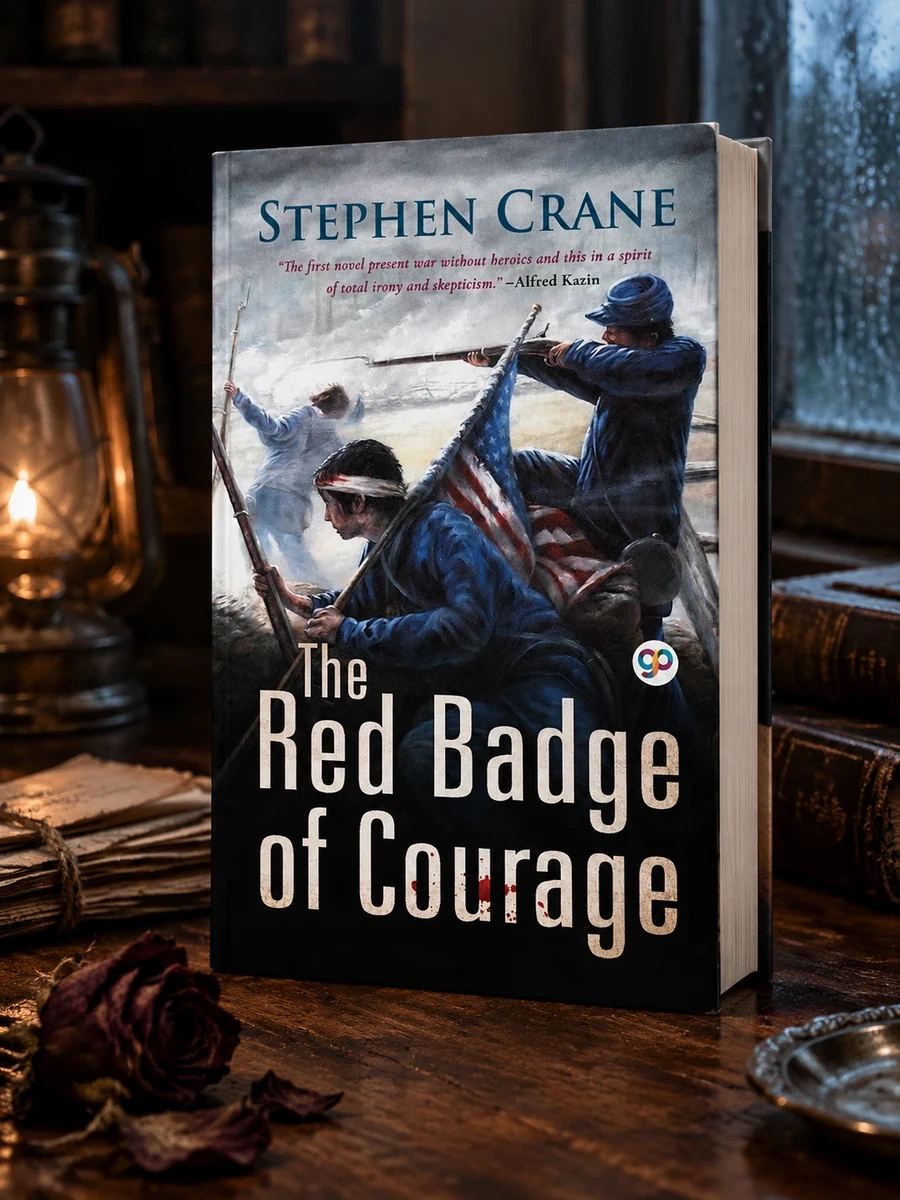
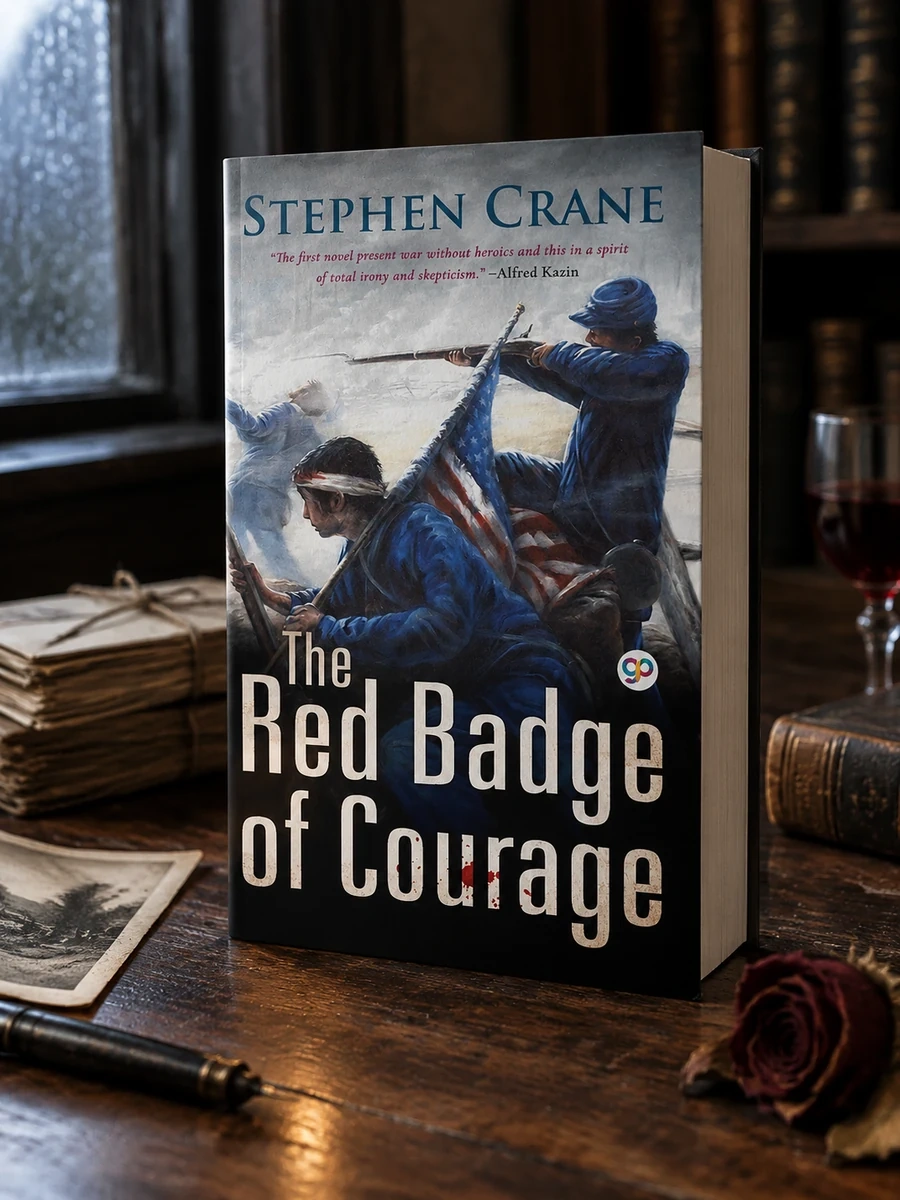
A psychological portrait of a Union soldier’s fear and shame during the Civil War.
Crane writes with a style that blends realism with impressionism to depict the grueling intensity of frontline combat. The narrative does not glorify war but instead examines the raw, often ugly emotions of an ordinary man facing mortality. Henry Fleming’s internal conflict drives the plot, making the text a study in human fragility under extreme pressure. The work gained immediate notoriety in the United States and abroad for its honest portrayal of fear. This Digireads.com edition preserves the original text without alteration, allowing modern readers to engage with Crane’s unique voice directly.
First published serially in 1894 and lengthened for book publication in 1895, this novel emerged as a landmark work of American literature. It brought Crane instant notoriety abroad and established a new standard for depicting the psychological aspects of warfare through naturalistic fiction.


📝 Description: The Red Badge of Courage
💎 Our verdict on The Red Badge of Courage
📖 Why choose it
Why this book is worth reading
Readers drawn to psychological horror and the exploration of human fragility will find this text profoundly resonant. It appeals to those interested in the raw, unglamorous emotions of fear and shame when facing mortality. The narrative offers a stark look at internal turmoil, making it ideal for audiences who prefer character studies over action-driven plots. By examining the grueling intensity of frontline combat through an impressionistic lens, the book provides a unique perspective on courage and cowardice. It is particularly suitable for individuals seeking honest portrayals of human weakness under extreme pressure, offering a stark contrast to traditional heroic tales.
⭐ Reader reviews
Reader rating
Crane delivers a gripping psychological portrait that eschews glorification for raw honesty. The impressionistic style vividly captures the confusion and terror of combat, making the protagonist’s internal conflict the true antagonist. This approach creates a tense, atmospheric experience akin to cosmic horror’s focus on the insignificance of the individual against overwhelming forces. While it lacks tactical detail or heroic triumphs, its strength lies in depicting human fragility. It suits readers who appreciate naturalistic depictions of fear and those interested in the darker aspects of the human psyche during crisis.
📖 Read on the blog
✍️ More books by this author Stephen Crane


🏛 Books from this publisher Digireads.com

You might also like
See more →

Have a question about this item?
Ask about the edition, condition, delivery or anything else — we reply by email or phone, usually within a day.
