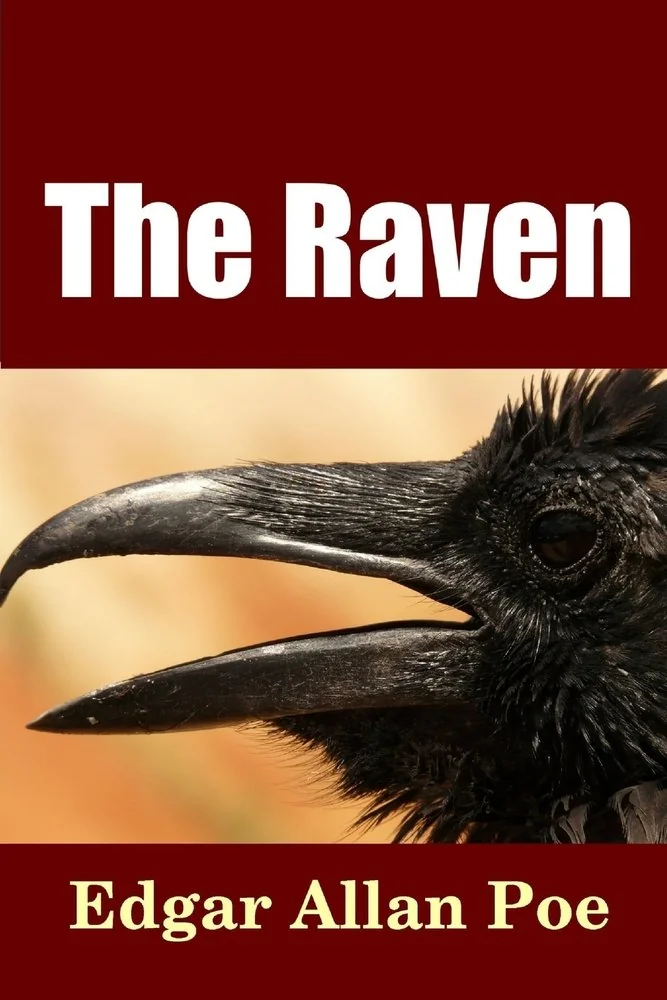
The Raven
A narrative poem about a grieving student and a mysterious bird.
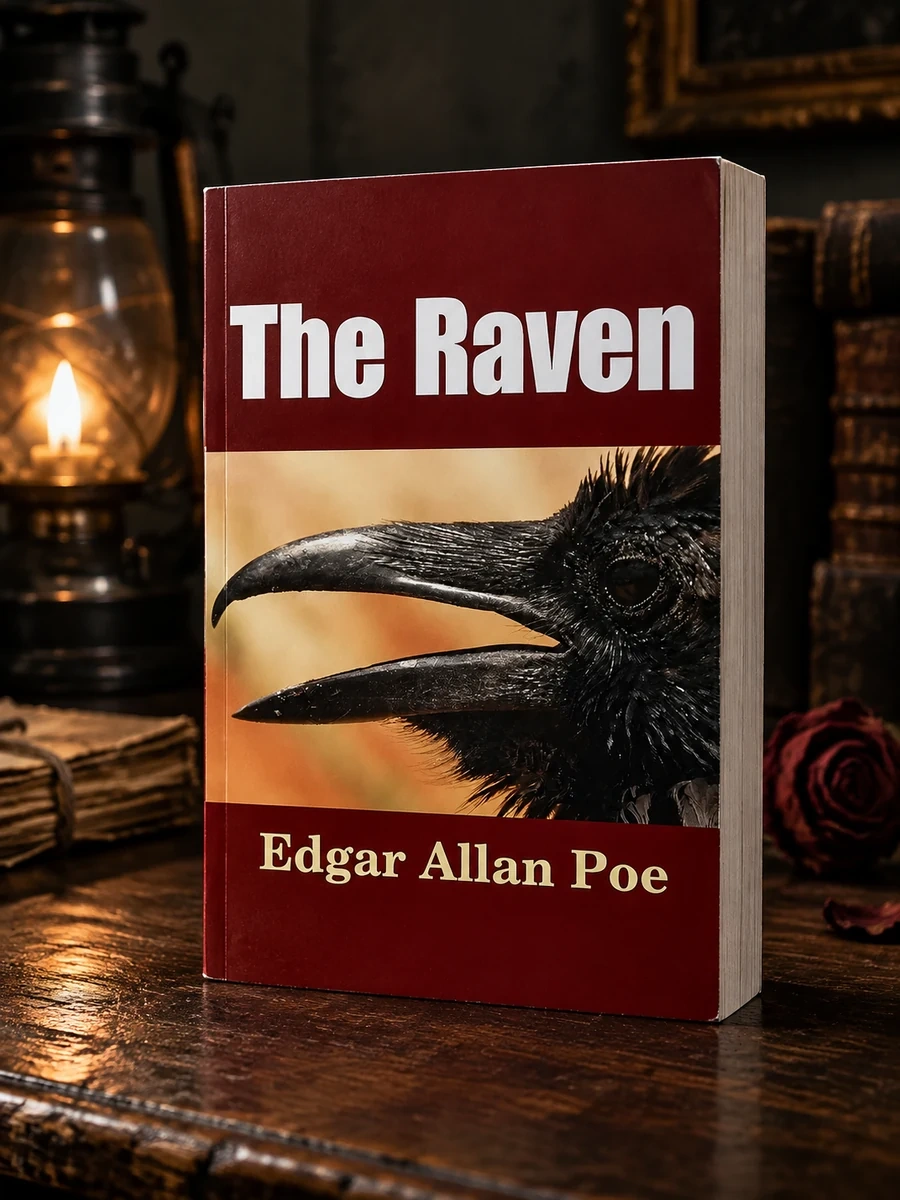
The Raven presents a single continuous narrative rather than a collection of tales. Poe constructed the piece to appeal to wide audiences by balancing critical appreciation with popular accessibility. The story focuses on a student lamenting Lenore while a raven sits on a bust of Pallas. The bird’s repeated utterance drives the protagonist toward madness. Poe detailed his creative decisions in a follow-up essay published in 1846. He cited Dickens’s Barnaby Rudge as an inspiration for the avian character. The work relies heavily on classical and religious allusions to build its mood. Readers examining the intersection of folklore and psychological decline will find value here. The text offers no easy comfort, only a structured exploration of grief.
First published in January 1845, this poem emerged from the American literary tradition of Poe. He drew on Dickens’s Barnaby Rudge and classical references to shape its supernatural tone. The work reflects mid-nineteenth-century interests in folk mythology and religious symbolism.


📝 Description: The Raven
💎 Our verdict on The Raven
📖 Why choose it
Why this book is worth reading
Readers interested in the intersection of folklore and psychological horror will find significant value in this text. It offers a structured exploration of grief without providing easy comfort, appealing to those who appreciate stylized language and atmospheric dread. The work is ideal for individuals examining the mechanics of poetic structure and the descent into madness. While it may not suit those seeking straightforward plot resolutions, its calculated artistic intent and musicality make it essential for students of gothic literature and psychological horror.
⭐ Reader reviews
Reader rating
Poe’s narrative poem masterfully blends musicality with a supernatural atmosphere to trace a lover’s descent into madness. By balancing critical appreciation with popular accessibility, the text creates a unique experience rooted in classical allusions and religious imagery. It excels in building mood through the repetitive utterance of a mysterious bird, driving the protagonist toward psychological collapse. This edition suits readers who appreciate stylized language and the study of grief’s mechanics. However, those seeking non-fiction analysis or simple resolutions may find the repetitive nature less engaging. Ultimately, it remains a profound work of atmospheric dread.