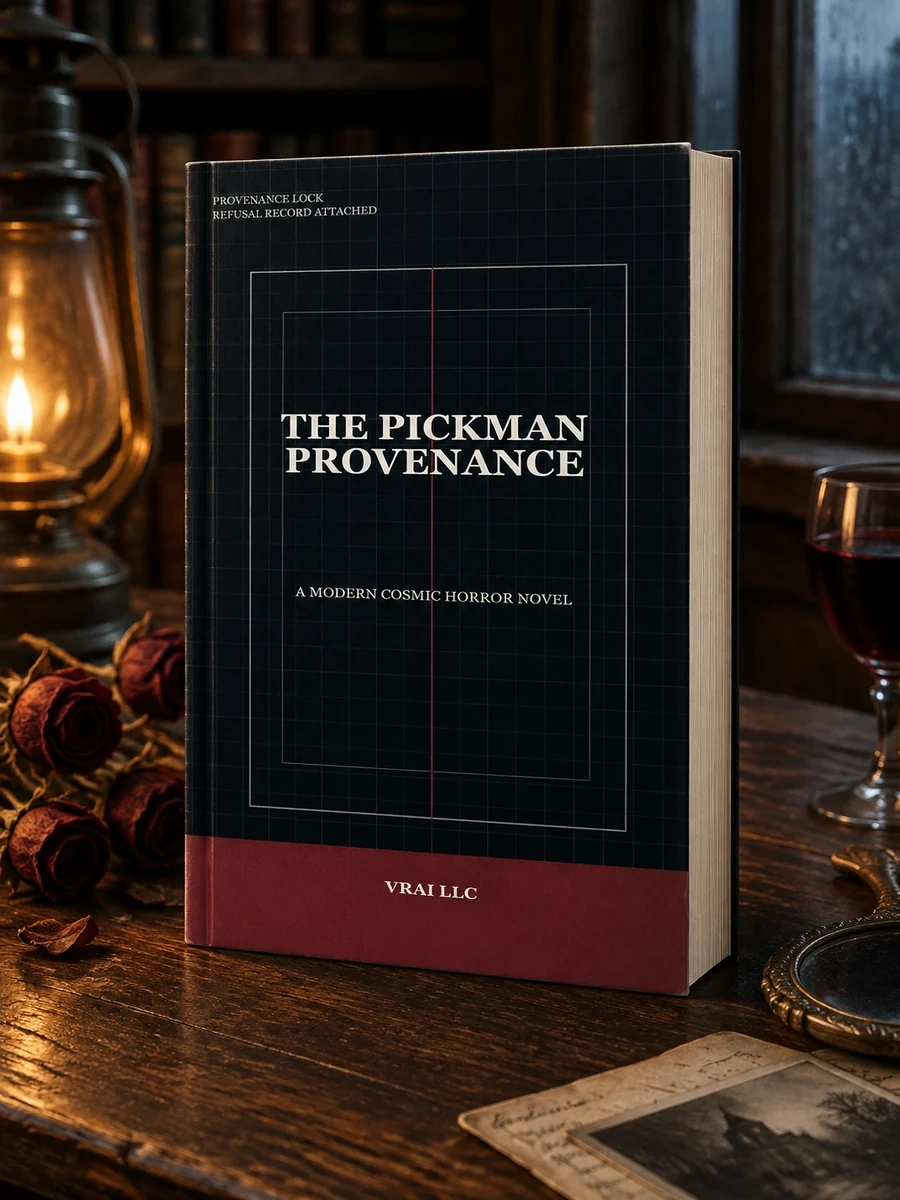
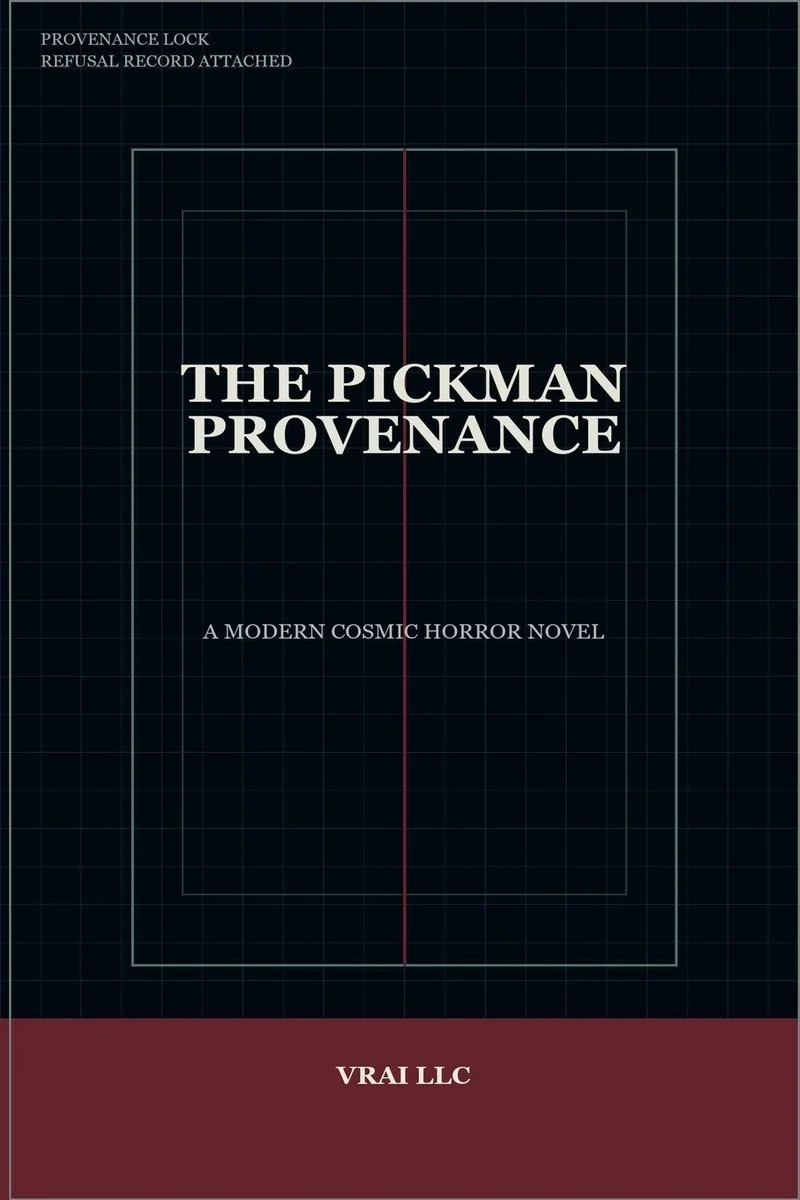
The Pickman Provenance
A researcher uncovers a banned AI model generating images from a century before the internet.
The Pickman Provenance centers on Anika Rowe, who works for a generative image firm. She is tasked with explaining a specific anomaly in their systems. A banned model produces images that match sealed crime scene photographs from a hundred years ago. The training data claims the artist does not exist. The visual output suggests otherwise. Anika faces a moral dilemma. She must choose between protecting her career or revealing how she helped launder stolen images into datasets. Her goal is to build a record naming the dead before the machine treats them as property. This plot highlights the tension between corporate profit and ethical responsibility in the age of artificial intelligence.
The book is published by Vrai LLC in 2026. It addresses contemporary anxieties about generative AI and data privacy. The narrative blends modern tech industry practices with gothic horror traditions involving the undead.


📝 Description: The Pickman Provenance
💎 Our verdict on The Pickman Provenance
📖 Why choose it
Why this book is worth reading
Readers intrigued by the intersection of technology and the supernatural will find this narrative compelling due to its sharp critique of corporate ethics in the age of AI. The book appeals to those who enjoy psychological tension arising from moral dilemmas rather than physical action. It offers a unique perspective on how historical trauma persists through modern data systems, making it suitable for audiences interested in dark fantasy and tech thrillers. Those concerned with issues of provenance, stolen art, and the commodification of the dead will appreciate its thematic depth. The story invites reflection on agency beyond human comprehension, providing intellectual stimulation alongside atmospheric dread.
⭐ Reader reviews
Reader rating
This work excels at weaving gothic traditions into a contemporary setting, creating a chilling atmosphere where the past haunts the digital present. It effectively balances corporate thriller elements with supernatural horror, focusing intensely on the protagonist's internal conflict and ethical responsibilities. The narrative structure supports its themes of data ownership and the persistence of entities beyond human understanding. It suits readers who appreciate nuanced explorations of artificial intelligence ethics and historical horror. The book avoids simple resolutions, instead offering a complex critique of how unexplainable data sources are handled by profit-driven institutions. It is best enjoyed by those willing to engage with philosophical questions about art and ownership.
📖 Read on the blog
✍️ More books by this author Vrai LLC


🏛 Books from this publisher Vrai LLC
You might also like
See more →



Have a question about this item?
Ask about the edition, condition, delivery or anything else — we reply by email or phone, usually within a day.
