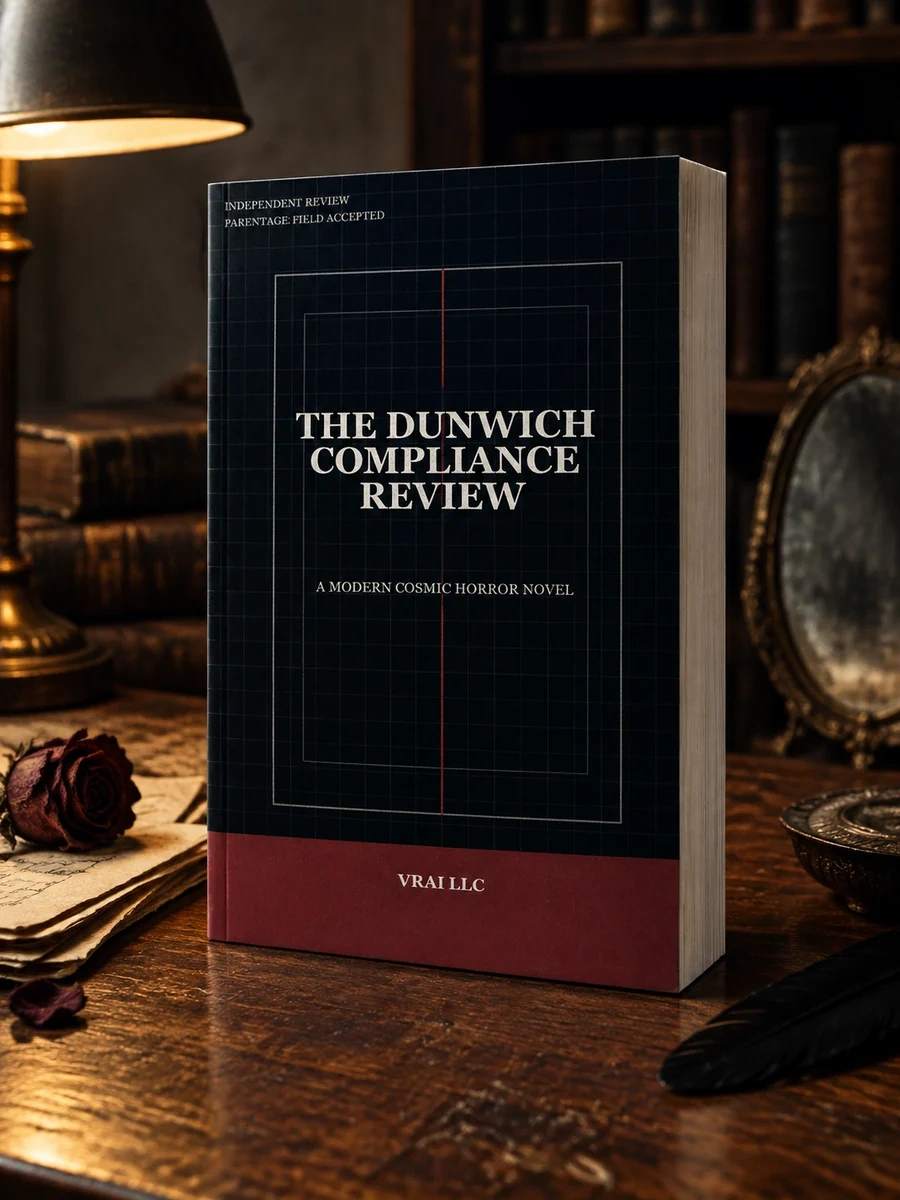
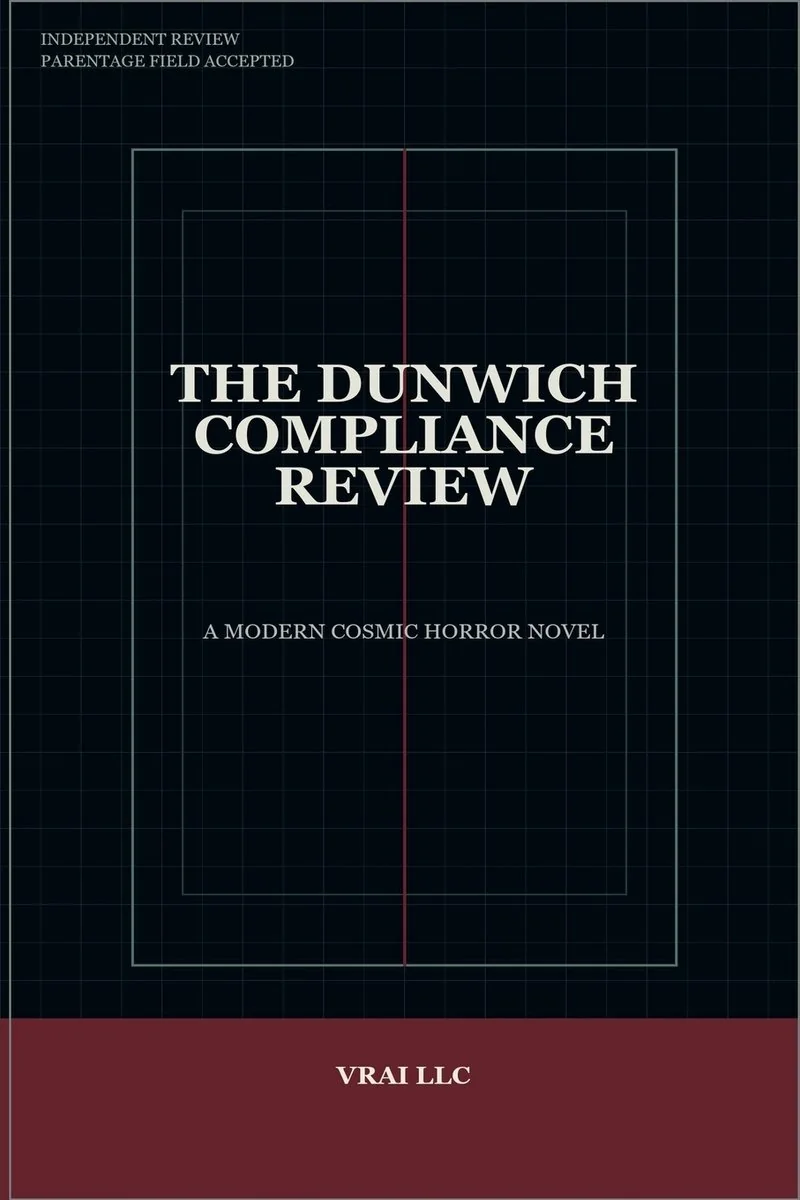
The Dunwich Compliance Review
A compliance attorney audits a biotech trial where records answer before filing.
Elena Wexler investigates a pediatric trial in Dunwich, Massachusetts, where regulatory failures mask supernatural events. The narrative focuses on her discovery that institutions recognize non-human parties to consent. She must confront past harms to stop the protocol. The story uses legal documentation as a lens for horror. It explores how bureaucracy can facilitate occult practices. Elena’s journey involves naming individuals rather than categories. This approach highlights the vulnerability of human subjects in rigid systems. The text examines the intersection of clinical research and gothic terror. It shows how silence protects harmful entities. The narrative structure follows Elena’s growing realization that the trial is not merely a scientific endeavor but a ritualistic process. Her confession becomes the key to breaking the cycle.
The narrative is set in Dunwich, Massachusetts, a location with deep roots in American gothic literature. The story engages with contemporary concerns about clinical research ethics and regulatory compliance. It blends modern corporate structures with traditional supernatural horror elements. The setting reflects a history of isolated communities facing external threats.


📝 Description: The Dunwich Compliance Review
💎 Our verdict on The Dunwich Compliance Review
📖 Why choose it
Why this book is worth reading
Readers who appreciate slow-burn horror that blends corporate procedure with dread will find this book compelling. It appeals to those interested in system failure and the costs of silence within rigid bureaucratic structures. The narrative offers a unique lens on gothic terror through legal documentation, exploring how institutions can facilitate occult practices. Those fascinated by the vulnerability of human subjects in clinical trials and the subversion of regulatory frameworks will gain insight into institutional complicity. The story’s focus on naming individuals rather than categories highlights the personal stakes involved in systemic horror.
⭐ Reader reviews
Reader rating
This text excels at weaving legal compliance with occult participation, creating a chilling atmosphere where bureaucracy facilitates supernatural events. Elena Wexler’s investigation provides a grounded entry point into gothic terror, making the abstract horrors of institutional failure tangible. The narrative structure effectively builds dread through the slow realization that the trial is ritualistic rather than scientific. It suits readers who prefer psychological depth over fast action or clear resolutions. By examining how silence protects harmful entities, the book offers a critical look at regulatory frameworks. The emphasis on individual naming adds emotional weight to the systemic critique. This is a study of complicity that rewards attentive reading.
📖 Read on the blog
✍️ More books by this author Vrai LLC


🏛 Books from this publisher Vrai LLC
You might also like
See more →



Have a question about this item?
Ask about the edition, condition, delivery or anything else — we reply by email or phone, usually within a day.
