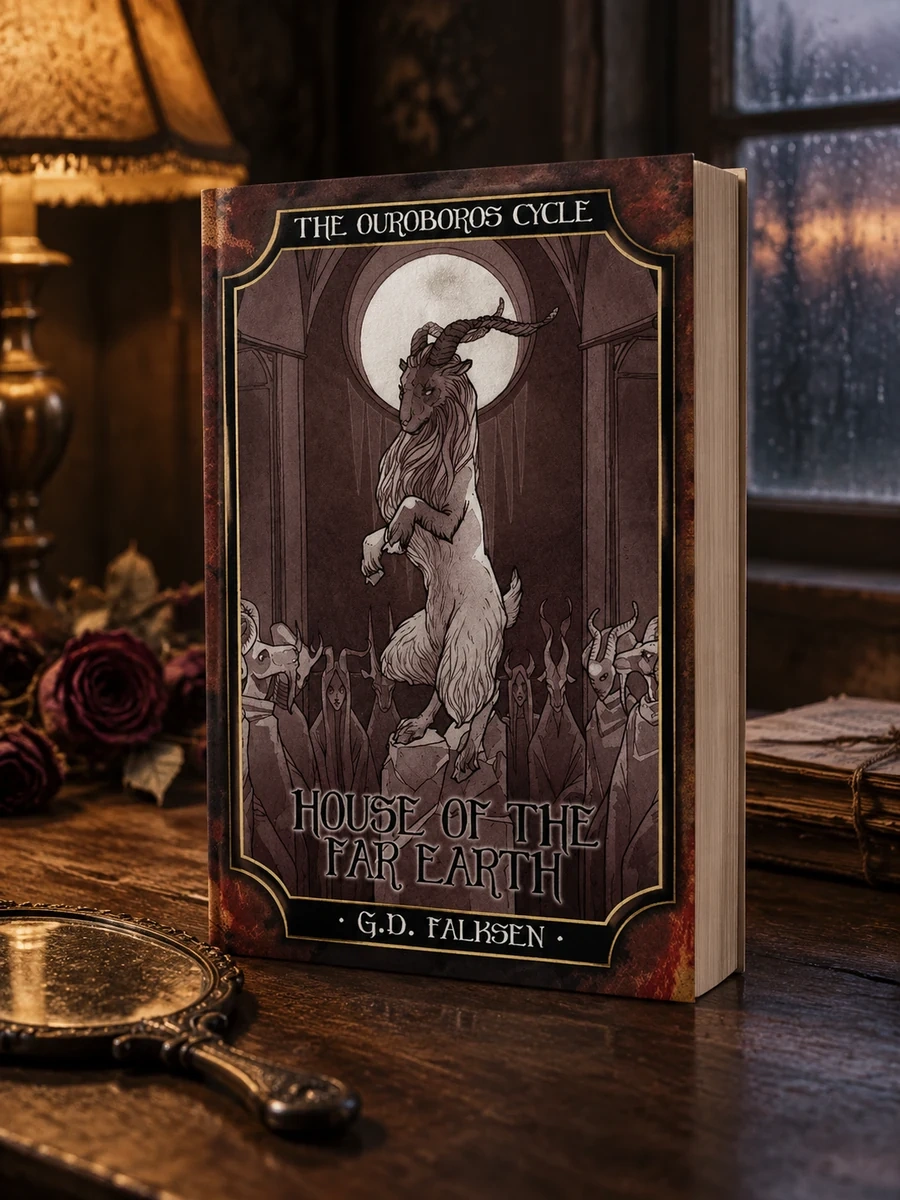

The Ouroboros Cycle, Book 5: House of the Far Earth
A gothic tale of a doctor trapped in the desert while her mentor seeks a cursed Sumerian city.
Falksen constructs a narrative centered on Doctor Varanus, who remains inactive in the heat while Iosef leads an expedition into Sumeria. The team includes a banker and an archaeologist whose incompetence adds to the tension. Their goal is Ekizu, a place linked to dark gods and sacrifice. As they dig deeper, internal conflicts rise alongside external threats from lurking enemies. The discovery of the temple brings a realization that some ancient warnings exist for good reason. The plot emphasizes the danger of curiosity and the weight of history.
The story draws on Sumerian traditions and the mythos of dark gods. It is set in a desert environment where ancient ruins hide secrets. The narrative explores the intersection of historical archaeology and supernatural horror, focusing on the dangers of uncovering lost civilizations.


📝 Description: The Ouroboros Cycle, Book 5: House of the Far Earth
💎 Our verdict on The Ouroboros Cycle, Book 5: House of the Far Earth
📖 Why choose it
Why this book is worth reading
Readers who appreciate slow-burn psychological dread and atmospheric historical settings will find this volume deeply rewarding. Falksen excels at transforming the vast, oppressive heat of the desert into a claustrophobic landscape of mental unraveling. Those interested in Sumerian mythology and the specific horror of disturbing ancient, buried secrets will appreciate the detailed world-building. The book offers a unique perspective through Doctor Varanus’s stagnation, contrasting with the active exploration of her mentor. It is ideal for fans who prefer character dynamics and internal tension over immediate action, providing a thoughtful examination of curiosity's dangerous weight within a gothic framework.
⭐ Reader reviews
Reader rating
Falksen delivers a compelling entry in The Ouroboros Cycle that prioritizes psychological erosion over physical threats. By anchoring the narrative in Doctor Varanus’s stagnant experience, he creates a potent sense of isolation despite the open desert setting. The inclusion of flawed companions, such as the incompetent archaeologist, adds necessary friction to the expedition toward Ekizu. The book succeeds in blending historical mystery with supernatural horror, creating an atmosphere where ancient warnings feel tangible and dangerous. It suits readers who enjoy gothic fiction rooted in specific mythological contexts. While it lacks fast-paced action, its strength lies in its detailed exploration of history’s burden and the inevitable consequences of digging too deep into forbidden pasts.