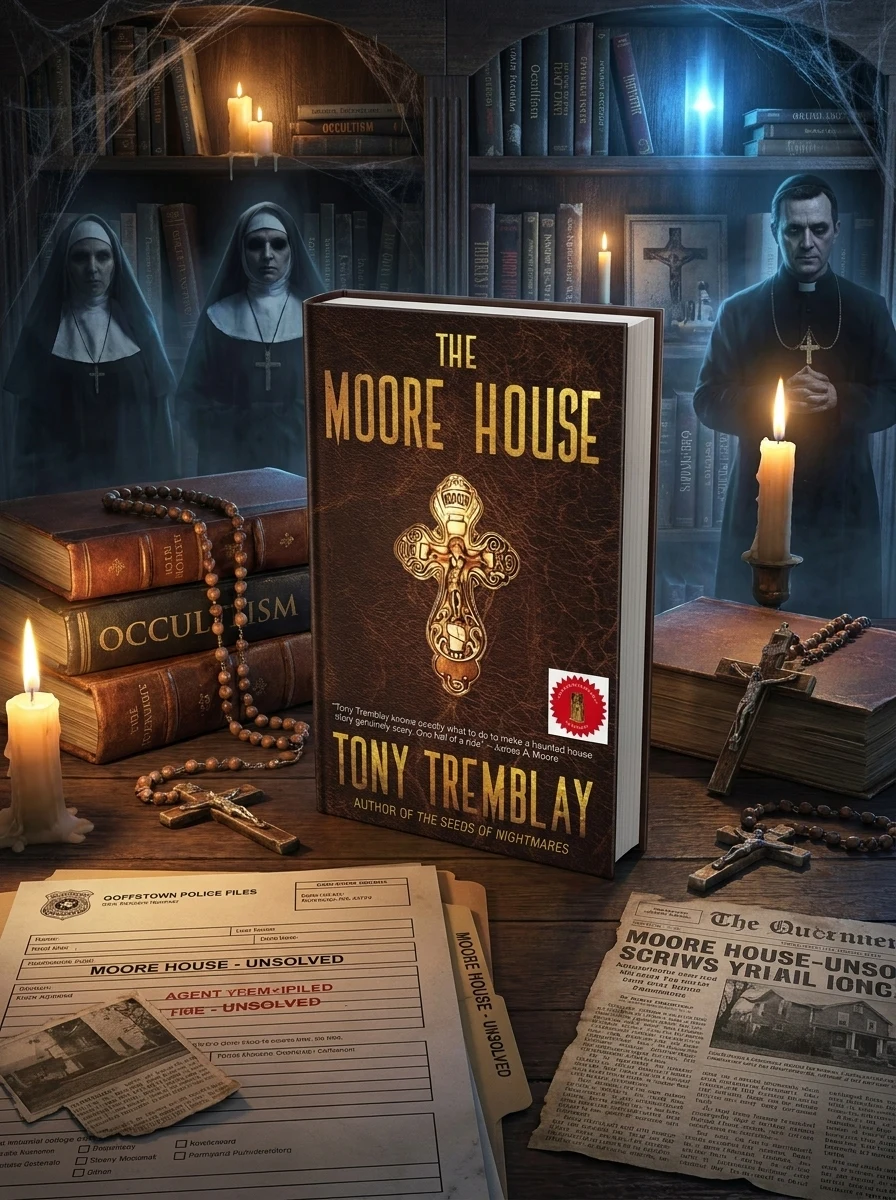

The Moore House
Three excommunicated nuns investigate demonic claims at a haunted New Hampshire house for redemption.
The narrative focuses on Nora, Agnes, and Celeste, who have been excommunicated from their order. They seek to regain standing in God's eyes by joining a specialized paranormal unit. Father MacLeod leads this group, which operates under Catholic sanction. The women use their empathic abilities to verify possession reports. Their assignment takes them to New Hampshire to examine the Moore House. Goffstown police files provide the evidence for their investigation. These documents list seven unsolved killings and other strange events at the property. The story explores the intersection of religious guilt and supernatural horror. It does not rely on traditional ghost stories but rather on institutional verification of evil.
The story is set in a small New Hampshire town, specifically referencing Goffstown police records. It draws on the tradition of Catholic excommunication and church-sanctioned paranormal units. The narrative blends religious themes with local American folklore regarding haunted houses and unsolved crimes.


📝 Description: The Moore House
💎 Our verdict on The Moore House
📖 Why choose it
Why this book is worth reading
Readers drawn to the intersection of faith and horror will find significant value in this narrative's unique premise. Those who appreciate stories where religious guilt fuels supernatural conflict will engage deeply with the protagonists' quest for redemption. Fans of procedural elements within horror genres will enjoy the structured approach to investigating demonic claims. The book offers a compelling look at how institutional verification interacts with evil, providing a distinct alternative to traditional ghost stories. It is ideal for audiences seeking psychological depth alongside cosmic or demonic terror, particularly those interested in the complexities of excommunication and redemption.
⭐ Reader reviews
Reader rating
Tremblay delivers a focused exploration of religious guilt and supernatural horror through the lens of three excommunicated nuns. The narrative effectively utilizes the tension between personal exile and institutional sanction to drive its plot. By grounding the mystery in police files and official church units, the story avoids cliché ghostly tropes in favor of a more procedural, yet deeply spiritual, investigation. This approach suits readers who prefer Catholic horror and psychological depth over secular supernatural tales. The tight focus on the nuns' professional duties creates a compelling atmosphere of dread. It is best suited for those interested in the verification of evil through official channels rather than traditional folklore.
📖 Read on the blog
✍️ More books by this author Tony Tremblay


🏛 Books from this publisher Twisted Publishing


You might also like
See more →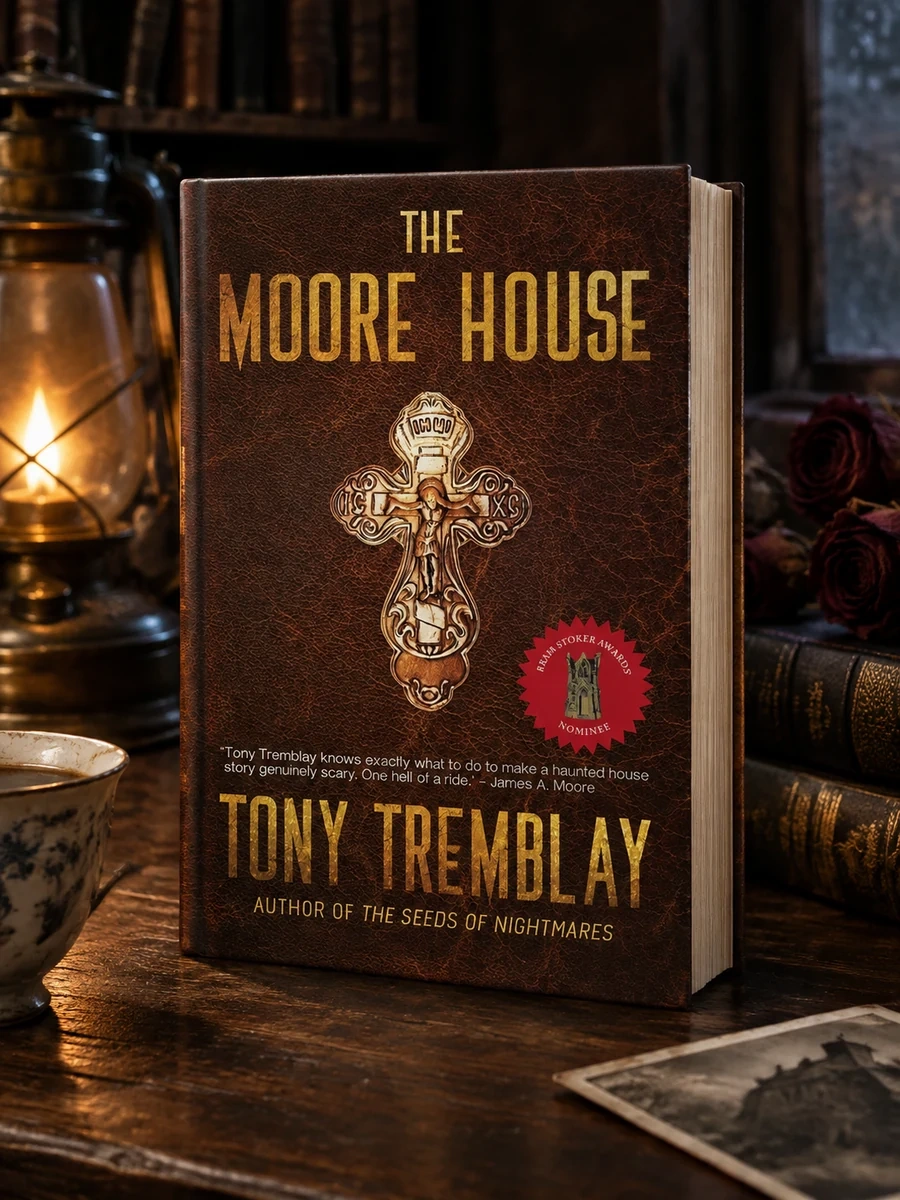


Have a question about this item?
Ask about the edition, condition, delivery or anything else — we reply by email or phone, usually within a day.
