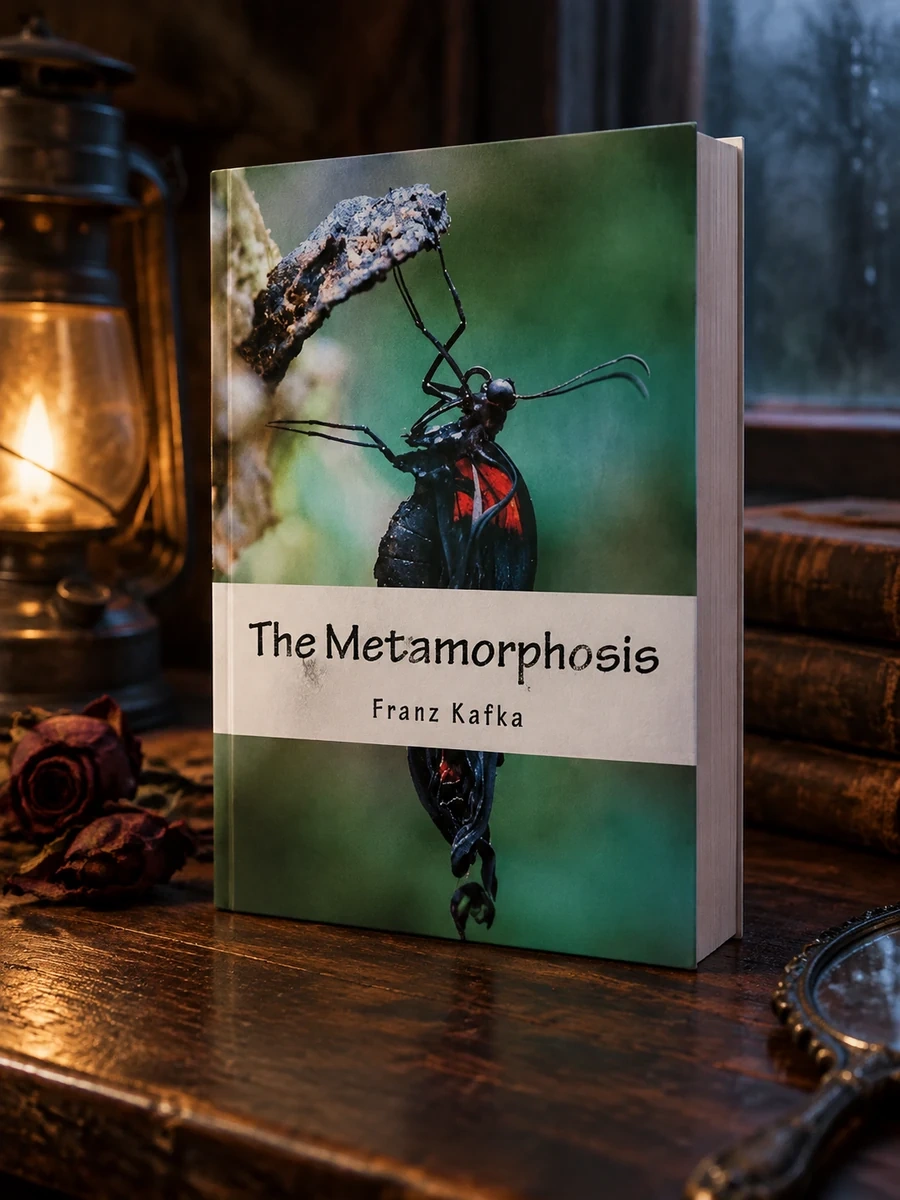
The Metamorphosis
Ian Johnston's edition of Kafka's 1915 novella about a man turning into a vermin.
The narrative centers on Gregor Samsa, whose sudden transformation disrupts his life as a salesman. The three-chapter structure tracks his isolation and the family's reaction to his new form. This work draws on the tradition of European literary modernism established in 1915. It stands as a key example of supernatural fiction that explores identity and alienation. The text was first published in Die weißen Blätter before appearing in book form by Kurt Wolff. Readers encounter a story that has generated extensive critical debate regarding its symbolism and meaning.
The novella appeared in the October 1915 issue of Die weißen Blätter, edited by René Schickele. The first book edition followed in December 1915 within the series Der jüngste Tag, edited by Kurt Wolff. This places the work firmly in early twentieth-century German literature.


📝 Description: The Metamorphosis
💎 Our verdict on The Metamorphosis
📖 Why choose it
Why this book is worth reading
This novella offers a profound engagement with the source material that first appeared in Die weißen Blätter before its book form release by Kurt Wolff. It is ideal for readers interested in early twentieth-century gothic fiction and supernatural metaphors who wish to examine the traditions of existential dread and bodily horror. The text provides significant literary history, retaining its original structure and thematic weight without alteration. While it may challenge those seeking lighthearted adventure or clear resolutions, it rewards those looking to understand the extensive critical debate regarding its symbolism. It serves as a vital entry point for exploring how modernism utilized the monstrous to dissect the human condition.
⭐ Reader reviews
Reader rating
Ian Johnston presents a version of Franz Kafka’s novella The Metamorphosis, originally published in 1915. This edition focuses on the story of Gregor Samsa, a traveling salesman who wakes to find himself transformed into a monstrous vermin. The text is organized into three chapters and spans approximately seventy printed pages. It represents one of the longest complete stories Kafka published during his lifetime. The narrative follows Samsa as he struggles to adjust to his new physical condition. Critics have widely discussed the work, offering differing interpretations of its meaning. Popular culture often depicts the insect as a cockroach, though the original German term translates to monstrous vermin. This edition allows readers to engage with the source material that first appeared in the journal Die weißen Blätter under René Schickele before its book form release by Kurt Wolff. This book suits readers interested in early twentieth-century gothic fiction and supernatural metaphors. It appeals to those examining the traditions of existential dread and bodily horror. Readers seeking lighthearted adventure or clear resolutions may find the tone challenging. The text remains a significant piece of literary history, retaining its original structure and thematic weight without alteration.