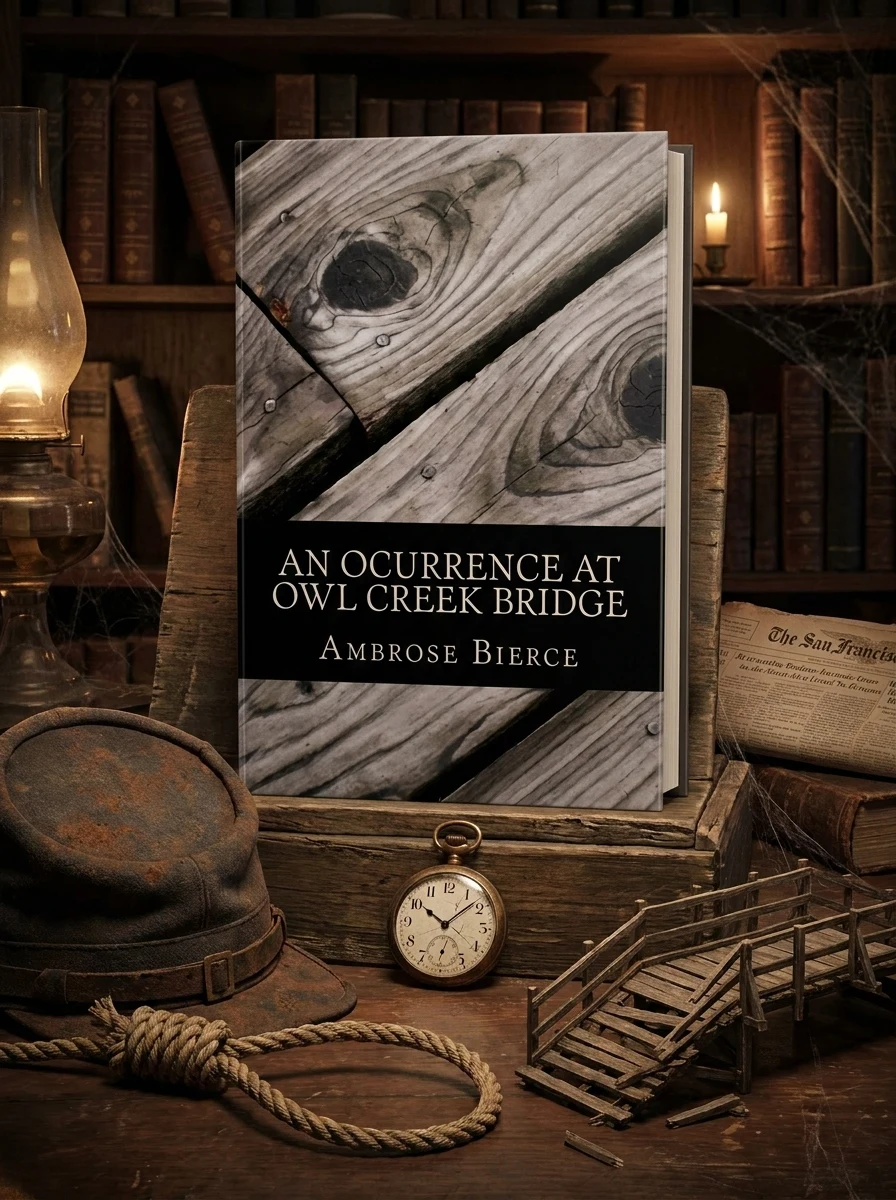
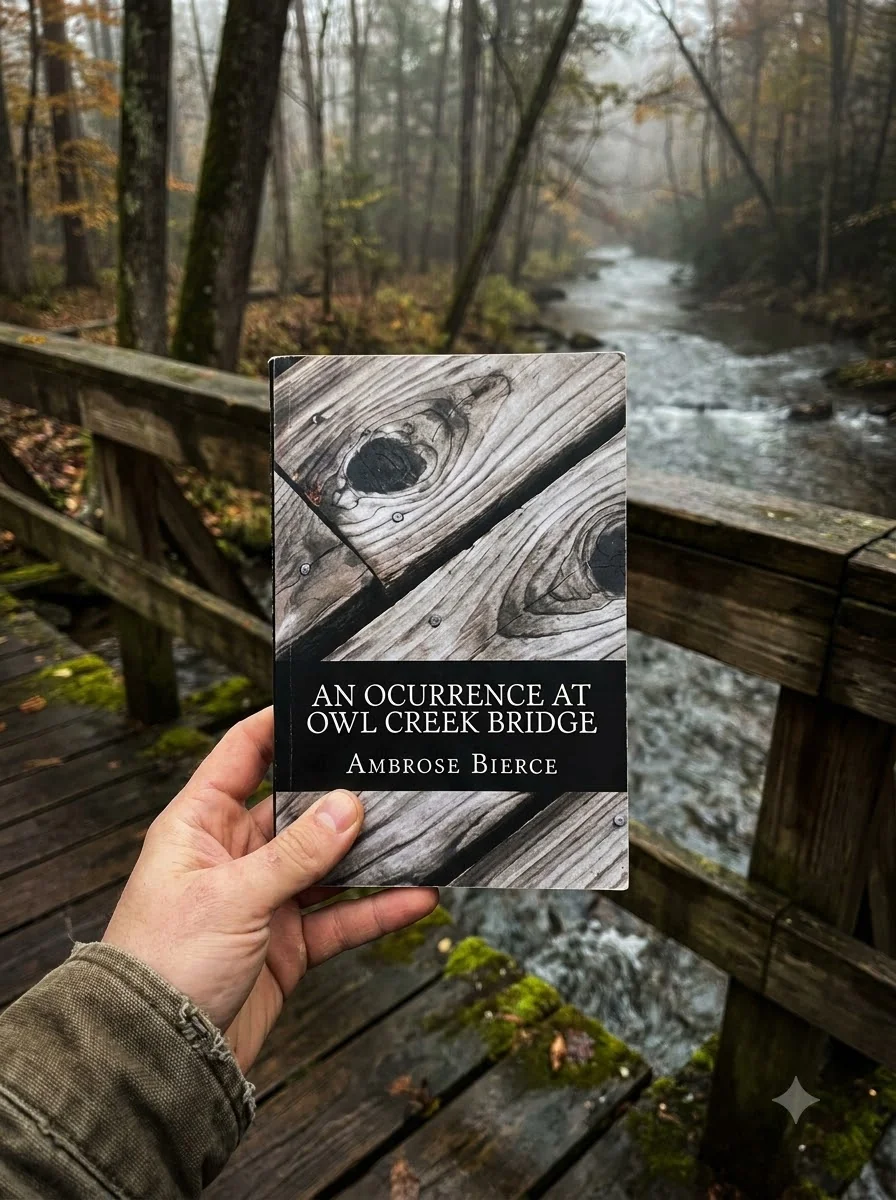

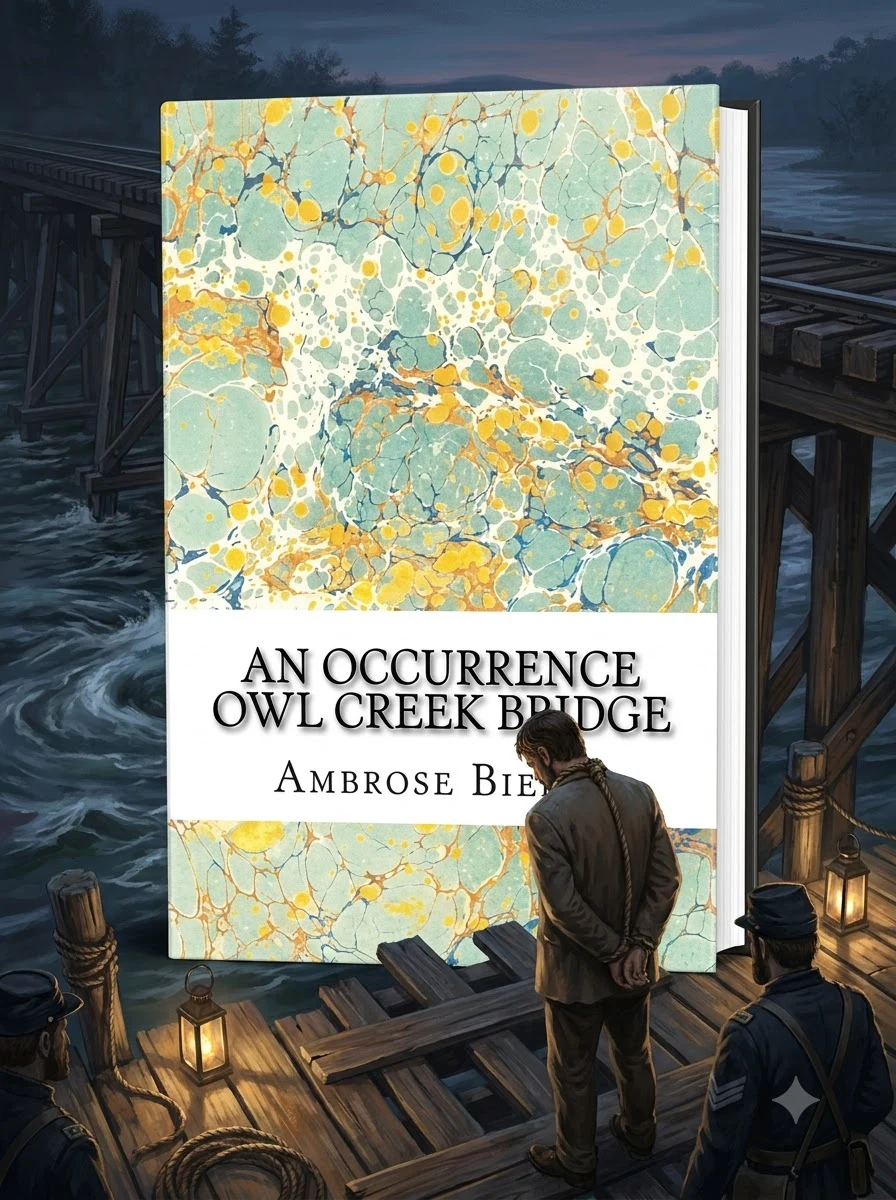
An Ocurrence at Owl Creek Bridge
A Civil War execution story with a twist ending and stream of consciousness style.
This collection features Bierce's most famous short story, which examines the final moments of a man facing hanging. The narrative structure is irregular, focusing on the protagonist's internal experience rather than external events. It was first published in 1890 and later included in Tales of Soldiers and Civilians. The work is noted for its early use of stream of consciousness technique. Readers interested in the evolution of American fiction will find this text significant. It challenges traditional notions of time and reality within a single scene. The story is set during the Civil War, providing historical context for the psychological drama. Bierce's approach to narration was innovative for its time. The book appeals to students of literature and fans of Gothic suspense. It does not offer easy answers or clear moral judgments. The text remains a staple in anthologies due to its structural brilliance.
Ambrose Bierce published this story in The San Francisco Examiner in 1890. It appeared in his 1891 book Tales of Soldiers and Civilians. The work is set during the American Civil War. It represents an early experiment with stream of consciousness narration. Bierce is an American author known for this innovative approach to storytelling.


📝 Description: An Ocurrence at Owl Creek Bridge
💎 Our verdict on An Ocurrence at Owl Creek Bridge
📖 Why choose it
Why this book is worth reading
Readers interested in the evolution of American fiction and the development of psychological horror will find this text significant. It challenges traditional notions of time and reality within a single scene, offering a disorienting effect that mirrors the protagonist's mental state. This book suits those who appreciate structural innovation and literary history over straightforward plot progression. Students of literature and fans of Gothic suspense will gain insight into Bierce’s innovative approach to narration. The text provides a deep dive into perception and reality, appealing to those who enjoy exploring the boundaries of the human mind under extreme duress. It is essential for understanding early modernist techniques and the subgenre's historical roots.
⭐ Reader reviews
Reader rating
Bierce crafts a narrative that defies conventional storytelling by abandoning strict linear narration in favor of the internal mind. This work focuses on the final moments of execution, utilizing an irregular time sequence to create a profound psychological drama. The text is noted for its early use of stream of consciousness, predating many modern literary movements. It appeals to readers who appreciate psychological depth and structural brilliance over traditional plot progression. While it may not satisfy those seeking clear resolutions or straightforward historical accounts, it remains a staple in anthologies due to its technical mastery. The disorienting organization effectively mirrors the protagonist's experience, making it a compelling study of perception for those willing to engage with complex narrative forms.
📖 Read on the blog
✍️ More books by this author Ambrose Bierce





🏛 Books from this publisher Createspace Independent Publishing Platform




You might also like
See more →



Have a question about this item?
Ask about the edition, condition, delivery or anything else — we reply by email or phone, usually within a day.
