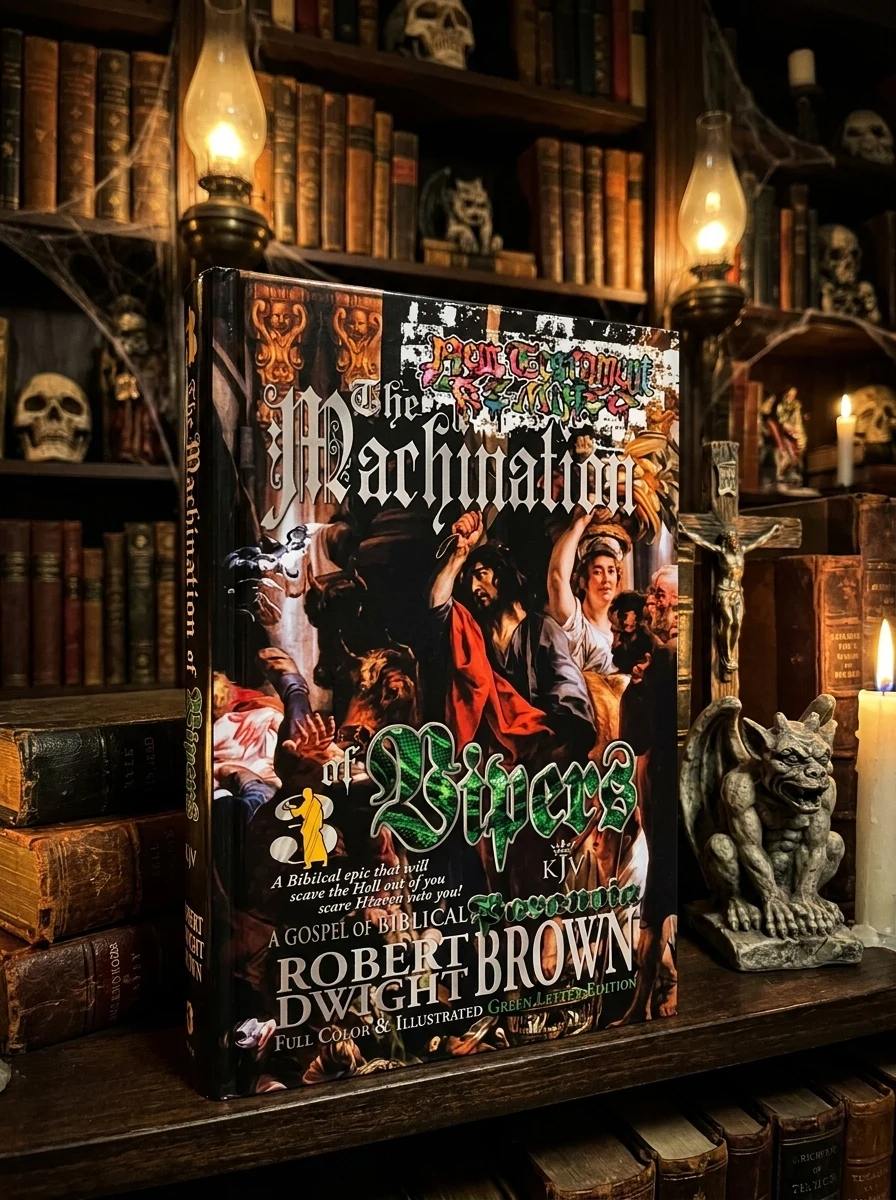
The Machination of Vipers
A horror novel designed to deepen religious devotion through terror and suspense.
Brown’s text operates at the intersection of spiritual inspiration and genre fiction. It utilizes elements of shock and gore to facilitate a closer relationship with Jesus Christ. The publisher frames this as a transcendent experience, challenging conventional boundaries between holy scripture and dark fiction. By referencing Hieronymus Bosch and Stephen King, the work positions itself within a lineage of unsettling artistic and literary traditions. Readers encounter a narrative that demands engagement with both fear and faith, offering a unique perspective on religious themes through the lens of horror.
Published by Allonymous Books in 2019, this work sits within the American market for supernatural fiction. It bridges the gap between traditional religious devotion and modern horror genres, appealing to readers interested in gothic themes that challenge conventional spiritual narratives through intense emotional and visceral storytelling.


📝 Description: The Machination of Vipers
💎 Our verdict on The Machination of Vipers
📖 Why choose it
Why this book is worth reading
This volume is intended for readers who seek a profound, visceral engagement with Christian theology through the lens of intense horror. It appeals to those interested in gothic and supernatural fiction that does not shy away from blasphemous or heretical themes. The book offers a unique perspective on religious devotion by utilizing shock, gore, and suspense to facilitate a closer relationship with Jesus Christ. It is designed for individuals who view fear and faith as interconnected experiences, inviting them to confront unsettling artistic traditions. Those comfortable with content described as provocative will find a transcendent journey that demands active emotional participation rather than passive consumption.
⭐ Reader reviews
Reader rating
The Machination of Vipers stands as a provocative experiment in blending spiritual inspiration with the mechanics of horror fiction. By leveraging shock and gore, Brown aims to deepen religious devotion, creating a narrative that operates more like a spiritual trial than standard genre entertainment. The work succeeds in its ambitious goal of challenging readers to engage with faith through terror, drawing clear lines to the unsettling traditions of Hieronymus Bosch and Stephen King. It is best suited for an audience willing to navigate heretical themes and intense emotional states. Readers seeking traditional horror without these specific spiritual undertones may find the experience alienating, but for the target demographic, it offers a distinct and challenging confrontation with divine mystery.