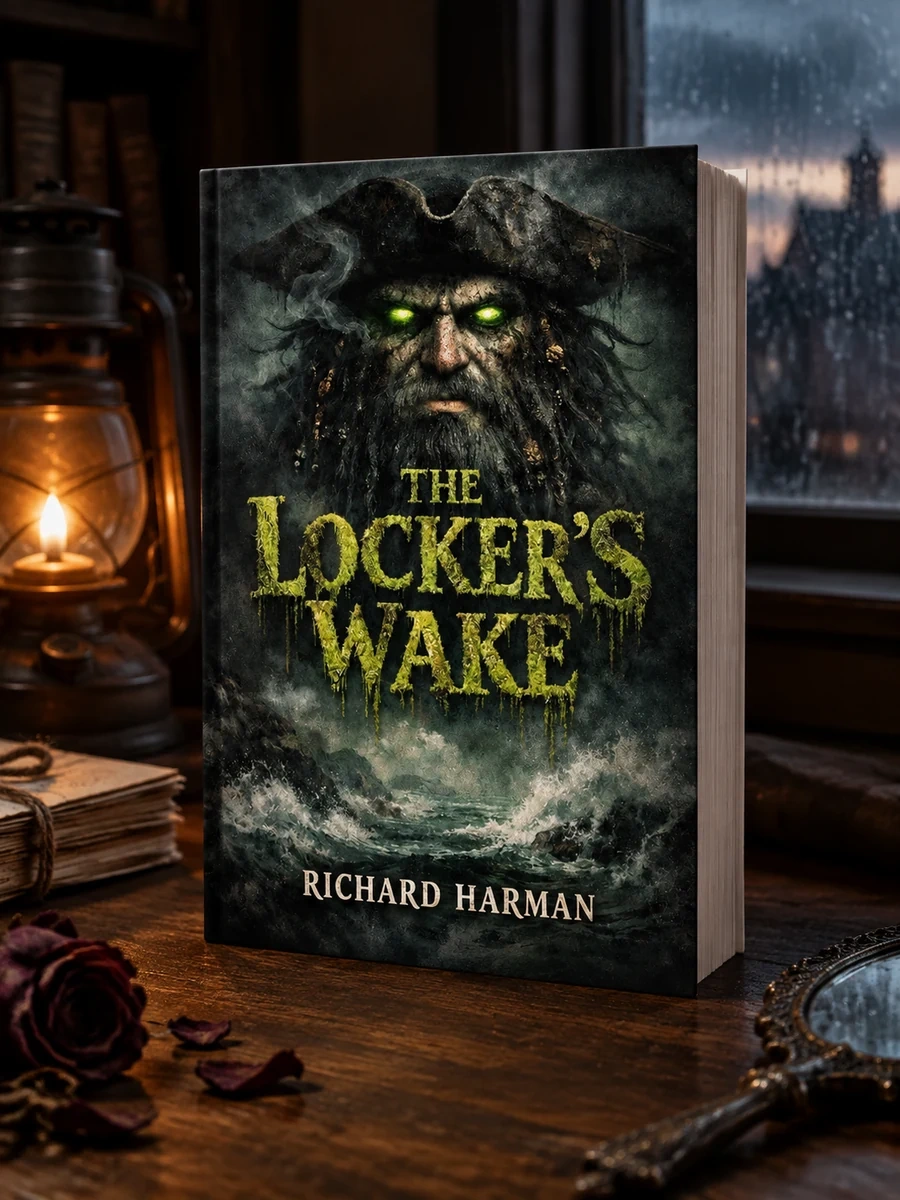
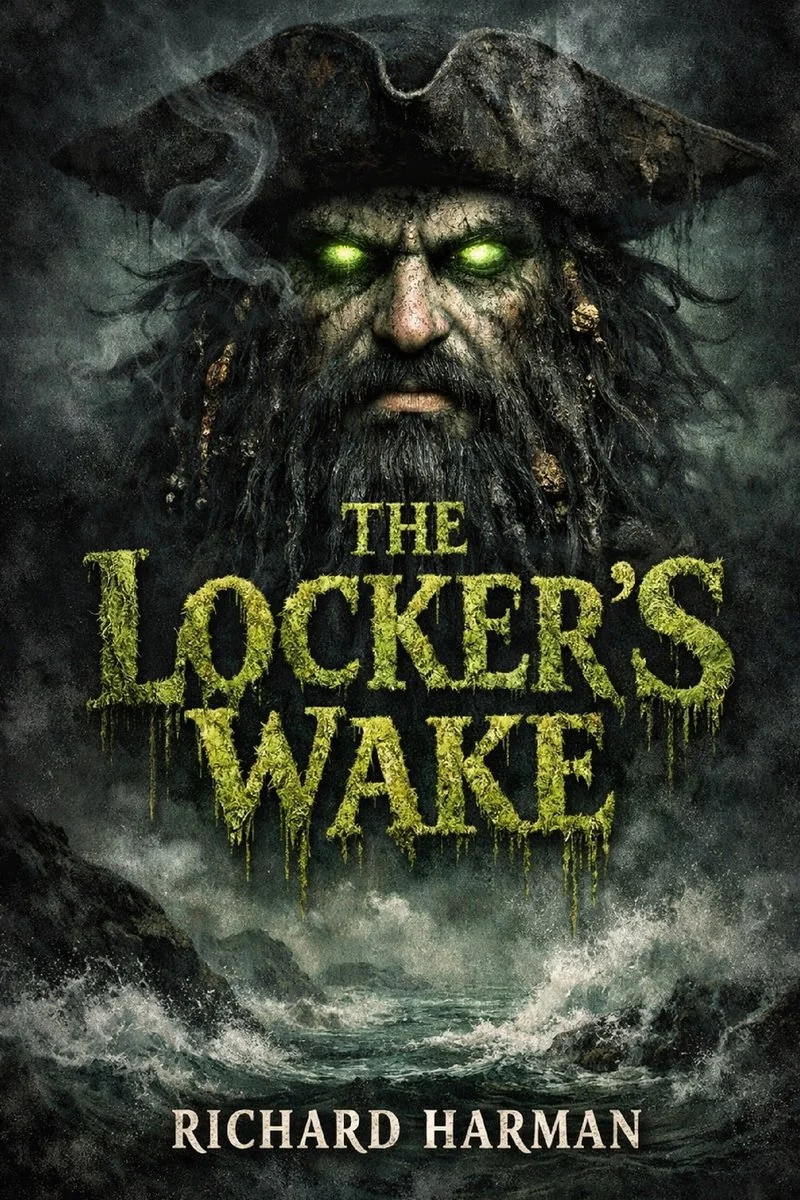
The Lockers Wake
A cursed pirate returns to claim victims through a haunting maritime phenomenon.
The narrative tracks Mae and Jonah as they investigate strange occurrences linked to Davy Jones' Locker. Green lights appear in calm waters and reflections. Ships lose direction without wind. Radios whisper like throats. Crewmen wake with rope marks and taste salt. The sea records people into a crew they did not join. A lantern selects victims. Disappearances mount. The coast becomes a trap. Mae and Jonah choose between curiosity and survival. Truth competes with sanity. Land offers safety but the deep pulls hard. Once the Locker knows your name, it needs only your breath to claim you. Blackbeard sails again.
The work engages with American coastal folklore and the historical figure of Edward Teach, known as Blackbeard. It reimagines the pirate's legacy within a contemporary supernatural framework, blending nautical tradition with modern dread.


📝 Description: The Lockers Wake
💎 Our verdict on The Lockers Wake
📖 Why choose it
Why this book is worth reading
Readers who appreciate atmospheric dread and the slow burn of psychological terror will find this narrative compelling. It suits those fascinated by historical horror elements and nautical folklore, offering a deep dive into the fear of being claimed by an ancient evil that records individuals into its eternal crew. The book appeals to fans of cosmic horror where the environment itself is hostile and manipulative, using green lights and whispering radios to create unease. It is ideal for those who prefer thematic depth over fast-paced action, inviting them to explore the boundary between sanity and the irresistible pull of the deep.
⭐ Reader reviews
Reader rating
Harman effectively constructs a tale of atmospheric dread where the ocean serves as both setting and antagonist. The narrative excels in describing the psychological terror of being recorded by an ancient evil, using subtle details like rope marks and the taste of brine to build tension. By focusing on the loss of direction and the manipulation of reality through green-tinged lights, the author creates a pervasive sense of entrapment. This work is best suited for readers who enjoy gothic traditions and historical horror elements that prioritize mood over resolution. It offers a chilling exploration of curiosity versus survival, making it a strong choice for enthusiasts of slow-burn maritime horror.