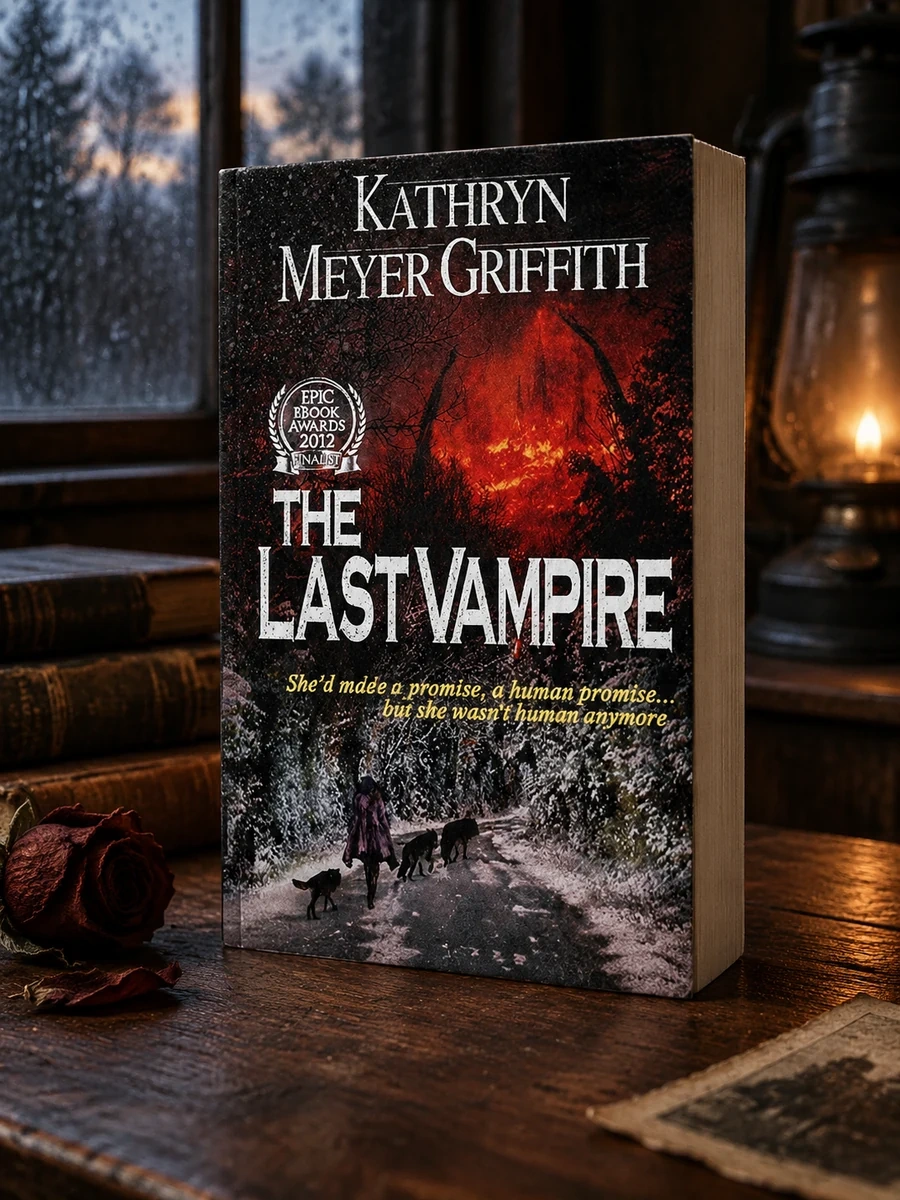

The Last Vampire
A vampire fights her own hunger in a world destroyed by plague and disaster.
The narrative tracks Emma's transformation from a grieving survivor into an undead being. She must contend with the physical toll of the plague that killed her kin and the psychological weight of her new nature. The plot emphasizes the scarcity of humans as prey, forcing vampires to turn on one another. Emma's journey is defined by her refusal to fully surrender to her instincts. The story highlights the desperation of a species losing its dominance over the earth.
This 2015 publication by Createspace Independent Publishing Platform reflects contemporary anxieties about climate change and pandemics. It reimagines vampire mythology through the lens of modern ecological collapse, placing the supernatural within a framework of global disaster rather than historical gothic tradition.


📝 Description: The Last Vampire
💎 Our verdict on The Last Vampire
📖 Why choose it
Why this book is worth reading
Readers who enjoy the intersection of supernatural lore and dystopian survival will find this narrative compelling. It offers a unique perspective on the vampire mythos by stripping away romanticism to focus on biological necessity and existential dread. Those interested in psychological horror where the monster is as dangerous as the environment will appreciate the internal conflict described. The book appeals to fans of dark fantasy who prefer grim, realistic consequences over traditional heroic tropes. It provides a stark look at desperation and the loss of dominance, making it suitable for those seeking atmospheric tension rather than action-packed adventures.
⭐ Reader reviews
Reader rating
Dominique delivers a gritty exploration of vampirism stripped of glamour, focusing instead on the visceral struggle for survival in a ruined world. The narrative effectively balances external catastrophe with internal psychological decay, highlighting Emma's battle to retain her humanity against overwhelming instinct. This approach suits readers who prefer atmospheric dread and moral ambiguity over conventional heroics. The setting serves as both backdrop and antagonist, enhancing the tension of the food scarcity crisis. While it lacks traditional lore, its strength lies in the raw depiction of desperation. It is best suited for audiences comfortable with bleak, thought-provoking horror that challenges genre expectations through a lens of ecological and social collapse.