
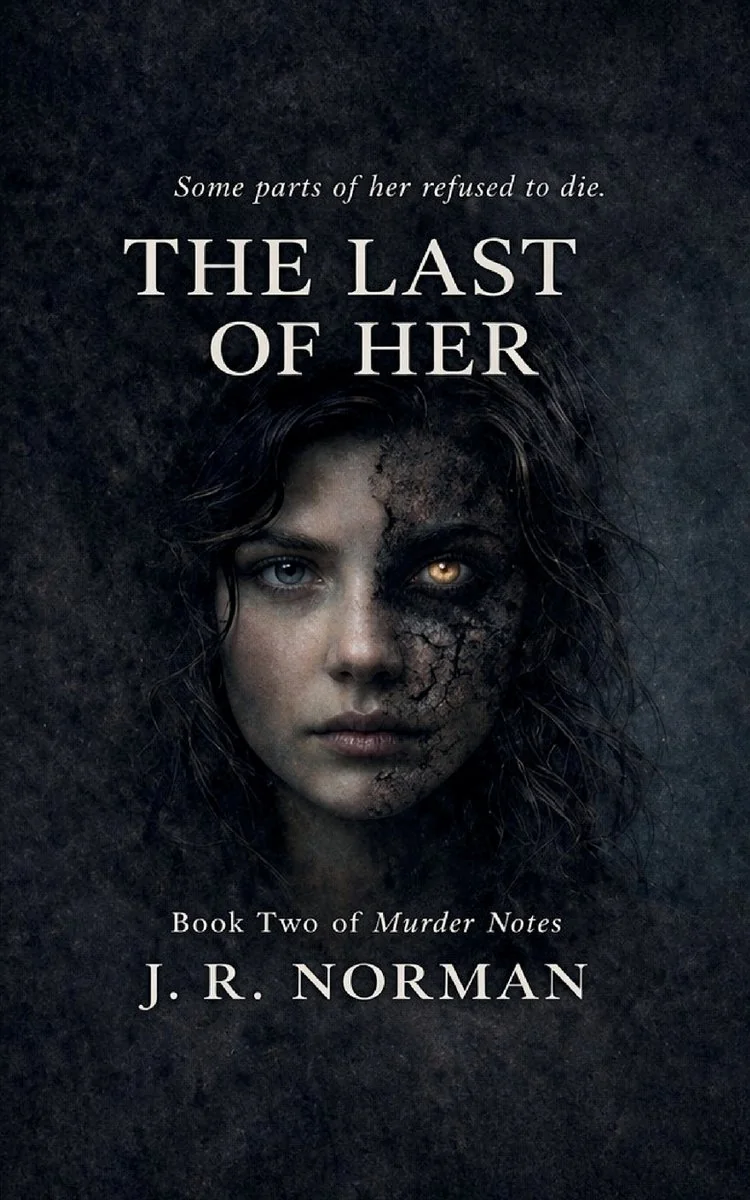
The Last of Her
A psychological horror novel about inheriting a haunted legacy from a deceased psychologist.
Meghan inherits Dr. Calla Thorne’s home after her death, expecting closure but finding only a persistent presence. The house feels watched, and small disturbances escalate into terrifying events. Meghan and Brandon uncover Calla’s true research: she was containing something dangerous. Symbols in the text reveal warnings about a force that grows when acknowledged. The narrative shifts from grief to survival as Meghan realizes the entity has learned and is now targeting her. This work examines how unresolved trauma can manifest as supernatural threat, blending psychological study with gothic horror elements.
This 2026 publication by Bloodroot Studios fits within the contemporary American horror genre. It draws on gothic traditions of haunted houses and inherited curses, updated through the lens of modern psychological research. The story reflects current interests in trauma studies and the supernatural intersection with professional expertise.


📝 Description: The Last of Her
💎 Our verdict on The Last of Her
📖 Why choose it
Why this book is worth reading
Readers who appreciate the intersection of academic inquiry and supernatural dread will find this narrative compelling. It offers a distinct exploration of how grief can manifest as tangible danger, appealing to those who prefer survival-driven plots over healing arcs. The book is ideal for audiences interested in the mechanics of containment and the consequences of acknowledging hidden horrors. By focusing on the failure of closure and the persistence of legacy, it provides a chilling study of how past traumas infiltrate present realities. Those who enjoy stories where intellectual curiosity leads to peril will appreciate the careful escalation from psychological unease to active threat.
⭐ Reader reviews
Reader rating
Norman effectively blends psychological study with gothic elements, creating a tense atmosphere where the house feels increasingly hostile. The narrative structure, which reveals Calla’s research as a containment effort rather than mere academic work, adds layers of suspense. The emphasis on symbols and warnings creates a sense of inevitable doom. This approach suits readers who enjoy slow-burn horror that relies on atmosphere and psychological pressure rather than jump scares. The portrayal of grief intersecting with active malevolence is handled with precision, making the threat feel personal and inescapable. It is a strong entry for fans of haunted house fiction who value thematic depth regarding trauma and survival.
You might also like
See more →


Have a question about this item?
Ask about the edition, condition, delivery or anything else — we reply by email or phone, usually within a day.
