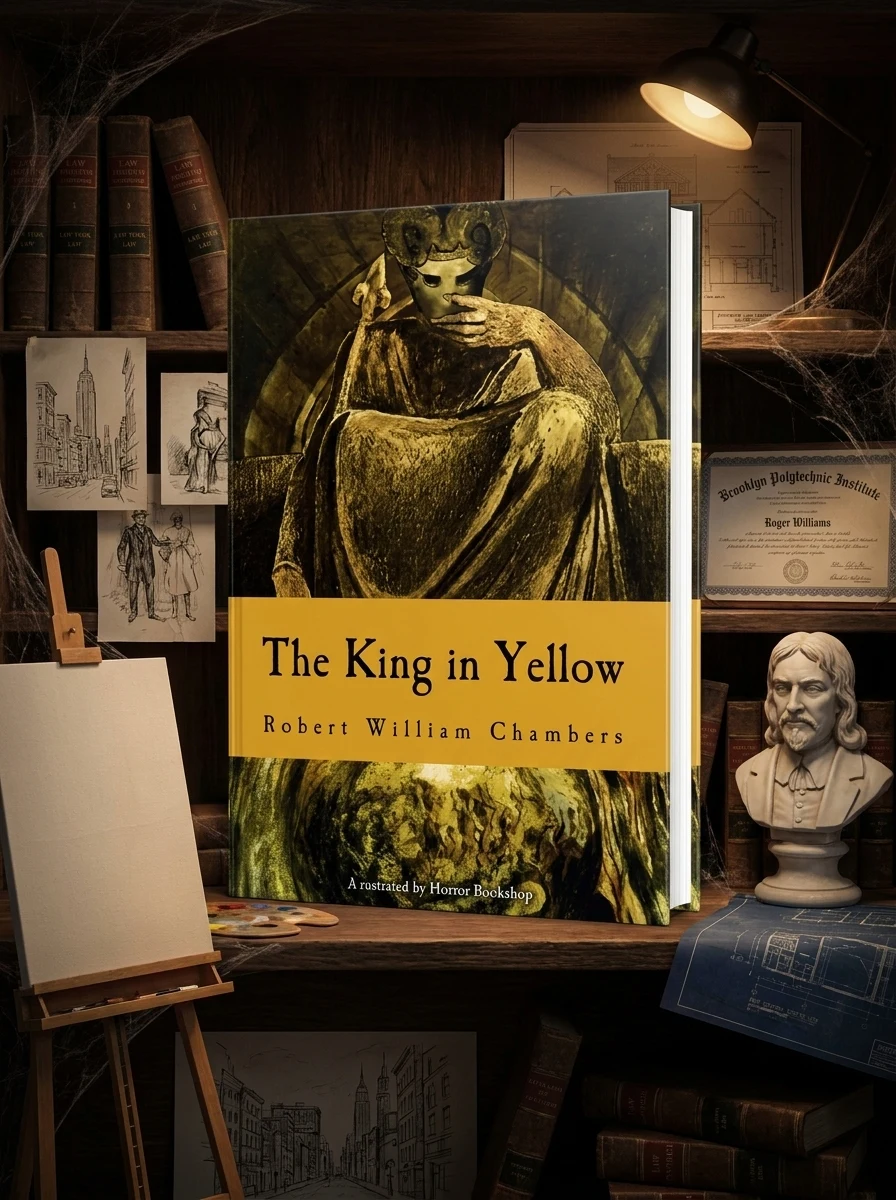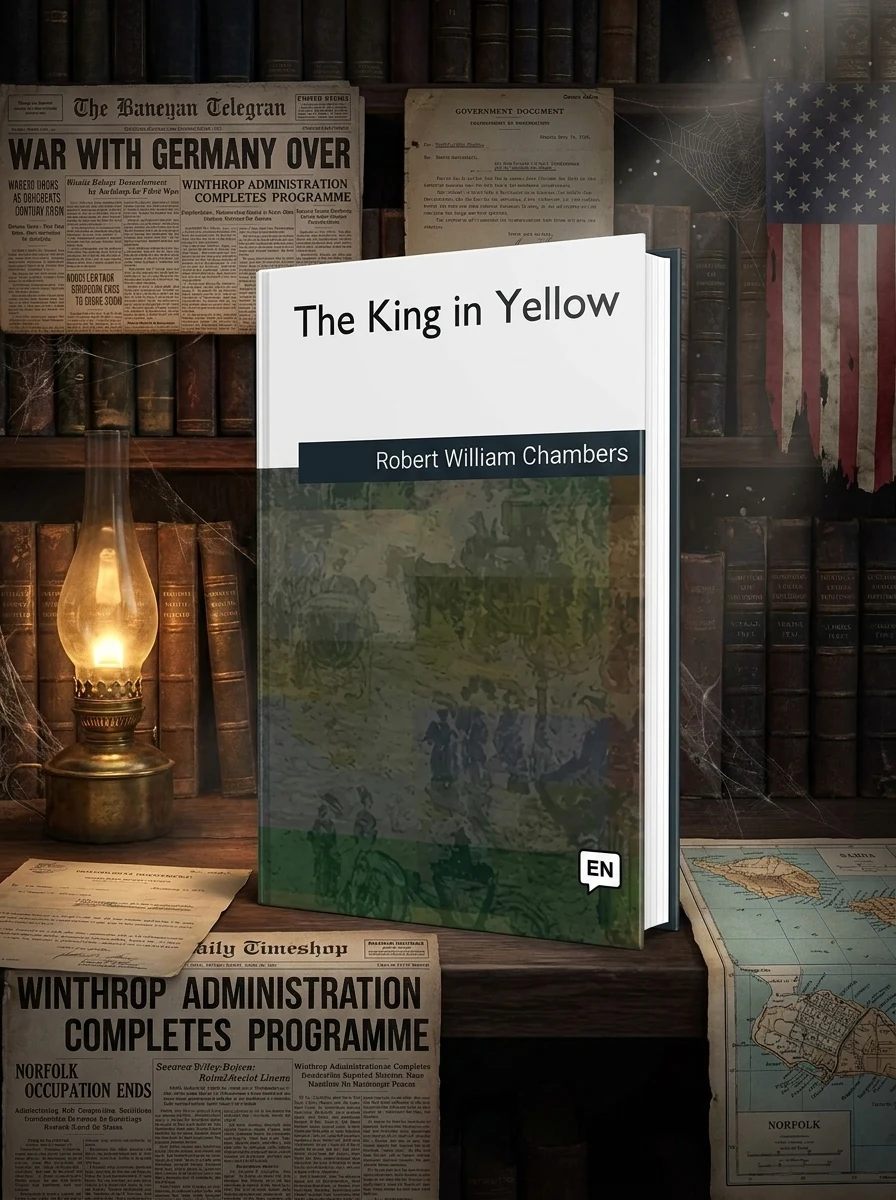

The King in Yellow
A collection of tales linking political history with the madness induced by a forbidden play.
The narrative begins in 1920, describing a United States that has settled tariff and labor questions. The country remains tranquil after a war with Germany over Samoan Islands. General Von Gartenlaube's forces face ridicule in New Jersey after occupying Norfolk. The text highlights the economic benefits of Cuban and Hawaiian investments. This political backdrop serves as a foundation for the introduction of the play The King in Yellow. Readers encounter characters who are drawn to this work despite its dangerous reputation. The structure moves from historical exposition to personal descent into insanity. Chambers uses this contrast to build tension. The book offers a unique blend of alternate history elements and supernatural horror. It requires patience from readers who prefer immediate action over slow-burn atmospheric dread.
The text is set in 1920, shortly after a war with Germany over Samoan Islands. It reflects on the administration of President Winthrop and the economic impact of investments in Cuba and Hawaii. The narrative captures a moment of apparent peace masking underlying societal fractures.


📝 Description: The King in Yellow
💎 Our verdict on The King in Yellow
📖 Why choose it
Why this book is worth reading
Readers seeking atmospheric dread over immediate action will find this collection deeply rewarding. It appeals to those interested in the intersection of political history and supernatural horror, offering a unique lens through which to view madness induced by forbidden knowledge. The book is ideal for fans of layered narratives who appreciate slow-burn tension and ambiguous resolutions. Those drawn to gothic traditions and psychological decay will enjoy how Chambers explores a society rotting from within. It serves as a crucial text for understanding the evolution of cosmic horror, providing insight into how early twentieth-century writers used alternate history elements to heighten existential fear.
⭐ Reader reviews
Reader rating
Chambers masterfully constructs a world where political tranquility masks profound supernatural terror. The narrative effectively juxtaposes historical exposition with personal insanity, creating a unique blend of alternate history and eerie dread. While the slow-burn approach may deter readers seeking straightforward action, it precisely suits those who appreciate atmospheric tension and psychological complexity. The exploration of madness through a forbidden play remains a compelling device for examining cosmic horror. This collection stands as a significant contribution to weird fiction, offering a disturbing yet intellectually stimulating experience for patients willing to endure its ambiguous tone.