

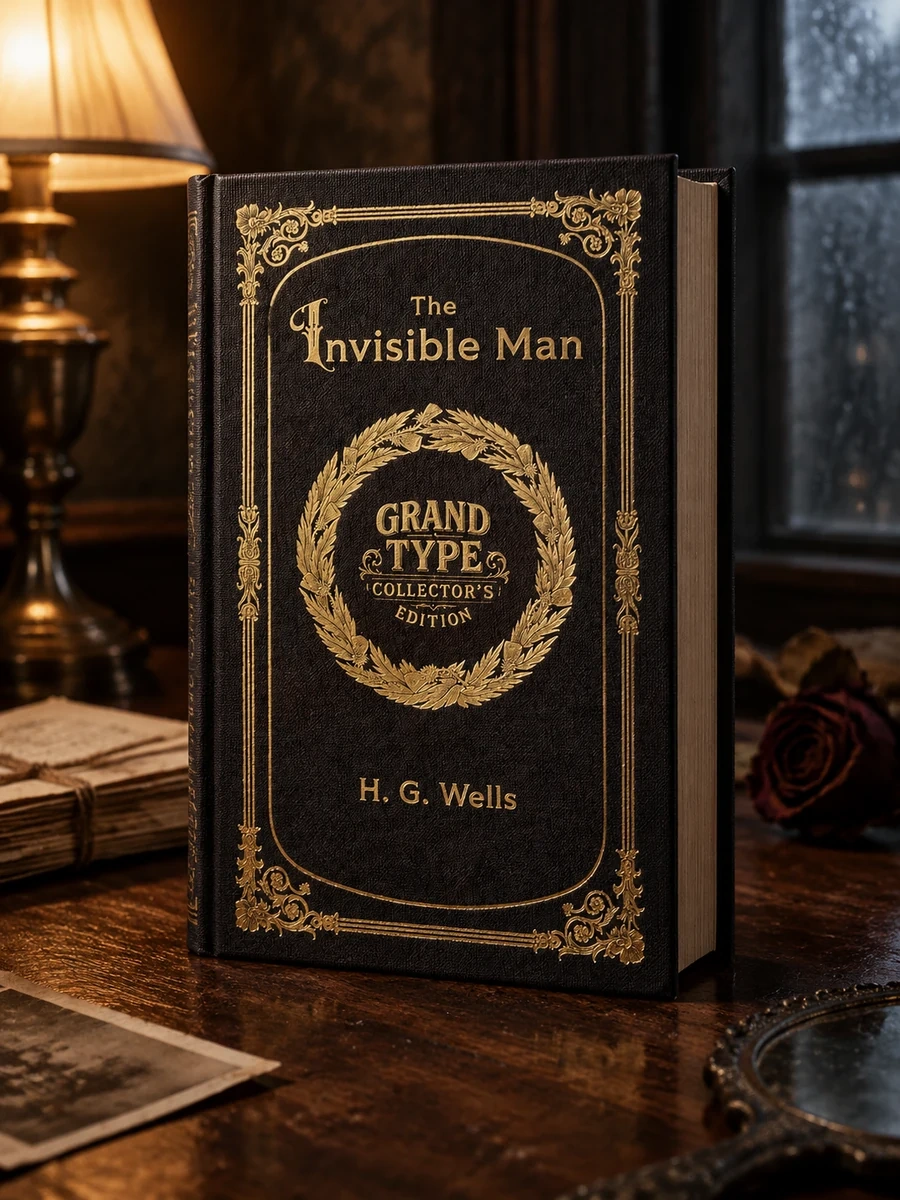
The Invisible Man
A classic science fiction tale about a man trapped by his own invisible creation.
This narrative follows a scientist whose experiment renders him invisible, leading to a descent into terror and isolation. Wells, a key figure in early science fiction, uses this premise to explore the dangers of scientific hubris. The story is not merely about invisibility but about the psychological unraveling that accompanies it. It reflects late nineteenth-century anxieties regarding technology and human nature. The plot moves from discovery to disaster, showing how knowledge can become a curse when stripped of moral constraint.
Published in 1897, this work emerged during the late Victorian era, a time of rapid scientific advancement. It reflects contemporary fears about the misuse of technology and the unknown consequences of human ingenuity. The book sits within the tradition of scientific fantasy, bridging rational speculation and supernatural horror.


📝 Description: The Invisible Man
💎 Our verdict on The Invisible Man
📖 Why choose it
Why this book is worth reading
This book is essential for readers who appreciate the intersection of classic science fiction and gothic horror traditions. It offers a profound exploration of scientific hubris, demonstrating how knowledge becomes a curse when divorced from moral constraints. Those interested in psychological unraveling and the dangers of unchecked experimentation will find its themes deeply resonant. The narrative serves as a stark warning against the destructive potential of human ambition, appealing to audiences who enjoy stories where scientific concepts drive the plot toward terrifying outcomes rather than lighthearted adventure.
⭐ Reader reviews
Reader rating
Wells masterfully frames his protagonist not as a hero but as a victim trapped within his own creation, creating a compelling study of isolation and terror. The text excels in examining the psychological consequences of invisibility, effectively blending scientific fantasy with gothic dread. It suits readers who favor narratives questioning the boundaries of human knowledge and the perils of early technological optimism. The gradual revelation of the protagonist's condition maintains tension throughout, offering a significant look at late nineteenth-century anxieties about technology and human nature without relying on contemporary thriller tropes.
📖 Read on the blog
✍️ More books by this author H G Wells







🏛 Books from this publisher General Press






You might also like
See more →

Have a question about this item?
Ask about the edition, condition, delivery or anything else — we reply by email or phone, usually within a day.
