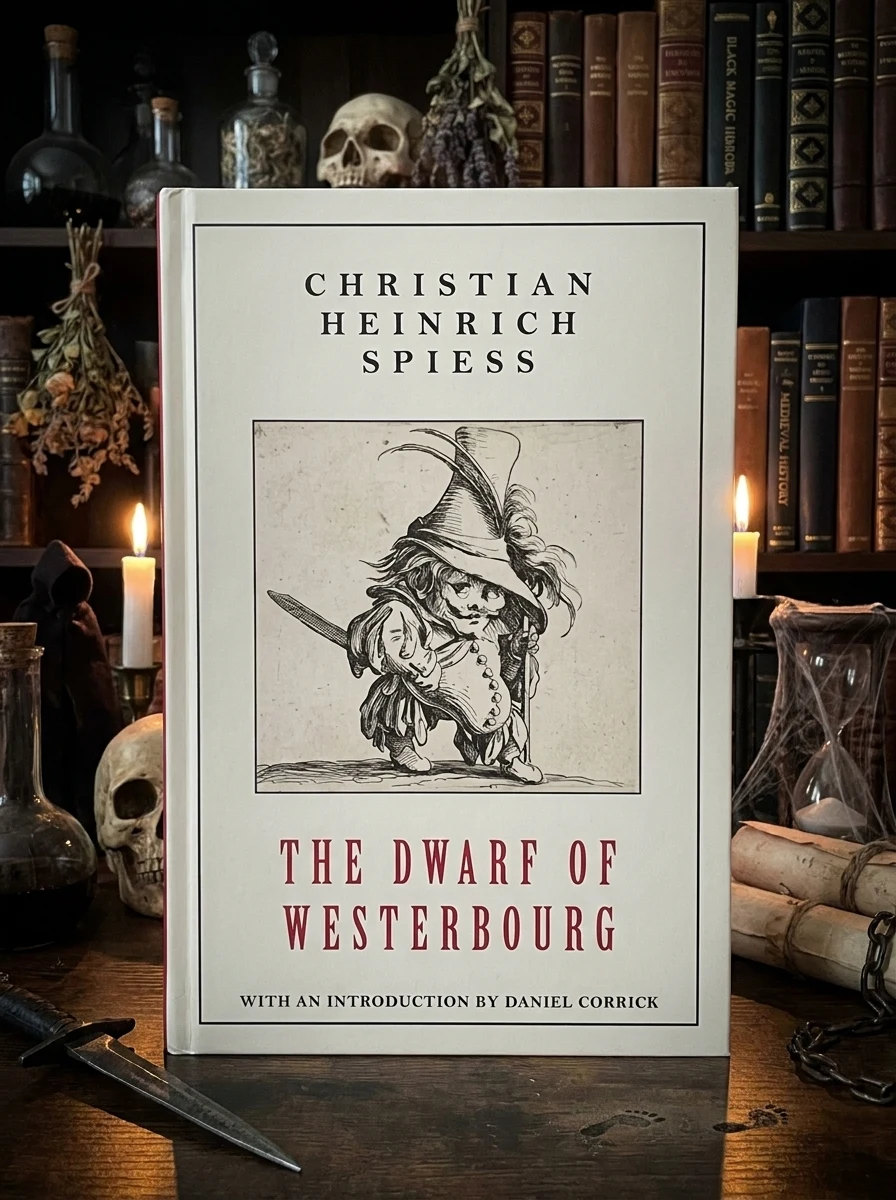
The Dwarf of Westerbourg
A thirteenth century tale of a knight and a dwarf phantom in a spiral of black magic
This narrative follows Rodolphe of Westerbourg through a series of gruesome killings and horrid happenings. The story relies on the dynamic between the knight and the dwarf phantom Peter to drive its plot forward. Spiess utilizes the setting of the thirteenth century to ground the supernatural elements in a specific historical context. The text avoids modern psychological explanations, instead leaning into the raw power of black magic. This approach creates a distinct tone that separates it from contemporary horror novels. The pacing accelerates as the characters descend further into their fate. Readers will encounter a consistent theme of despair and strange adventure throughout the pages.
Set in the thirteenth century, this work reflects early gothic and supernatural fiction traditions. It draws on medieval themes of knights and phantoms. The narrative style aligns with historical horror literature that emphasizes bizarre adventures and dark atmospheres over realistic plot structures.


📝 Description: The Dwarf of Westerbourg
💎 Our verdict on The Dwarf of Westerbourg
📖 Why choose it
Why this book is worth reading
Readers who appreciate the raw power of black magic and the atmospheric dread of early gothic fiction will find this text compelling. It is ideal for those interested in historical horror where supernatural elements are grounded in a specific medieval setting rather than modern psychological explanations. The narrative offers a continuous descent into darkness, appealing to enthusiasts of dark fantasy and tales involving knights and phantoms. Those seeking uplifting tales or straightforward romances will find it unsuitable, but fans of gruesome killings and strange adventures will enjoy the whirlwind of bizarre events that drive the plot forward.
⭐ Reader reviews
Reader rating
Spiess crafts a bizarre story with precision, utilizing supernatural fiction tropes to create an intense atmosphere of dread. The narrative relies heavily on the dynamic between Rodolphe and the dwarf phantom Peter, avoiding character development in favor of accumulating strange adventures. This structure supports the theme of inevitable doom effectively. The book suits readers who enjoy dark fantasy and historical horror with elements of the macabre. It does not offer light entertainment but delivers a consistent tone of despair. By leaning into the raw power of black magic, Spiess separates this work from contemporary horror novels, making it a distinct and necessary read for scholars of early horror literature.
📖 Read on the blog
✍️ More books by this author Christian Heinrich Spiess


🏛 Books from this publisher Snuggly Books
You might also like
See more →


Have a question about this item?
Ask about the edition, condition, delivery or anything else — we reply by email or phone, usually within a day.
