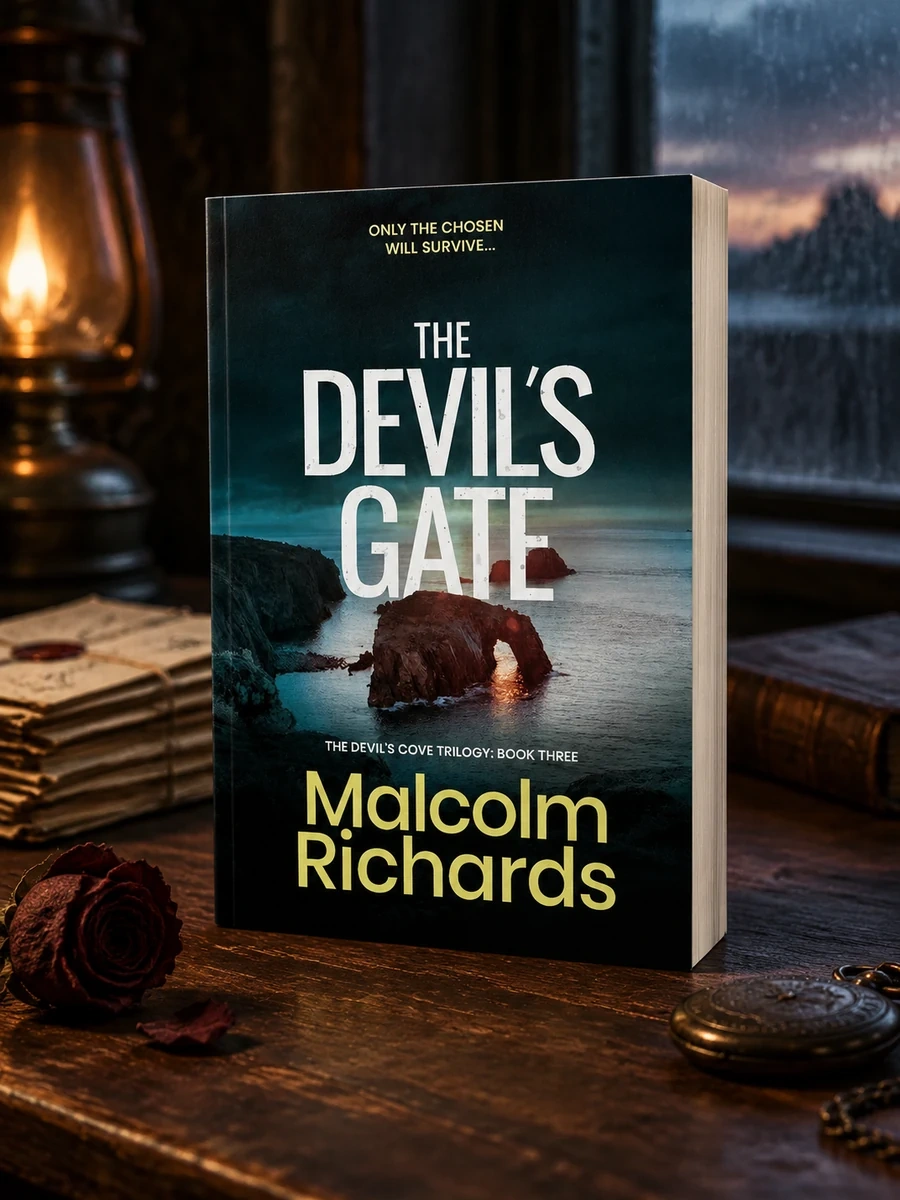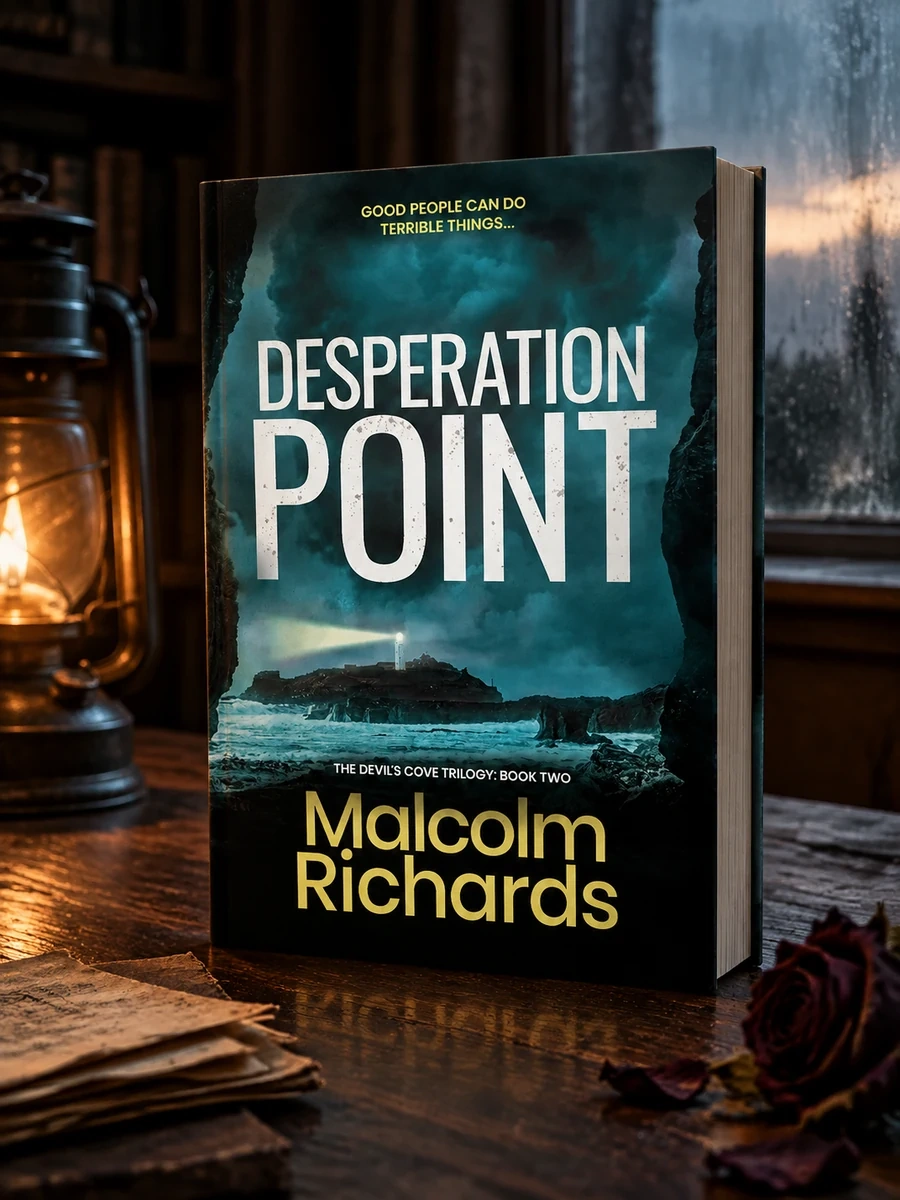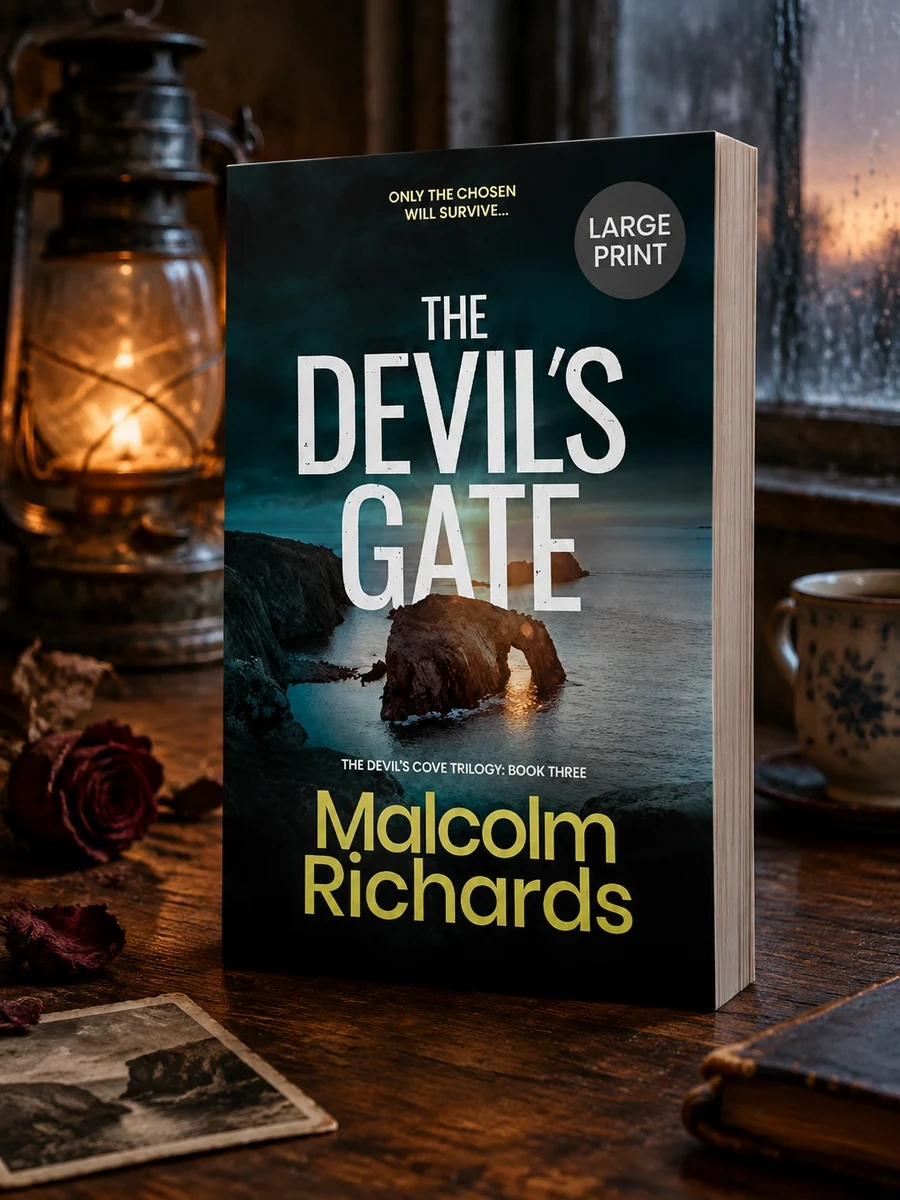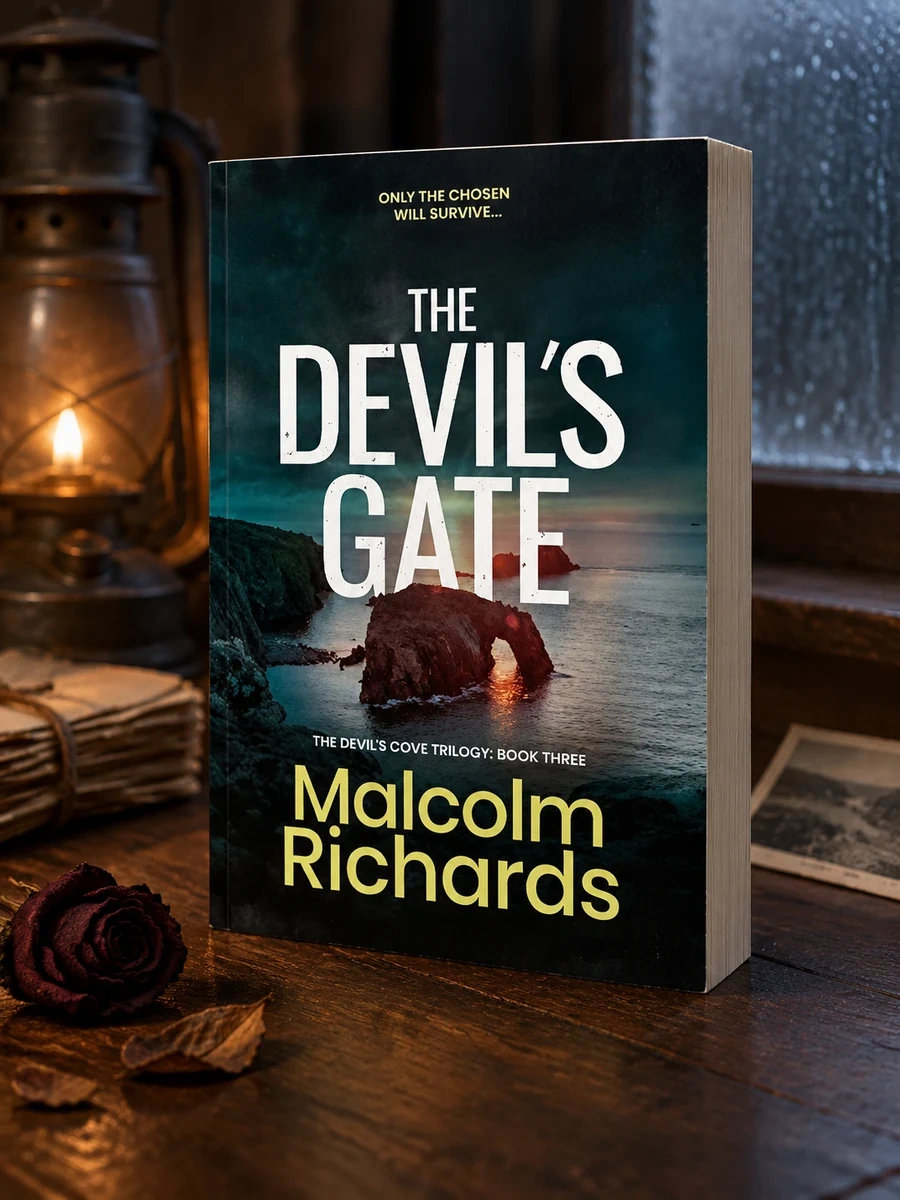

The Devil's Gate: A Chilling Thriller of Murder and Manipulation
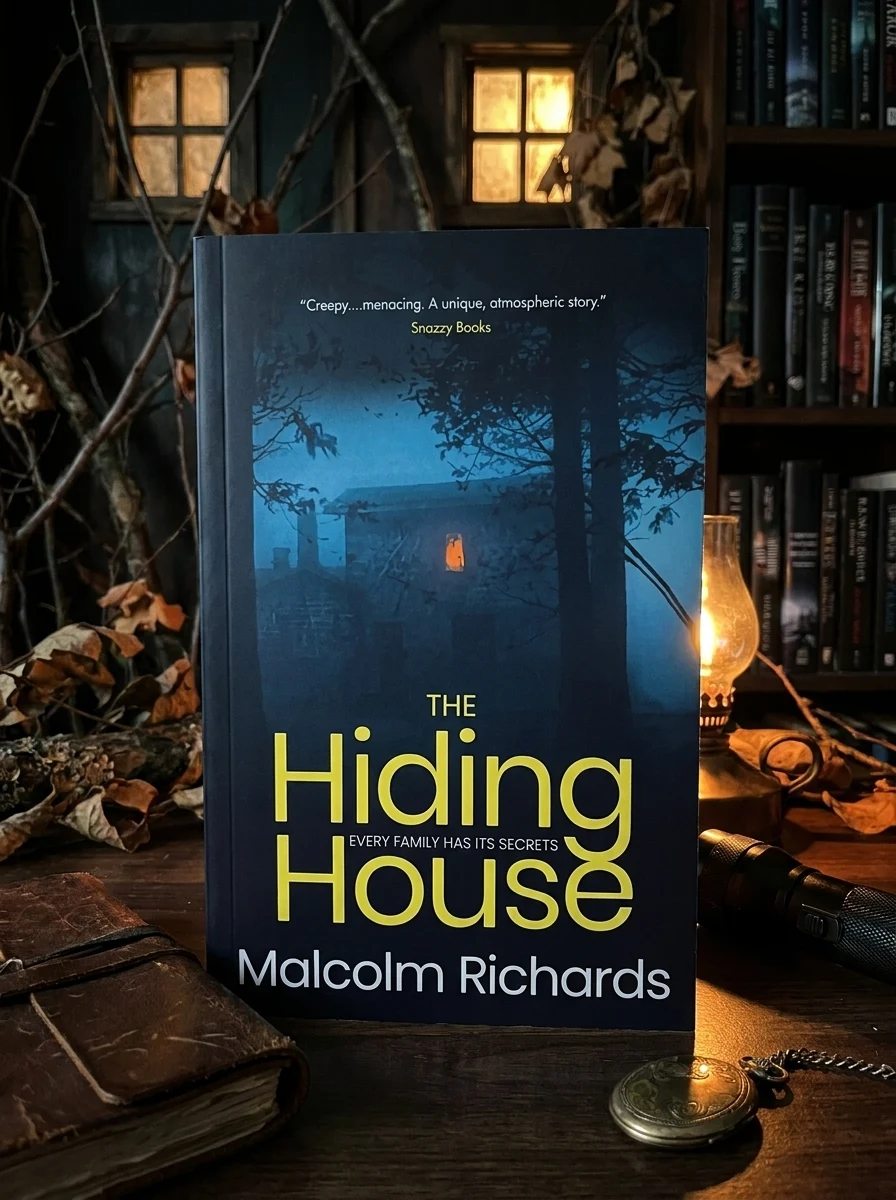
The final chapter of the Devil's Cove Trilogy focuses on cult violence during a local festival.
Richards examines the fragile state of Devil's Cove after recent trauma. The narrative does not rely on supernatural monsters but rather on human malice and organized fanaticism. The Dawn Children return with a specific agenda that disrupts the community's attempt at normalcy. Carrie and Nat represent two different responses to tragedy, one seeking stability and the other seeking retribution. Their paths converge as the cult executes their final scheme. The book provides a close look at how trauma affects family structures and individual mental health in the face of external threats.
The story is set in a small Cornish town during its annual Devil's Day festival. This tradition provides the backdrop for the conflict between the community and the Dawn Children cult. The narrative draws on themes of local folklore and rural isolation common in British horror fiction.


📝 Description: The Devil's Gate: A Chilling Thriller of Murder and Manipulation
💎 Our verdict on The Devil's Gate: A Chilling Thriller of Murder and Manipulation
📖 Why choose it
Why this book is worth reading
Readers who appreciate character-driven thrillers with deep psychological undercurrents will find value in this narrative. It offers a rigorous examination of how trauma fractures family structures and individual mental health when faced with external, organized threats. Those interested in the mechanics of cult dynamics and the manipulation of community norms during public events will gain insight into the fragile state of social cohesion. The book appeals to those who prefer steady tension over melodrama, providing a close look at human malice rather than relying on supernatural monsters. It is ideal for readers seeking intense psychological pressure and a realistic portrayal of vengeance versus stability.
⭐ Reader reviews
Reader rating
Richards delivers a compelling conclusion that prioritizes human malice over supernatural spectacle. The narrative effectively contrasts the festive atmosphere of the local festival with the dark, calculated movements of the Dawn Children cult. By focusing on Carrie’s attempt at stability and Nat’s path of retribution, the author explores complex responses to tragedy. The text avoids melodrama, opting for a steady, deadly build that highlights the impact of fanaticism on family units. This approach suits readers who enjoy gothic horror elements blended with psychological thriller dynamics. It is best appreciated by those who tolerate intense emotional weight and prefer grounded, character-focused stories over lighthearted mysteries or conventional monster hunts.