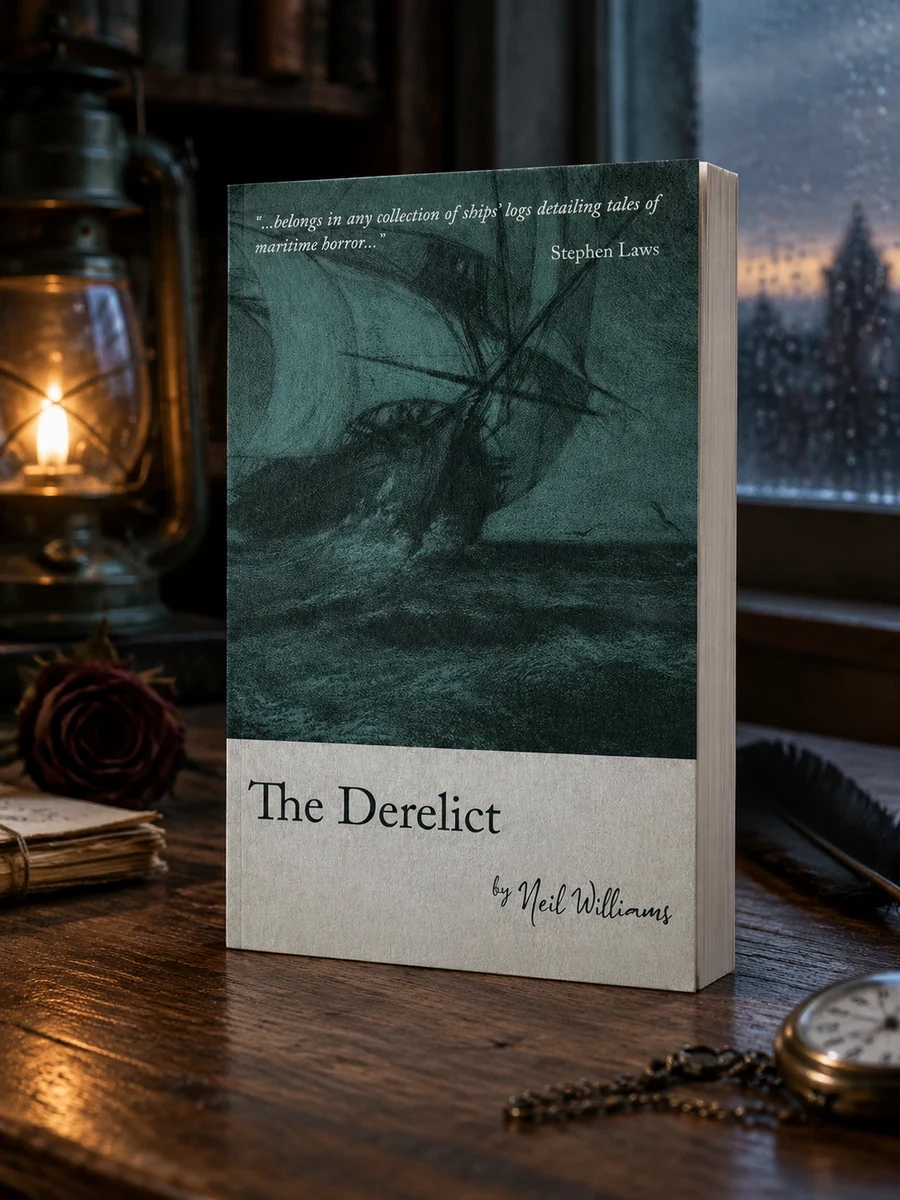
The Derelict
A doomed maritime voyage inspired by Dracula's Demeter chapter.
This novel functions as a homage to early horror traditions. Williams channels the atmosphere of Hodgson and Lovecraft to create a narrative where survival is impossible. The story centers on a crew whose fate is sealed at the start of their journey. By referencing Stoker’s Demeter, the author establishes a framework of inescapable terror. The plot avoids traditional heroism, focusing instead on the psychological unraveling of those involved. This approach aligns with the spirit of the time period depicted. Readers will find a story that prioritizes mood and inevitable doom over action or redemption. The work stands as a deliberate exercise in genre fidelity.
The Derelict sits within the gothic and supernatural fiction traditions established by William Hope Hodgson and H. P. Lovecraft. It draws directly from Bram Stoker’s Dracula, specifically the Demeter episode. The work also nods to Coleridge’s Ancient Mariner. This places the book firmly in the lineage of early twentieth-century horror literature.


📝 Description: The Derelict
💎 Our verdict on The Derelict
📖 Why choose it
Why this book is worth reading
Readers who appreciate the atmospheric weight of classic cosmic dread and maritime tragedy will find this book deeply rewarding. It is ideal for those seeking a narrative that honors the historical roots of horror fiction, offering a stark contrast to lighter contemporary fare. The novel appeals to audiences interested in the psychological unraveling of characters facing inescapable fate, rather than those looking for heroism or redemption. By focusing on isolation and doom, it provides a grim but authentic experience of supernatural horror. Fans of early horror traditions and gothic fiction will value its fidelity to genre conventions and its exploration of inevitable destruction without modern sensationalism.
⭐ Reader reviews
Reader rating
Neil Williams delivers a resolute tribute to early twentieth-century gothic fiction in The Derelict. By mirroring the voyage of Stoker’s Demeter, he creates a framework of inescapable terror where survival is impossible from the start. The narrative structure links past events to present doom, avoiding traditional heroism to focus on psychological unraveling. This approach suits readers who enjoy classic cosmic dread and maritime tragedy over modern psychological thrillers. Williams demonstrates skill in adapting older literary forms, such as journals and mad narrators, for contemporary audiences. The work stands as a deliberate exercise in genre fidelity, prioritizing mood and atmosphere. It is best appreciated by those seeking a stark, grim account of supernatural horror that remains true to its historical roots.
📖 Read on the blog
🏛 Books from this publisher Black Shuck Books




You might also like
See more →



Have a question about this item?
Ask about the edition, condition, delivery or anything else — we reply by email or phone, usually within a day.
