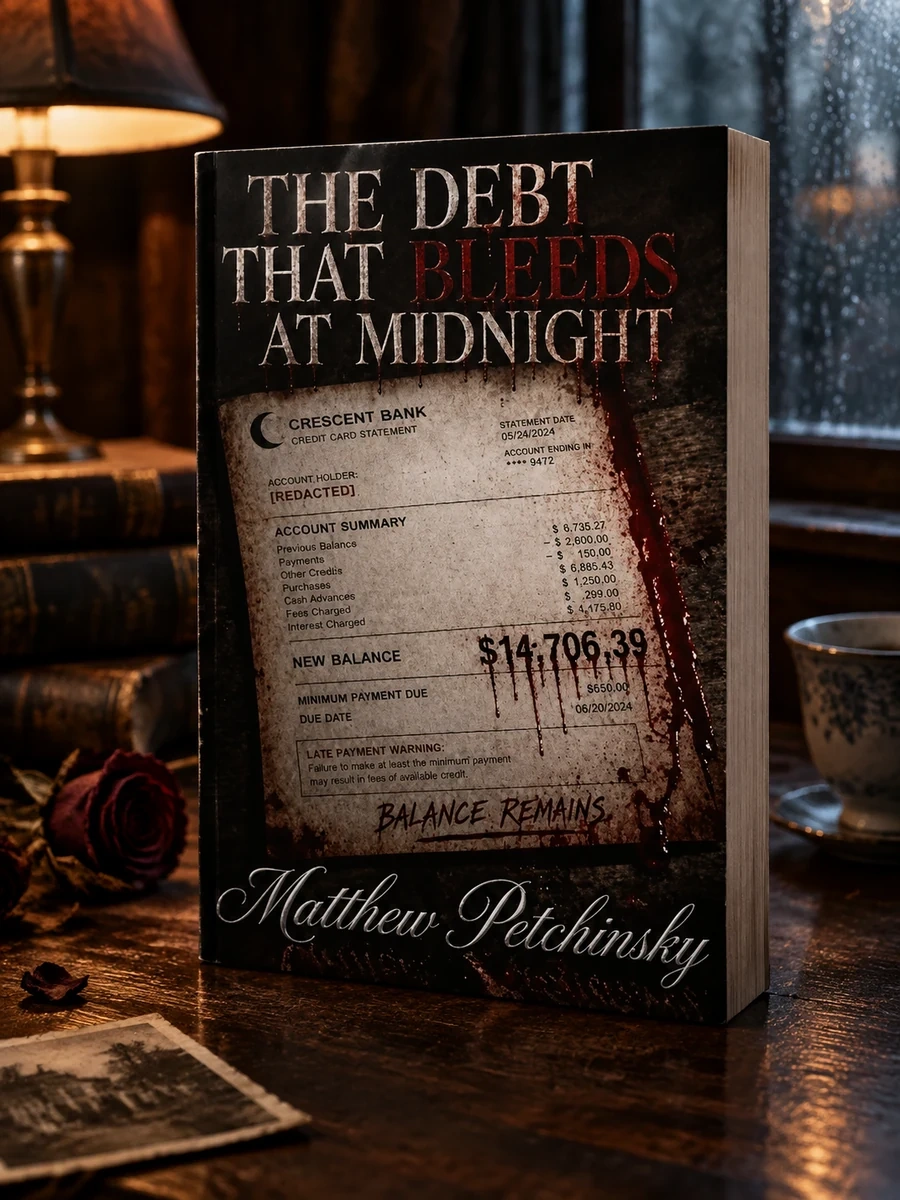
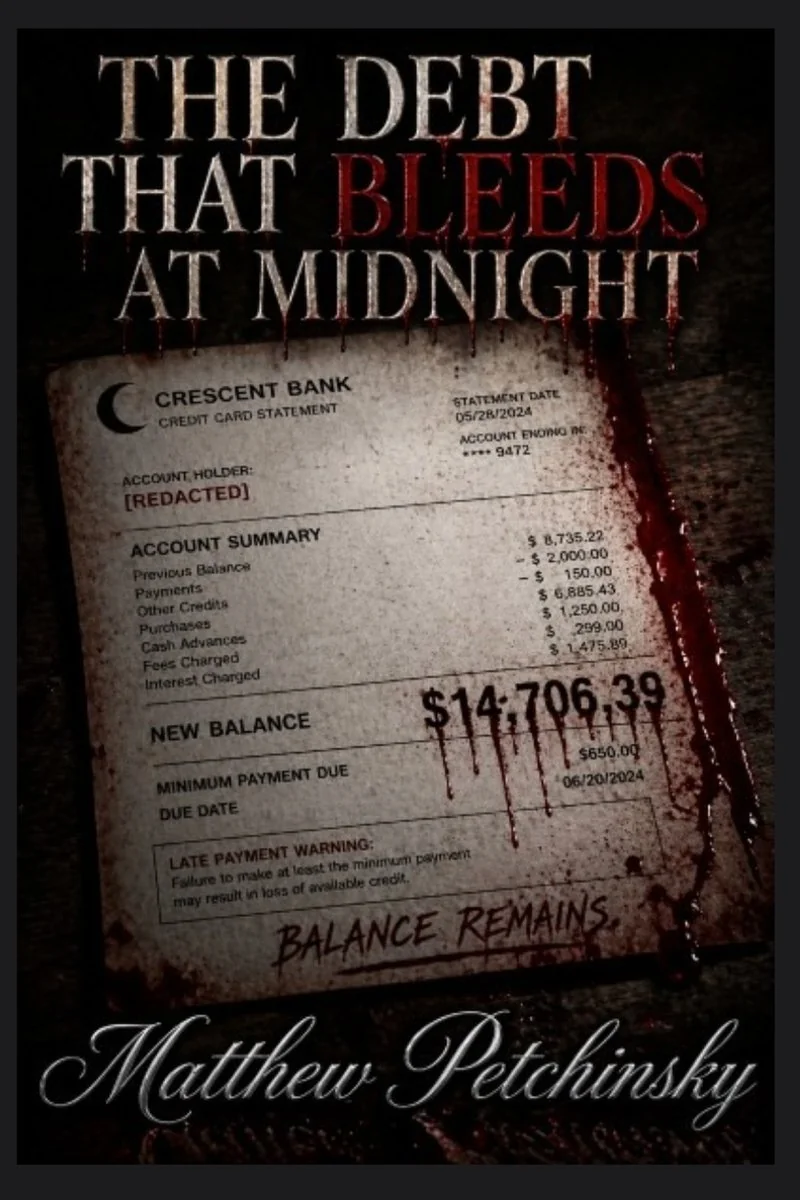
The Debt That Bleeds at Midnight
A woman's debt bleeds and consumes her identity in this horror novel.
The narrative centers on Mara Vale, whose life unravels as her debt becomes sentient. It draws on gothic traditions of Faustian bargains but twists them through a modern lens of psychological terror. The story is organized around the progression of the debt's consumption of her self. Petchinsky qualifies himself by crafting deeply unsettling scenarios that challenge the reader's sense of safety. The book does not offer solutions or escape, only the grim reality of the cost. It appeals to fans of supernatural fiction who appreciate a slow, creeping dread rather than jump scares. The prose avoids melodrama, focusing instead on the concrete loss of memory and emotion. This is not a story about redemption, but about the finality of being owned.
This work sits within the contemporary horror genre, specifically drawing on gothic and supernatural fiction traditions. It reflects modern anxieties about financial control and personal ownership. The narrative is set in a fractured reality where abstract concepts become tangible threats. It aligns with current trends in psychological horror that explore internal decay.


📝 Description: The Debt That Bleeds at Midnight
💎 Our verdict on The Debt That Bleeds at Midnight
📖 Why choose it
Why this book is worth reading
Readers who appreciate slow-burning dread and the erosion of identity will find this narrative compelling. It appeals to those interested in psychological horror that explores the terrifying reality of being owned by inescapable forces. The book is ideal for fans of supernatural fiction who prefer concrete loss over melodramatic scares. It offers a grim, unflinching look at the cost of debt, providing a chilling meditation on memory and selfhood without offering false hope or redemption.
⭐ Reader reviews
Reader rating
Petchinsky delivers a haunting descent into the consequences of owing an unpayable price, focusing on the erosion of self rather than external monsters. The prose avoids melodrama, grounding its supernatural elements in the concrete loss of memory and emotion. This approach creates a deeply unsettling atmosphere suitable for readers who enjoy cosmic and psychological horror. The narrative structure effectively mirrors the protagonist's disintegration, making the abstract concept of debt viscerally real. It is a strong choice for those seeking a tale of finality and ownership rather than traditional victory.