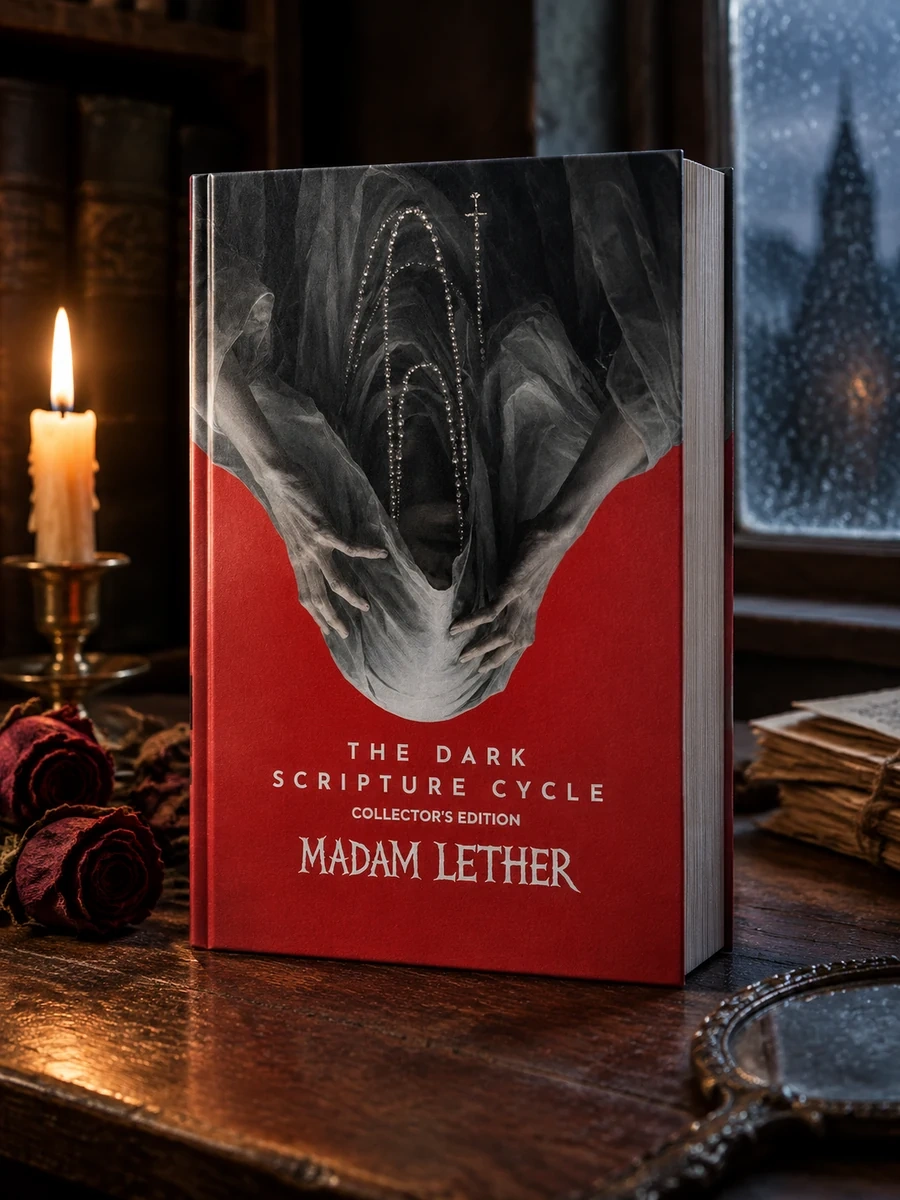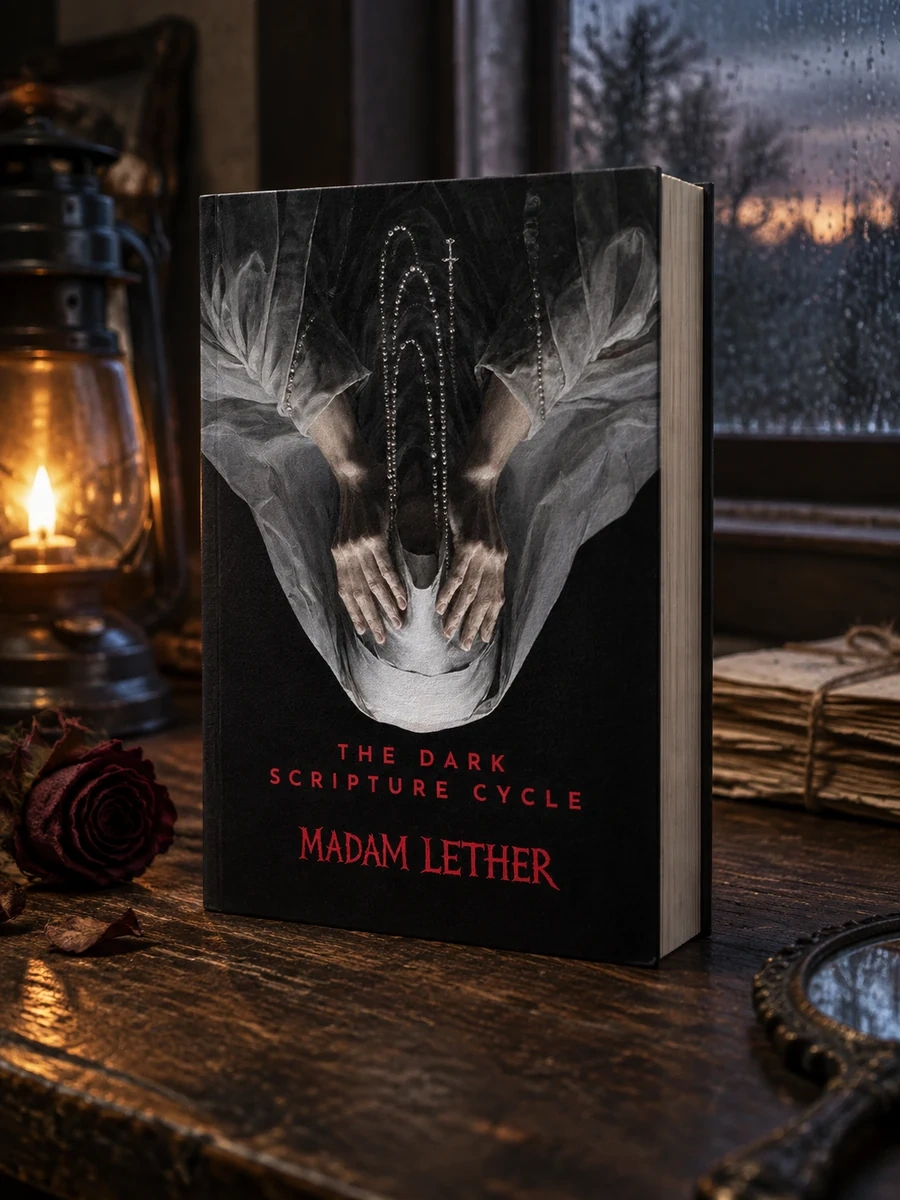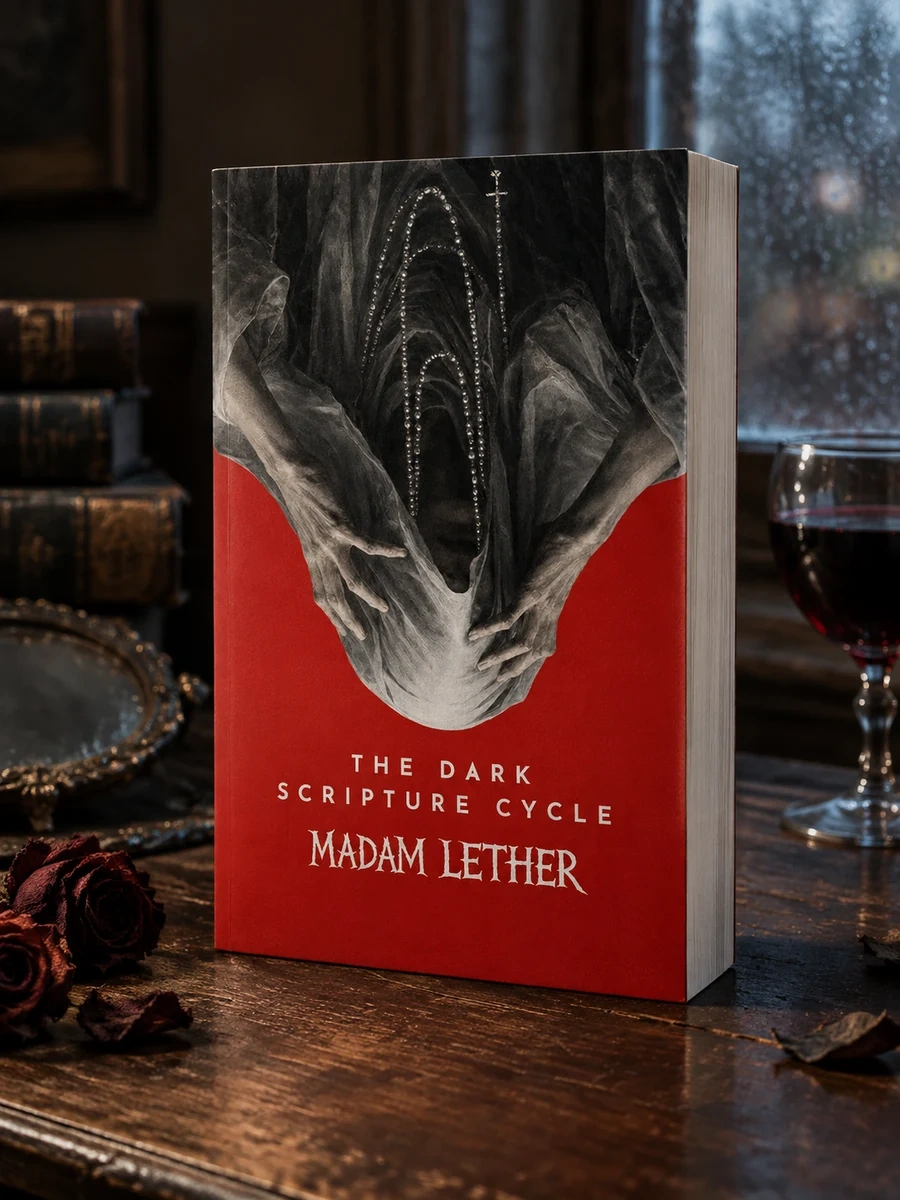
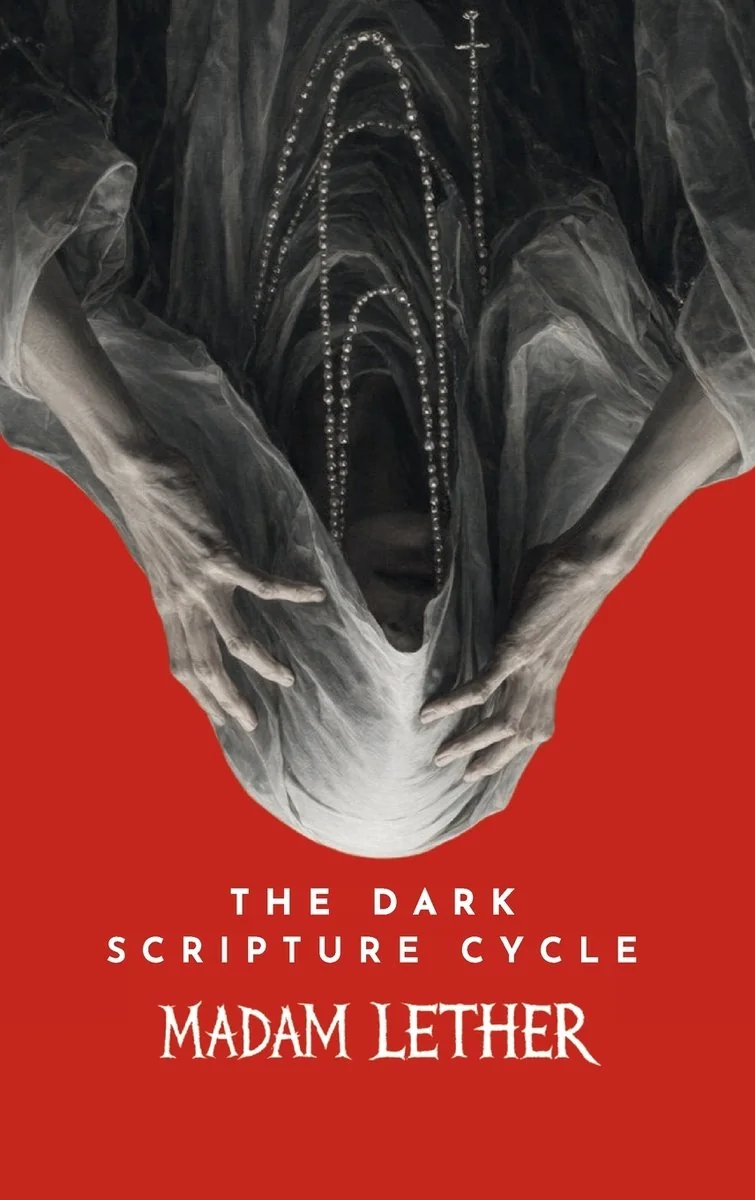
The Dark Scripture Cycle
Five interconnected stories about faith becoming a dangerous infection.
Lether constructs a narrative framework where scripture operates as a living parasite. The stories move from cloistered religious settings to scientific laboratories, showing how different environments react to supernatural contact. A convent in decay, a village singing to stone structures, and a shrine recording past deaths all demonstrate the physical toll of divine interaction. The final story shifts focus to an archivist afterlife, suggesting that judgment is merely storage. This progression highlights the terrifying reality that something is always listening.
The Dark Scripture Cycle sits within the tradition of biblical and cosmic horror. It draws on religious iconography and gothic architecture to create a modern narrative of theological terror. The work engages with concepts of martyrdom, liturgy, and the supernatural to challenge traditional views of salvation.


📝 Description: The Dark Scripture Cycle
💎 Our verdict on The Dark Scripture Cycle
📖 Why choose it
Why this book is worth reading
Readers seeking profound theological dread and complex narratives will find this collection compelling. It appeals to those who enjoy liturgy acting as a delivery system for terror rather than salvation. The book offers a unique perspective where sacred texts become vectors of contamination, blurring the line between divine revelation and biological decay. Those interested in gothic fiction and supernatural horror will appreciate the intricate connections between belief and physical deterioration. It is ideal for audiences who want to explore how different environments react to supernatural contact without resorting to straightforward religious instruction or lighthearted tales.
⭐ Reader reviews
Reader rating
Lether constructs a terrifying narrative framework where scripture operates as a living parasite, effectively merging cosmic horror with gothic elements. The progression from cloistered religious settings to scientific laboratories demonstrates the physical toll of divine interaction with striking precision. By depicting environments ranging from rotting convents to ancient shrines, the author highlights the danger of revelation. The final shift to an archivist afterlife suggests judgment is merely storage, a chilling conclusion that leaves the reader with the unsettling feeling that something is always listening. This work succeeds in making faith feel like a dangerous infection, appealing strongly to fans of psychological and cosmic horror who enjoy intricate, darkly intellectual storytelling.