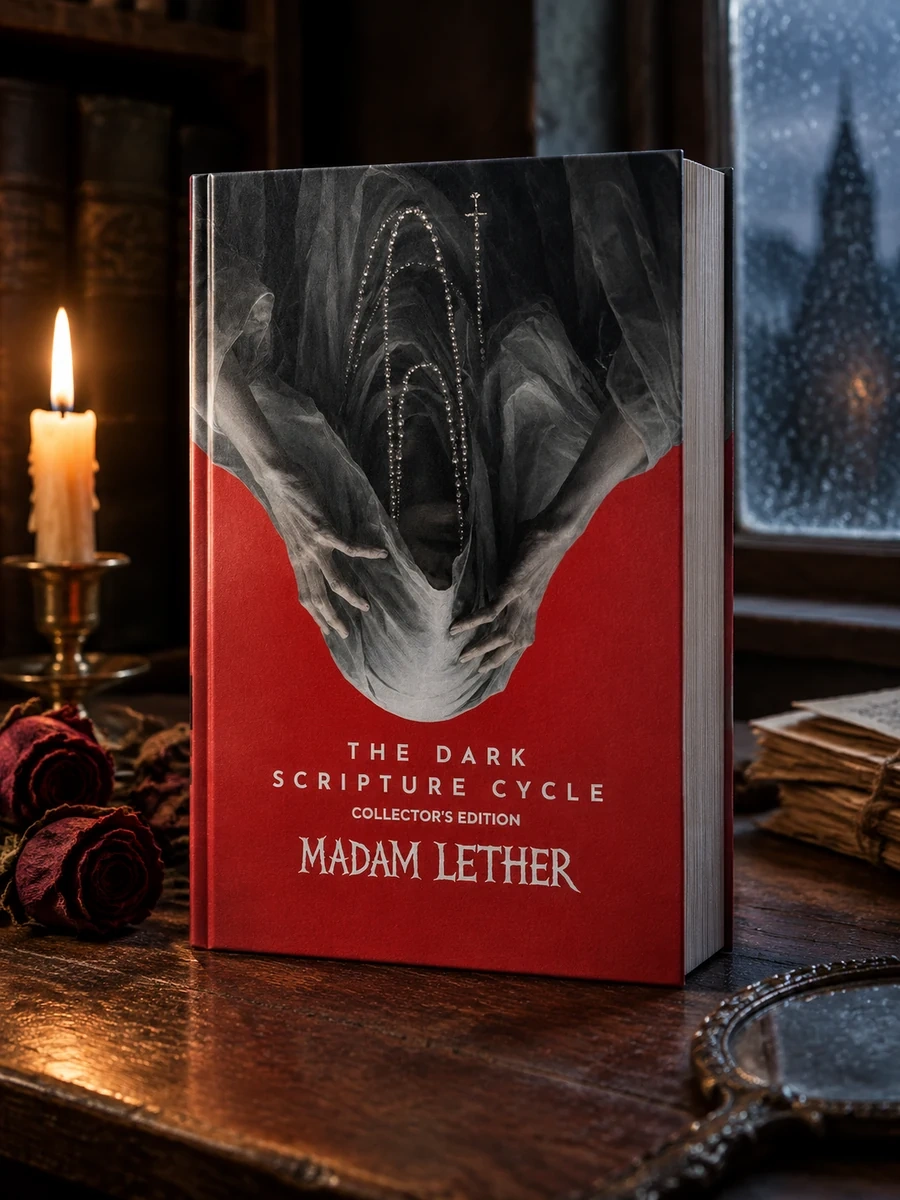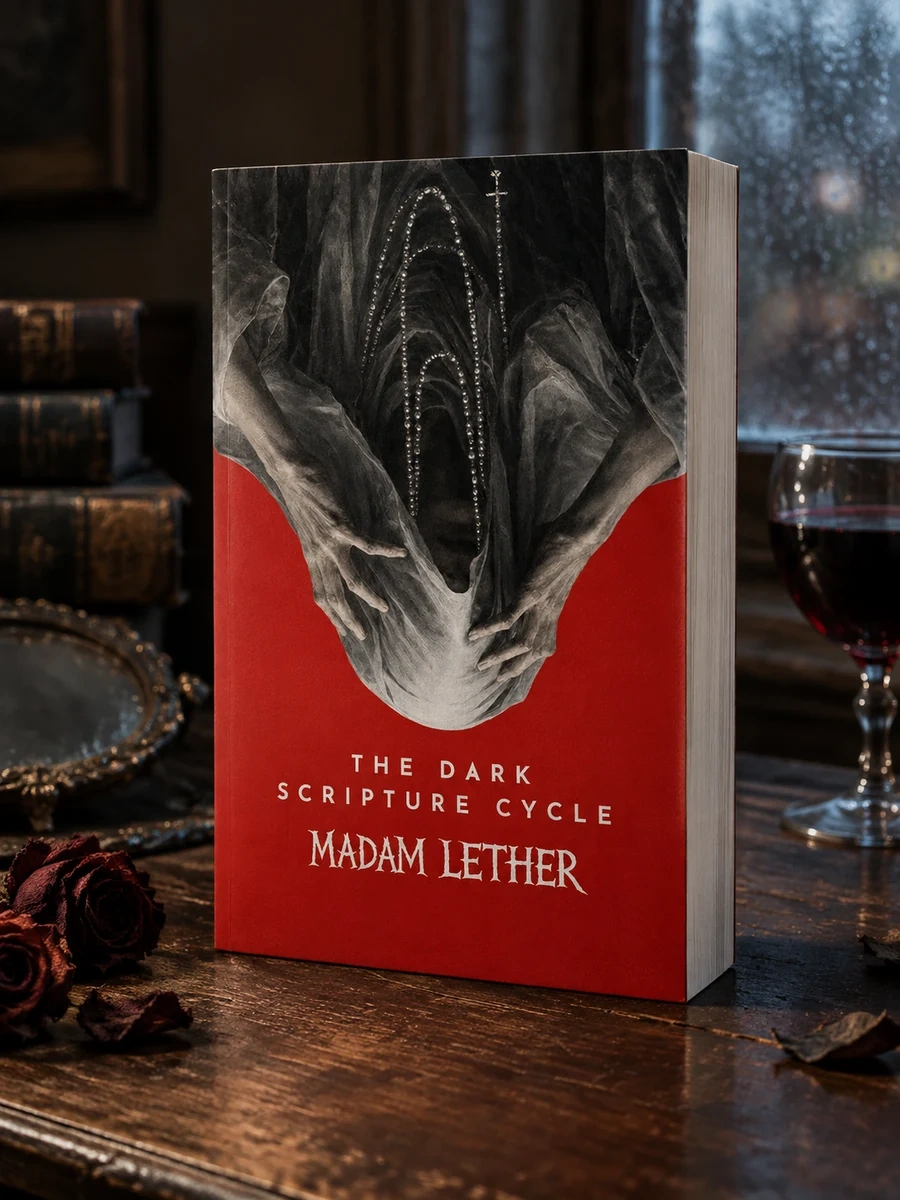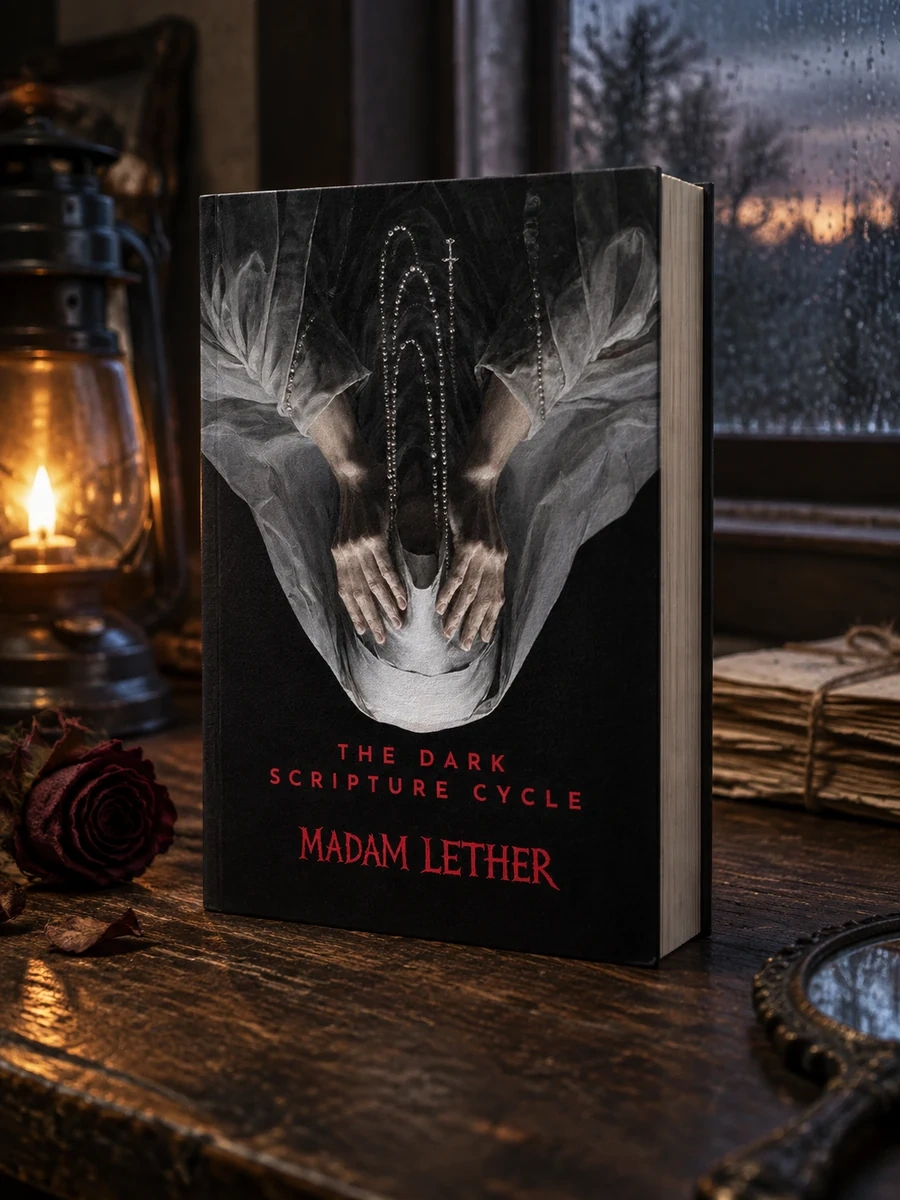
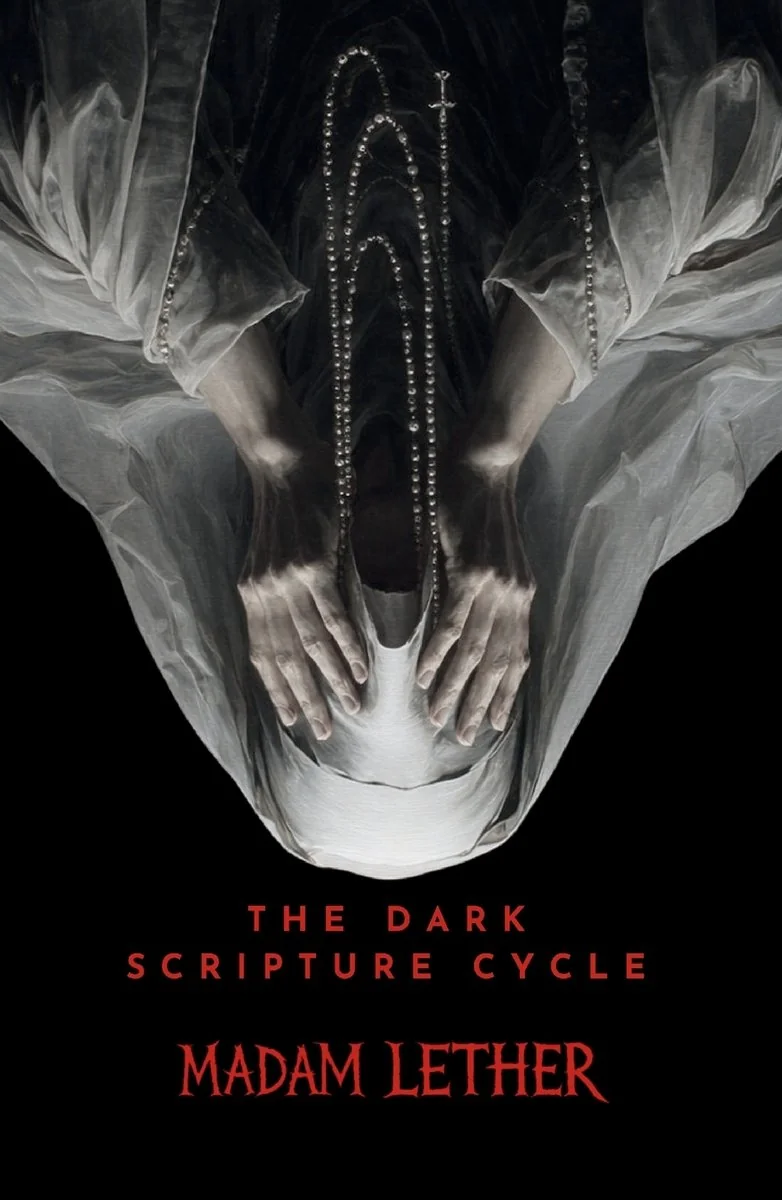
The Dark Scripture Cycle
Five intertwined tales of biblical horror where scripture becomes a living parasite.
The collection organizes five separate but connected stories under the umbrella of cosmic horror. Each narrative isolates a different aspect of corrupted faith. The nun guards against subterranean entities while villagers commune with ancient stones. A cursed book alters its own text, and a shrine retains historical pain. A scientific setting redefines death as archival data. Lether avoids conventional salvation tropes. Instead, the works present revelation as a dangerous infection. The tone remains cold and observational. Readers encounter a world where liturgy delivers contamination rather than grace. The structure allows each story to stand alone while contributing to the whole. This approach highlights the terrifying potential of belief systems when they interact with unknown forces. The result is a cohesive exploration of dread rooted in religious tradition.
Published by Library of Shadows in 2026, this work sits within the American horror market. It draws on biblical traditions and cosmic horror tropes. The stories reference New England villages, Ligurian shrines, and convents. These settings ground the supernatural elements in recognizable historical and geographical contexts.


📝 Description: The Dark Scripture Cycle
💎 Our verdict on The Dark Scripture Cycle
📖 Why choose it
Why this book is worth reading
Readers drawn to the intersection of theological dread and cosmic insignificance will find this collection compelling. It offers a unique perspective where belief systems act as infection vectors, delivering contamination through liturgy rather than salvation. Those who appreciate cold, observational tones over emotional resonance will engage with the narrative structure. The book is ideal for individuals interested in how sacred texts transform into living entities or archival data. It appeals to those willing to explore horror that rejects traditional moral resolutions. The focus on corrupted faith and subterranean entities provides a fresh take on familiar religious tropes. Fans of psychological unease rooted in historical pain will find value in the Ligurian shrine narrative. Ultimately, it serves readers seeking a cohesive exploration of dread where the holy terror is that something is listening.
⭐ Reader reviews
Reader rating
Lether executes a precise dissection of faith as a dangerous infection within the cosmic horror genre. The five intertwined tales effectively isolate aspects of corrupted belief, from self-rewriting gospels to afterlives functioning as archives. The tone remains consistently cold and observational, avoiding conventional salvation tropes in favor of terrifying revelation. This approach highlights the potential of religious tradition to deliver contamination rather than grace. The structure allows each story to stand alone while contributing to a cohesive whole. It suits readers comfortable with supernatural fiction that meets cosmic dread with biblical horror. Those seeking clear moral resolutions or traditional comfort may find the lack of redemption unsettling. However, the book succeeds in asking what happens when the holy terror is real. It is a rigorous examination of belief systems interacting with unknown forces.