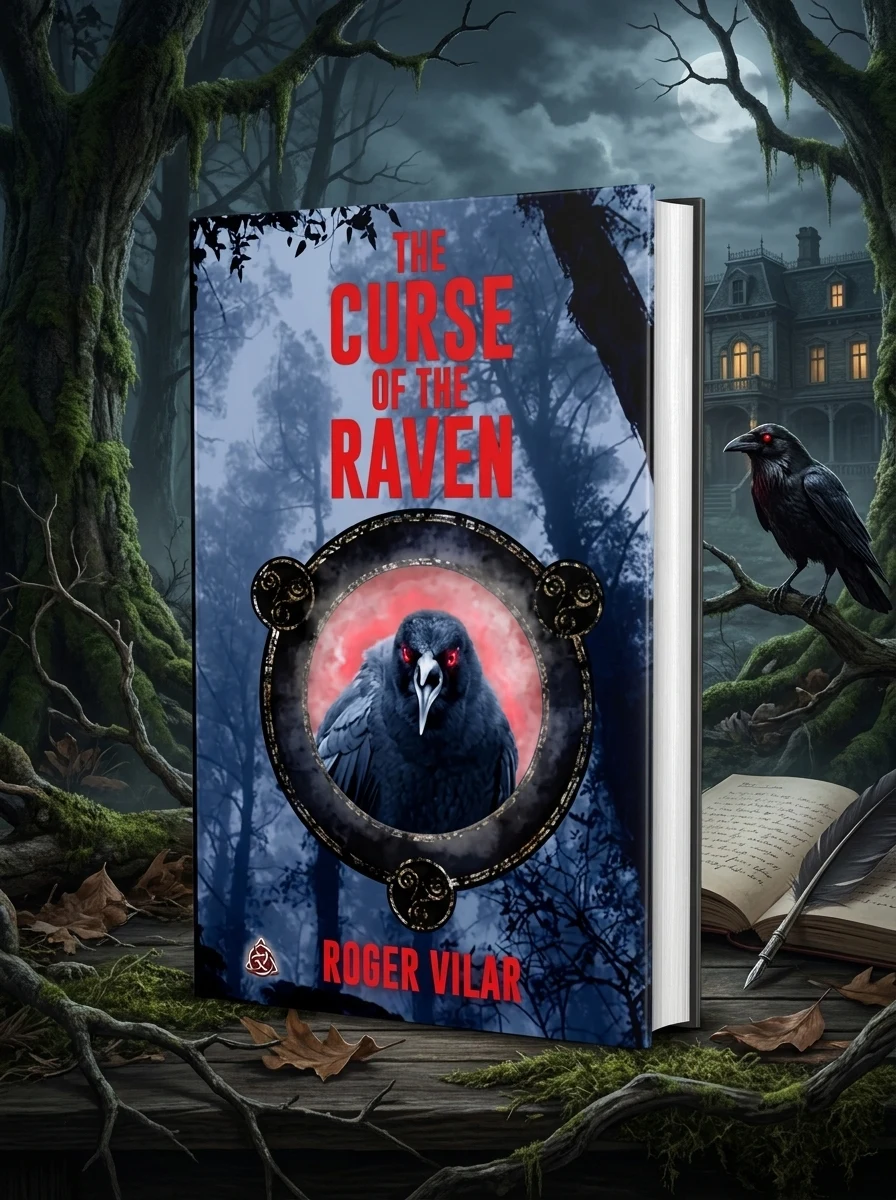
The Curse of the Raven
A writer battles a shape-shifting raven in a haunted mansion.
The plot focuses on Reingvald Vintersson’s time at the Greystone forests mansion. He uses the Edgar Allan Poe Scholarship to write, but a malevolent crow disrupts his progress. The bird can appear as a man and seeks to assassinate him. A murderer claims killing a Vintersson is difficult but possible. This suggests a specific threat tied to the protagonist’s identity. The story explores the intersection of creative isolation and supernatural horror. It does not offer resolution or escape, but rather a continuous struggle for existence and art. The tension arises from the raven’s dual nature and the writer’s vulnerability.
The narrative draws on Scandinavian literary traditions through its protagonist, Reingvald Vintersson. It incorporates elements of American Gothic horror via the Edgar Allan Poe Scholarship. The setting in Greystone forests merges European heritage with wild, untamed natural landscapes typical of gothic fiction.


📝 Description: The Curse of the Raven
💎 Our verdict on The Curse of the Raven
📖 Why choose it
Why this book is worth reading
Readers drawn to atmospheric dread and psychological terror will find this novel compelling for its exploration of creative isolation. The narrative offers a claustrophobic experience where the threat is both physical and metaphysical, grounding supernatural elements in the protagonist's desperate need for artistic survival. It appeals to those who enjoy slow-burn tension and the intersection of literary pursuit with cosmic horror. Fans of gothic tales featuring shape-shifting antagonists and bloodline vendettas will appreciate the unique blend of Scandinavian heritage with classic Poe-inspired tropes. The story provides a continuous struggle for existence rather than a neat resolution, offering depth for those who prefer ambiguity over action.
⭐ Reader reviews
Reader rating
Vilar constructs a tense narrative where a writer’s vulnerability collides with a shape-shifting raven in a haunted mansion. The book excels at building claustrophobic dread through the protagonist's isolation in Greystone forests. While lacking fast-paced action, it successfully merges Scandinavian heritage with gothic horror tropes to create a unique psychological landscape. The dual nature of the antagonist drives the tension effectively. This title suits readers who appreciate atmospheric storytelling and metaphysical threats over conventional plot resolutions. It is ideal for those interested in the intersection of art and supernatural terror, offering a grim but immersive experience for fans of slow-burn horror.