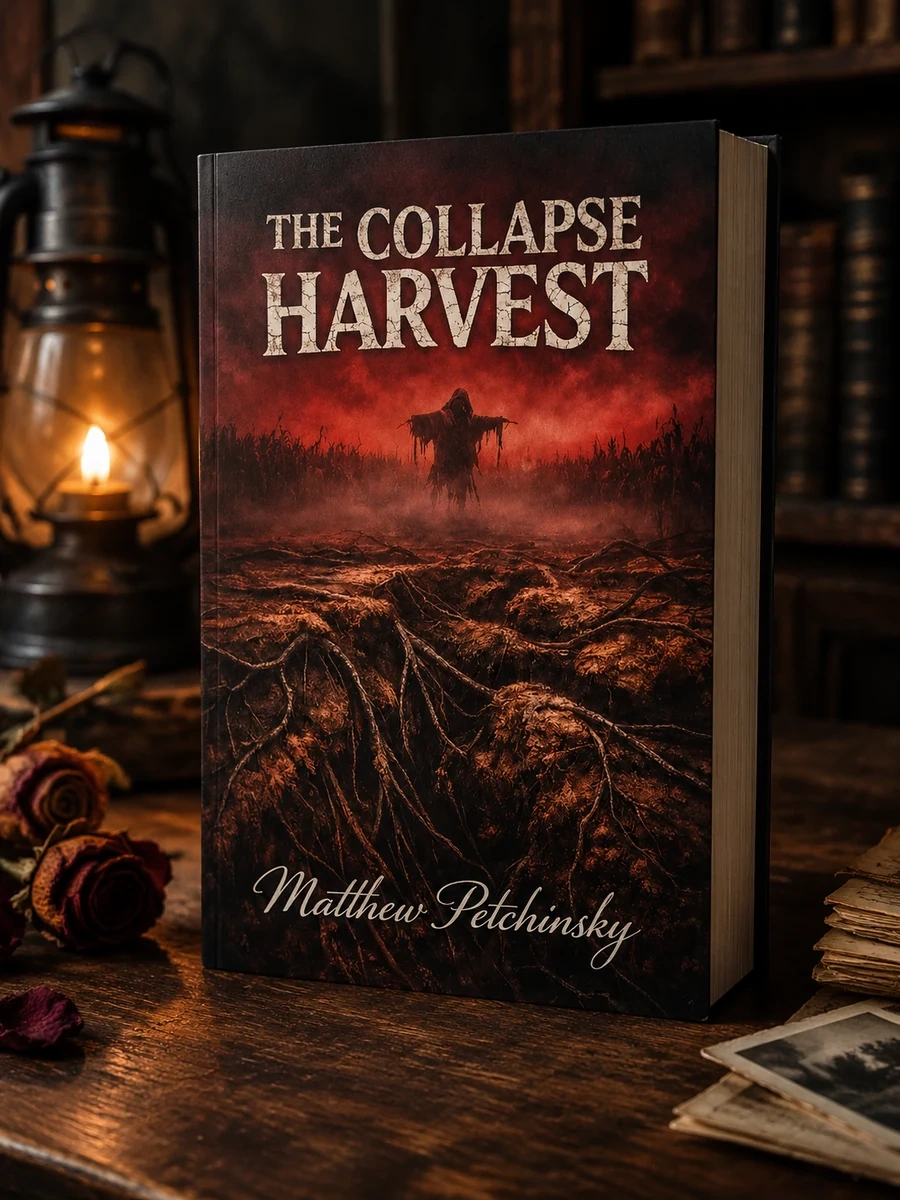
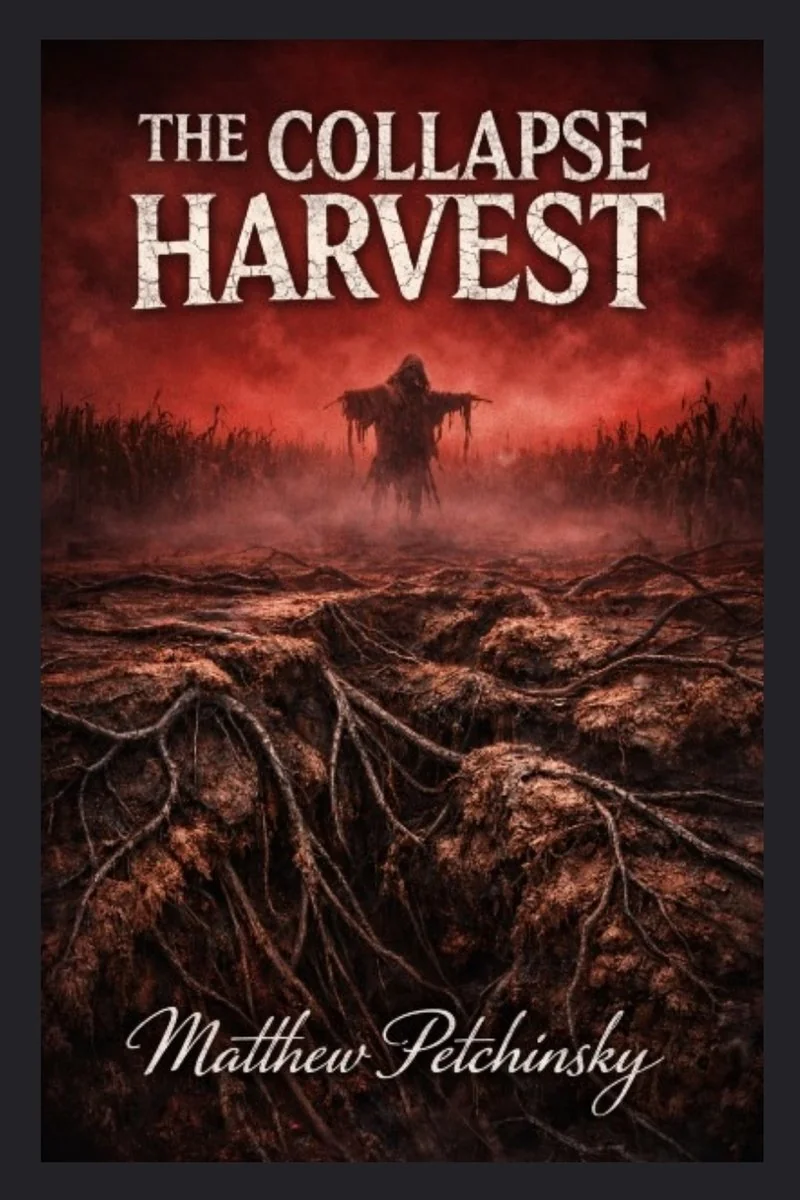
The Collapse Harvest
A father descends into a horror farm to save his family from an ancient harvest.
Petchinsky constructs a terrifying landscape where economic collapse enables human commodification. Elias Ward’s journey shifts from endurance to active rebellion as he penetrates the subterranean layers of the harvesting operation. The text explores the intersection of industrial efficiency and primal terror, suggesting that the earth itself is complicit in the violence. The narrative tension rises as the boundaries between machinery and biology blur, forcing the protagonist to confront a truth that redefines his understanding of sacrifice and survival.
The work emerges from contemporary anxieties about economic instability and environmental degradation. It reflects current fears regarding systemic exploitation and the loss of individual agency in a collapsing society. The setting draws on traditions of ecological horror and dystopian fiction, grounding its terror in plausible societal breakdown rather than supernatural fantasy alone.


📝 Description: The Collapse Harvest
💎 Our verdict on The Collapse Harvest
📖 Why choose it
Why this book is worth reading
Readers who crave visceral body horror and ecological dread will find this narrative deeply compelling. It appeals to those interested in sharp critiques of systemic exploitation and the dehumanizing effects of economic collapse. Fans of grim, atmospheric settings where machinery blurs with biology will appreciate the intense psychological toll depicted. The book offers a stark exploration of sacrifice and survival within rigid structures. Those seeking lighthearted adventure should look elsewhere, as this work remains relentlessly bleak. It is ideal for audiences who enjoy confronting uncomfortable truths about industrial efficiency and primal terror through a lens of cosmic horror.
⭐ Reader reviews
Reader rating
Petchinsky constructs a terrifying landscape where economic ruin enables the commodification of humanity. Elias Ward’s descent from endurance to rebellion drives a narrative that merges industrial efficiency with primal terror. The text effectively blurs boundaries between machinery and biology, suggesting the earth itself is complicit in violence. This approach creates a unique sense of ecological dread distinct from standard ghost stories. The story suits readers who appreciate grim atmospheres and psychological horror over traditional fantasy elements. By focusing on the physical and mental toll of survival, it delivers a potent critique of late-stage capitalism. The narrative tension rises effectively as the protagonist confronts redefined concepts of sacrifice.