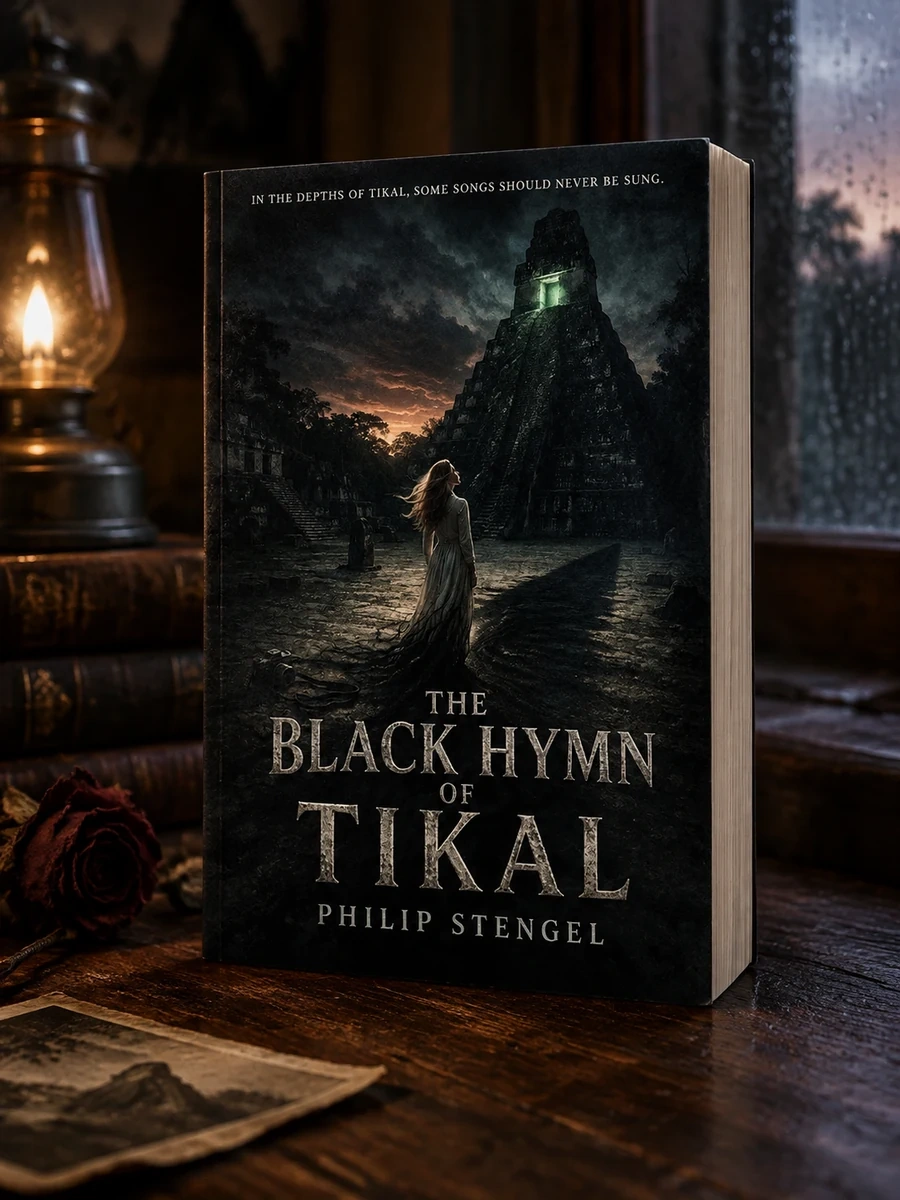
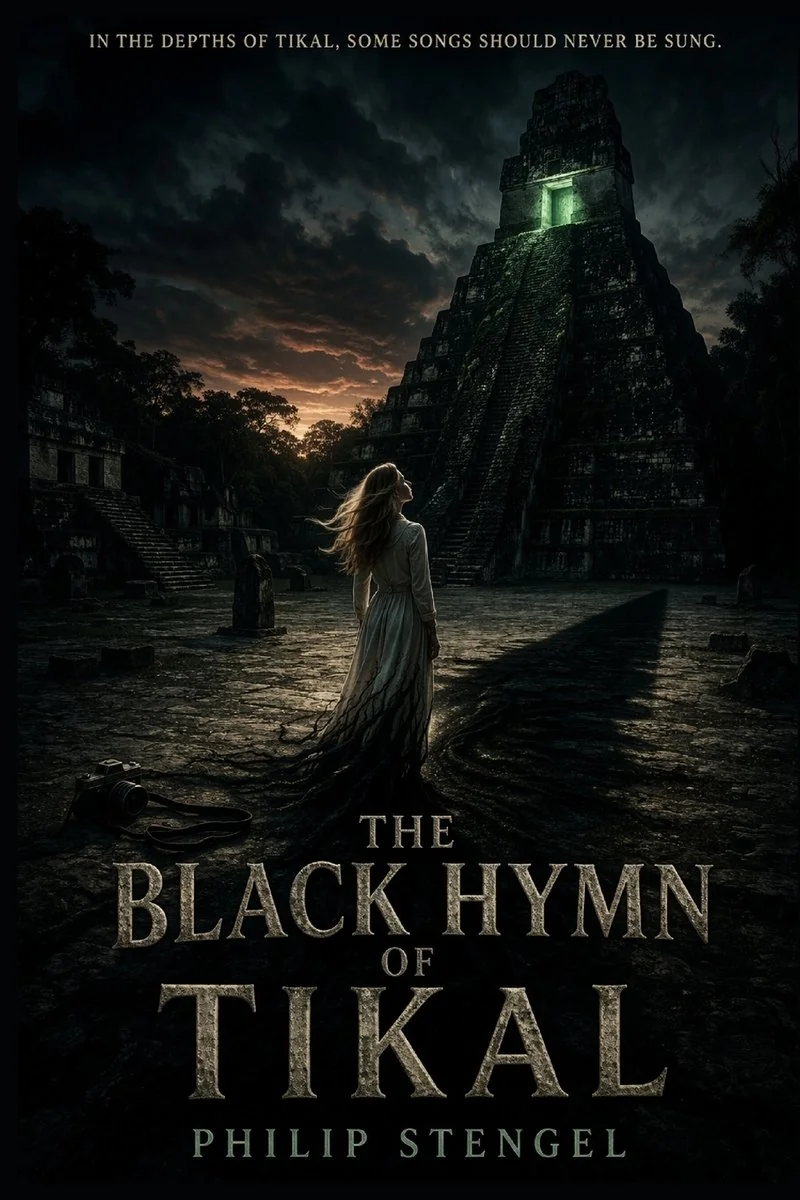
The Black Hymn of Tikal
A dig site that does not want to be understood.
Stengel presents a narrative centered on Dr. Elena Vargas and Professor Alistair Ainsworth at Tikal. The plot hinges on a sealed space that should not exist on any survey. As the team maps this void, the stone emits a hum that is not music but structure. This black hymn stitches itself into limestone and bone, listening to the researchers and rewriting their memories. The excavation descends into hidden tunnels and blood-marked glyphs. A sanctuary built for worship through silence becomes the focal point of the conflict. Elena faces a choice between proof and survival. The story treats discovery as non-neutral, showing how knowledge spreads the moment it is named. The consequences are cosmic in scale, urging readers to consider the cost of waking what was buried.
The story is set deep in the Guatemalan jungle at Tikal. It draws on Mayan archaeological traditions and the concept of sealed spaces beneath plazas. The narrative engages with the tradition of worship through silence and the use of blood-marked glyphs within a sanctuary context.


📝 Description: The Black Hymn of Tikal
💎 Our verdict on The Black Hymn of Tikal
📖 Why choose it
Why this book is worth reading
Readers seeking a deeply unsettling exploration of psychological erosion will find this book rewarding. It appeals to those interested in the intersection of archaeology and occult horror, offering a narrative where knowledge itself is dangerous. The story provides a unique perspective on how ancient structures can actively participate in their own unsealing, creating a sense of inevitable doom. Fans of cosmic horror who appreciate themes of silent worship and the cost of waking buried entities will find the tone oppressive yet compelling. It is ideal for those who prefer literary dread over jump scares, focusing on the slow unraveling of reality as the team becomes an instrument for an ancient song.
⭐ Reader reviews
Reader rating
Stengel effectively constructs a narrative where the ruin actively participates in its own unsealing, blurring the line between discovery and infection. The concept of a structural hymn woven into limestone and bone offers a fresh take on archaeological horror, emphasizing that knowledge spreads the moment it is named. The psychological erosion of the team is portrayed with precision, creating an atmosphere of occult dread that feels both intimate and cosmic. While the tone is undeniably oppressive and may alienate readers seeking lighthearted adventure or traditional historical fiction, it suits those who enjoy slow-burn terror. The focus on memory rewriting adds a layer of psychological complexity that elevates the story beyond standard monster narratives, making it a potent entry for fans of cosmic horror.
📖 Read on the blog
✍️ More books by this author Philip Stengel




🏛 Books from this publisher Independently Published






You might also like
See more →
Have a question about this item?
Ask about the edition, condition, delivery or anything else — we reply by email or phone, usually within a day.
