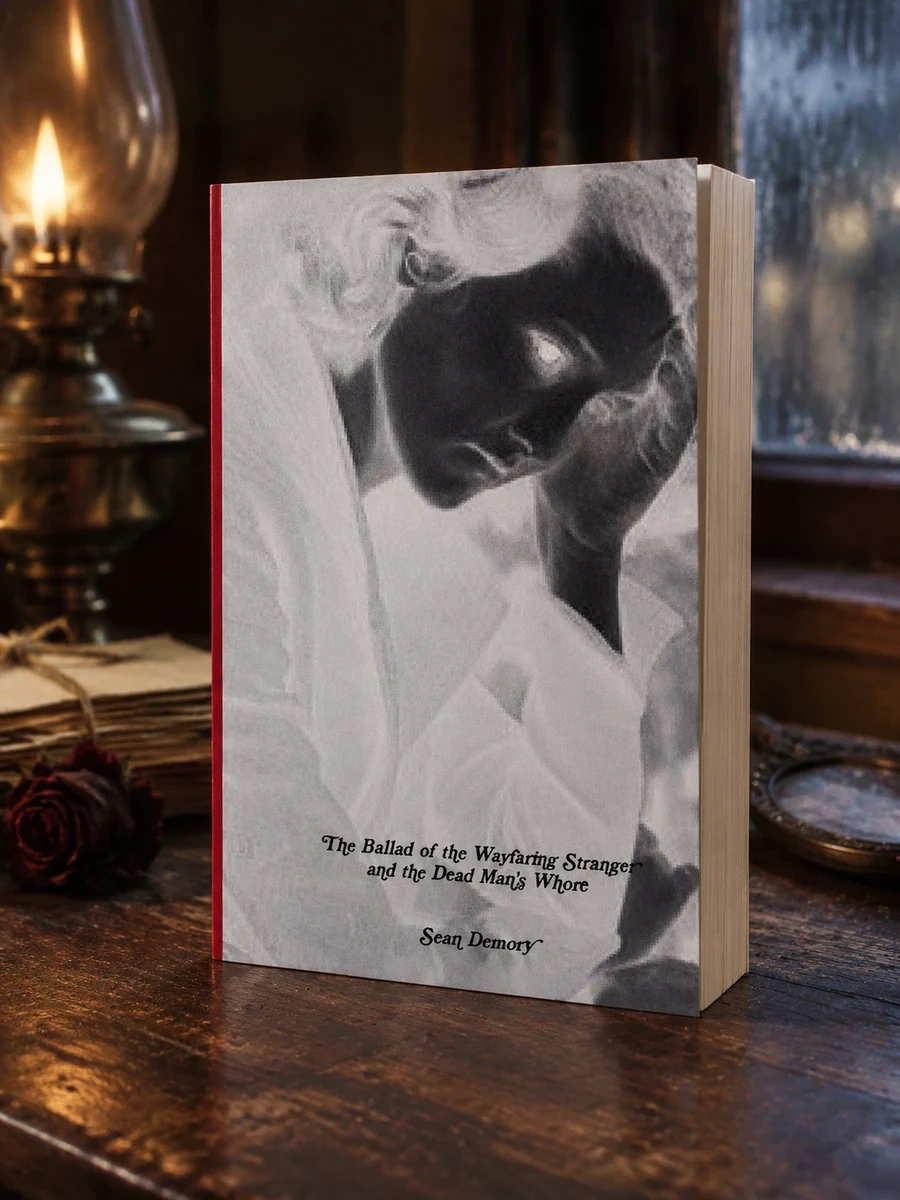

The Ballad of the Wayfaring Stranger and the Dead Man's Whore
A backwoods spook story driven by longing, loss, and unescapable doom.
This collection centers on the atmosphere of old murder ballads, presenting a world where tragedy is accepted with stoical shrugs. The narrative avoids set-piece shocks in favor of quiet, creeping unease that intensifies with every sentence. Demory captures this mood by focusing on the inevitability of doom and the emotional weight of loss. The work stands as a Locus Recommended Short Story from 2012 and earned an Honorable Mention in Year's Best Horror, Vol. 5. It appeals to readers who value atmospheric tension over explicit horror.
The book draws on the tradition of old murder ballads, presenting a backwoods setting where terrible things happen to the innocent. It reflects a cultural response of stoical shrugs to tragedy, rooted in the atmosphere of traditional American folklore and gothic fiction.


📝 Description: The Ballad of the Wayfaring Stranger and the Dead Man's Whore
💎 Our verdict on The Ballad of the Wayfaring Stranger and the Dead Man's Whore
📖 Why choose it
Why this book is worth reading
Readers who value atmospheric tension over explicit horror will find this collection profoundly rewarding. It appeals to those who appreciate the emotional weight of loss and the inevitability of doom presented with stoical shrugs rather than melodrama. The narrative avoids set-piece shocks, offering instead a quiet, creeping unease that intensifies with every sentence. This slow-burn approach suits individuals seeking subtle terror and literary fiction rooted in folklore. Fans of traditional ballads and dark fantasy will enjoy the grounded progression toward a dark conclusion. However, those expecting fast-paced action or graphic violence may find the experience unsatisfying. It is ideal for readers who prefer dread that settles beneath the skin through careful sentence construction rather than sudden frights.
⭐ Reader reviews
Reader rating
Sean Demory’s collection excels in capturing the distinct atmosphere of old murder ballads through meticulous prose. By focusing on unescapable doom and the emotional weight of loss, the work creates a chilling effect reliant on quiet unease rather than explicit horror. The narrative avoids melodrama, offering a grounded progression that respects the reader's intelligence. This approach suits those who appreciate atmospheric horror and literary fiction rooted in folklore. While it may disappoint readers seeking fast-paced action or graphic violence, it stands as a testament to the power of subtle terror. The careful sentence construction ensures dread settles deeply, making it a compelling choice for enthusiasts of psychological depth and gothic tradition over sensationalism.