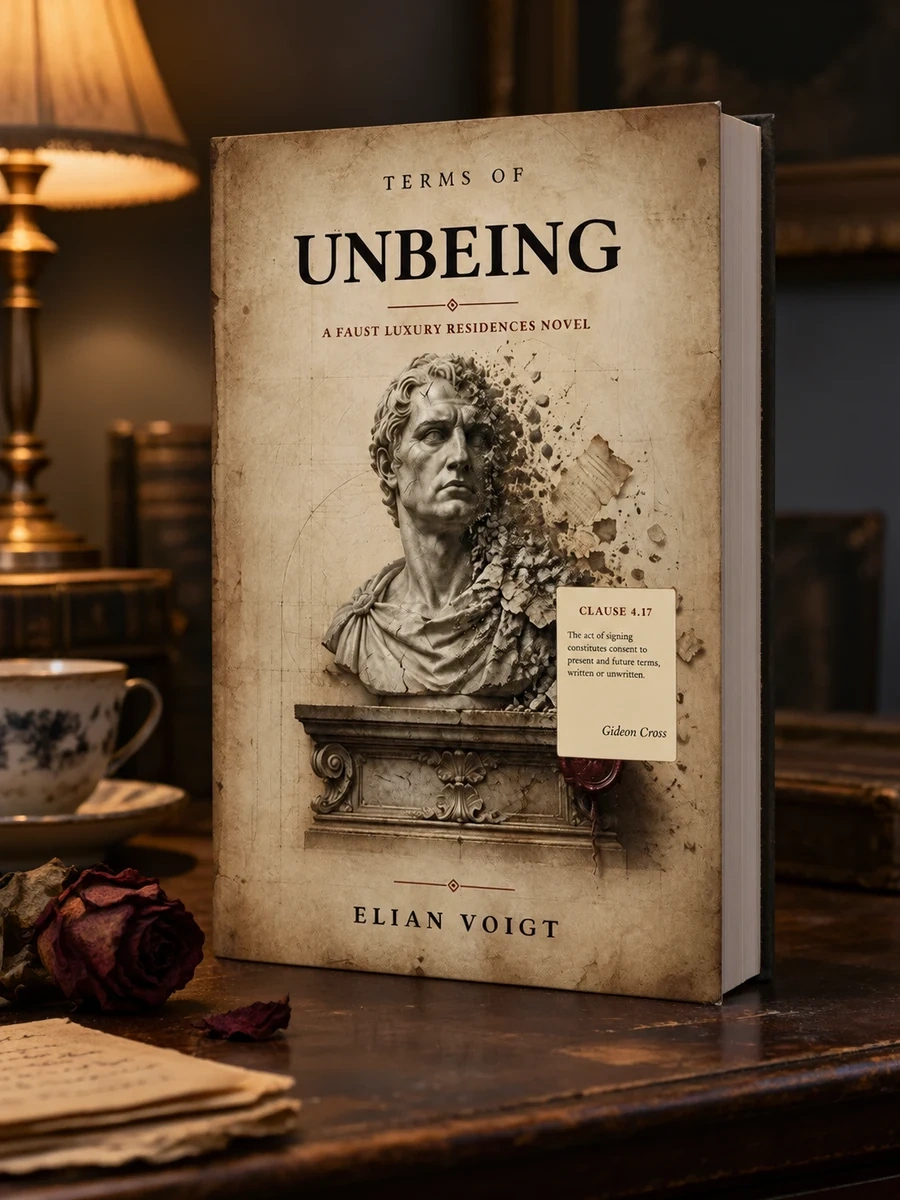
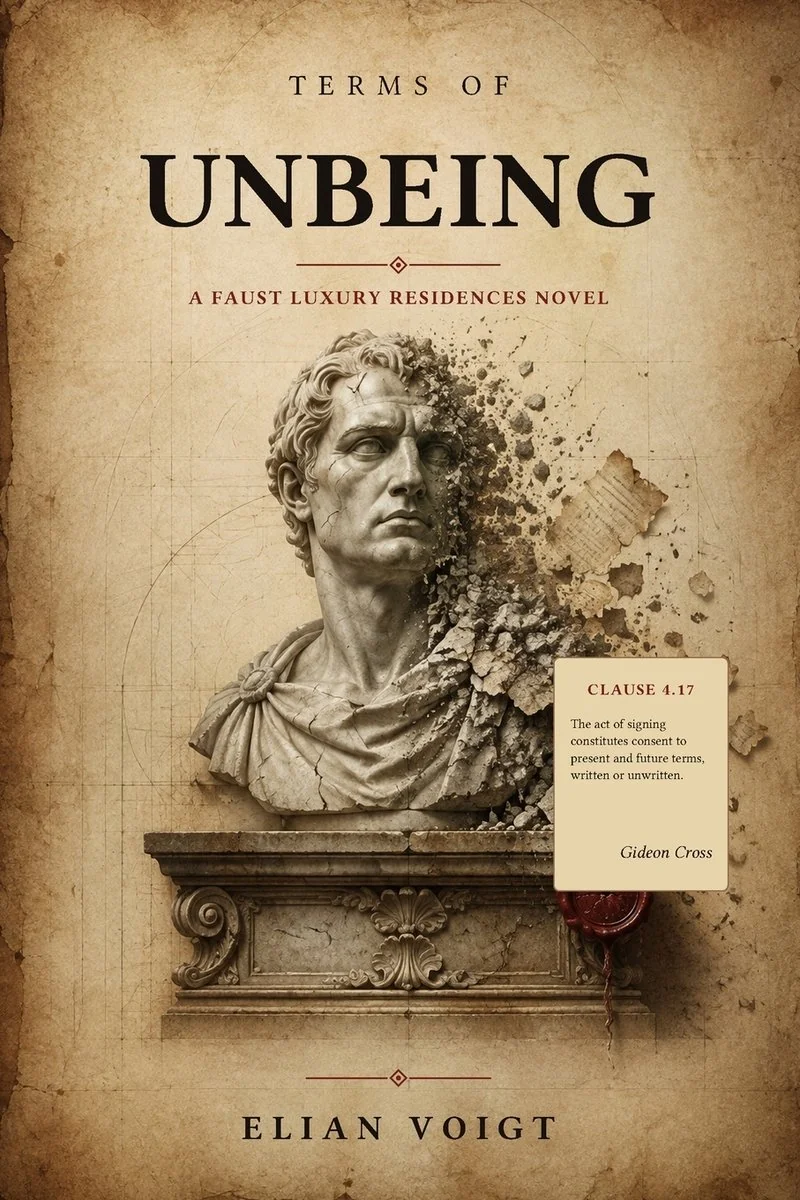
Terms Of Unbeing
A Navy corpsman signs a lease that demands his memories as payment for housing.
Gideon Cross enters Faust Luxury Residences with nothing but debt and a dead friend. The building accepts his life experiences as currency, taking specific moments from his past. He joins other tenants who have forgotten their original agreements while paying ongoing debts. The narrative tracks the daily reconciliation at 6:17 PM, where the lease terms shift to reflect new losses. Gideon must decide if he can reach the hidden exit clause before losing everything he has left. The story examines how grief makes one vulnerable to exploitation and what remains when identity is stripped away. Voigt uses the setting to critique how society extracts value from personal trauma. The horror arises not from monsters, but from the slow erosion of self through bureaucratic indifference.
This novel sits within the tradition of American literary horror and gothic fiction. It draws on the Faustian bargain archetype, updating it for a modern context of financial precarity and housing insecurity. The setting reflects contemporary anxieties about invisible contracts and the loss of personal agency in institutional systems.


📝 Description: Terms Of Unbeing
💎 Our verdict on Terms Of Unbeing
📖 Why choose it
Why this book is worth reading
This book appeals to readers who appreciate literary horror that merges metaphysical dread with sharp social critique. Those interested in how grief and financial ruin create vulnerability will find resonance in Gideon’s plight. It suits fans of psychological horror who prefer slow-burn erosion of self over jump scares. Readers valuing thematic depth regarding identity, consent, and bureaucratic indifference will engage with the narrative’s exploration of what remains when one’s past is stripped away. It offers a unique perspective on cosmic horror rooted in mundane contractual obligations.
⭐ Reader reviews
Reader rating
Voigt masterfully weaves personal loss into cosmic horror, using the setting of Faust Luxury Residences to critique societal extraction of value from trauma. The tension between signing a contract and losing one’s identity creates profound psychological dread. The narrative structure effectively escalates consequences through bureaucratic indifference rather than traditional monsters. This approach suits readers who enjoy metaphysical horror and gothic themes of exploitation. It may not satisfy those seeking straightforward action, but it rewards patience with deep thematic exploration. The focus on memory as currency provides a fresh angle on classic Faustian tropes.