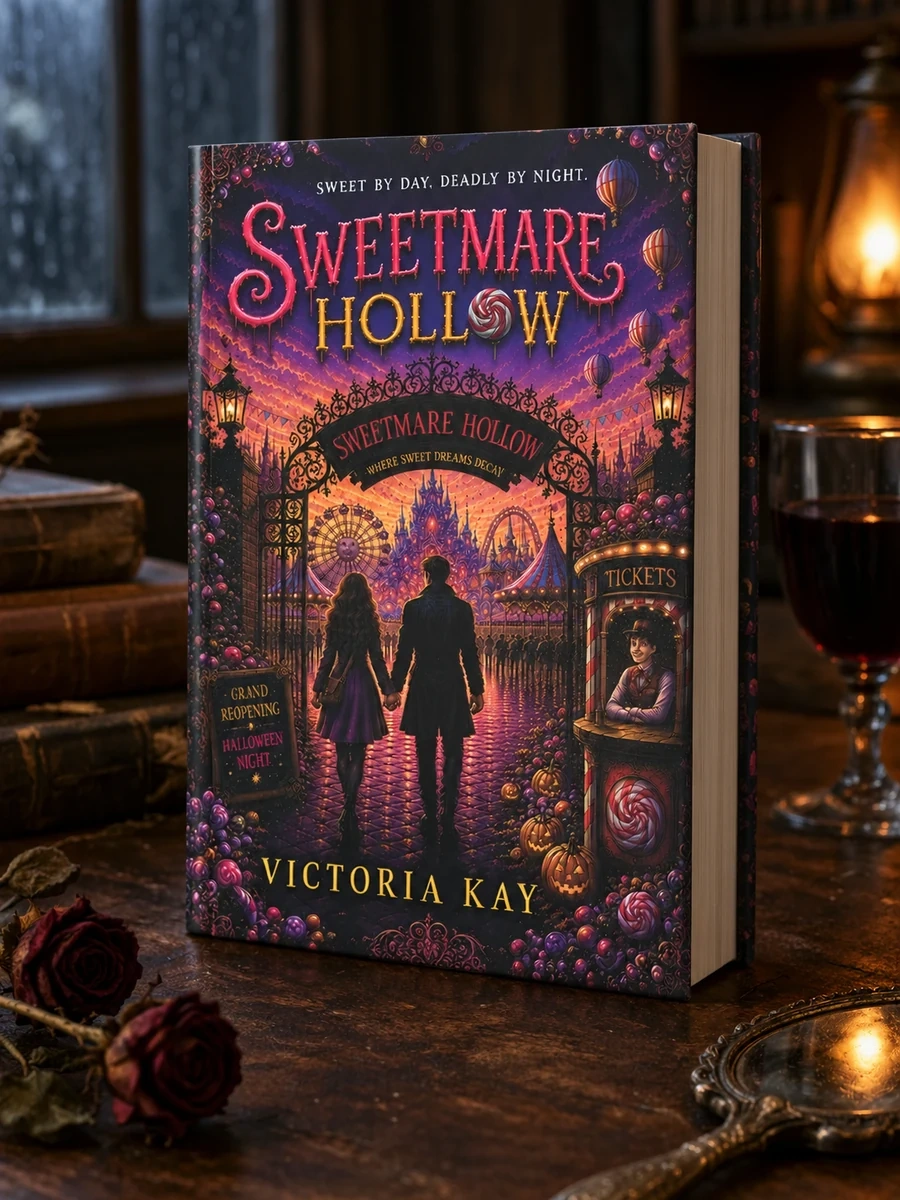
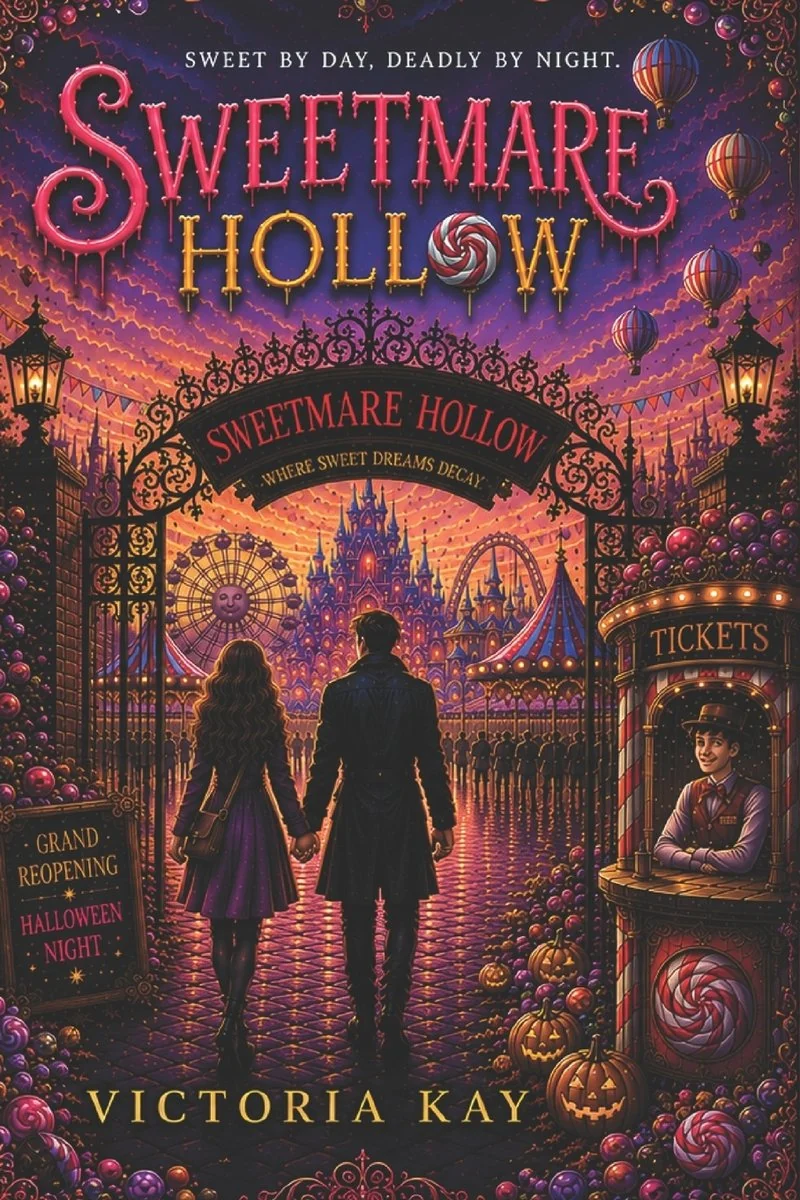
Sweetmare Hollow
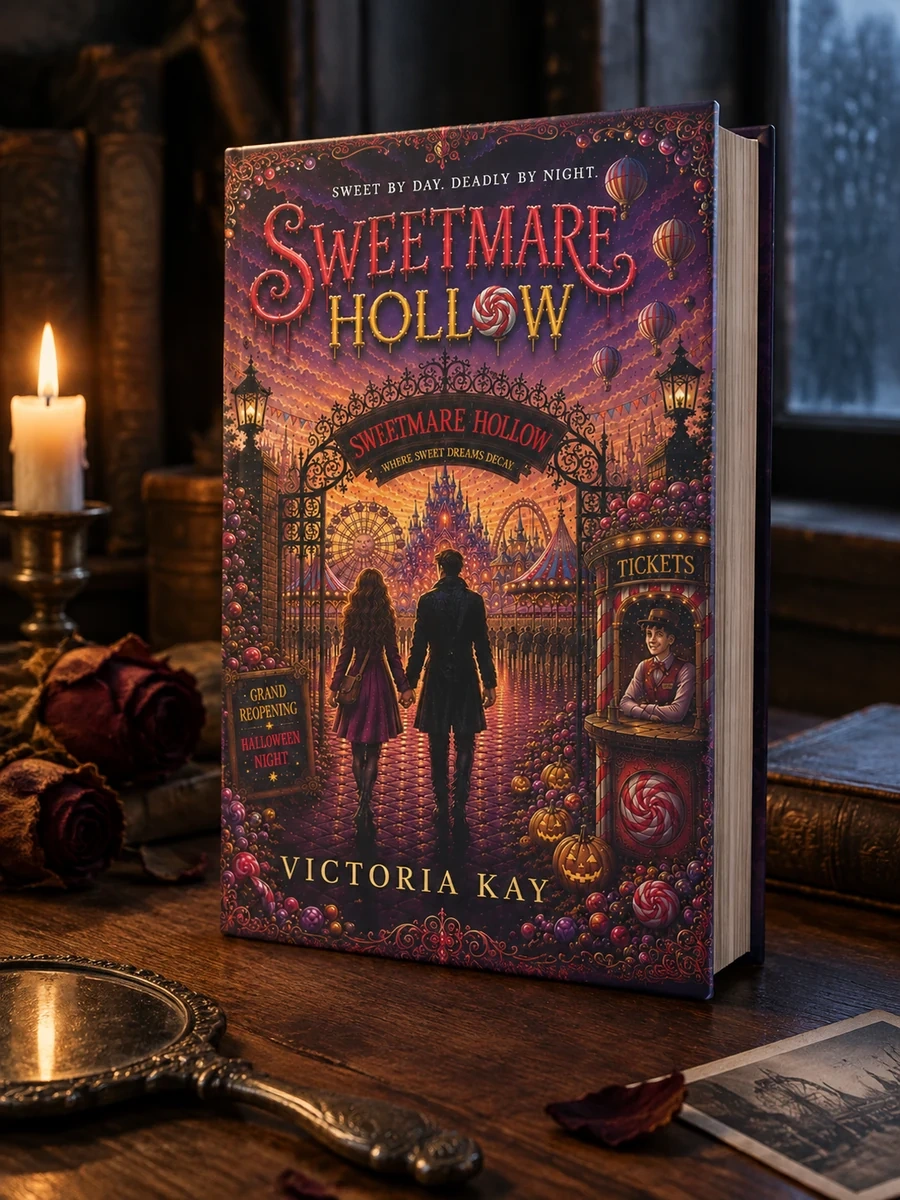
A horror novel about a woman trapped in a sinister amusement park.
This story examines the psychological unraveling of a protagonist forced to confront a forgotten history. Evelyn finds herself in a location that triggers deep, unexplained memories. The text focuses on the immediate danger of the reopening event and the betrayal within her social circle. Franks uses the setting of a closed amusement park to create a claustrophobic environment. The plot does not rely on jump scares but on the slow reveal of personal secrets. Readers interested in character-driven horror will find the exploration of trust and identity compelling. The narrative voice remains close to Evelyn’s perspective, limiting information to what she perceives.
The book is set during a Halloween night event at a fictional park. It draws on the tradition of haunted attractions and urban legends surrounding abandoned places. The narrative reflects contemporary interest in psychological horror where the past intrudes upon the present.


📝 Description: Sweetmare Hollow
💎 Our verdict on Sweetmare Hollow
📖 Why choose it
Why this book is worth reading
Readers who prefer atmospheric tension and psychological unraveling over visceral gore will find this narrative compelling. The book offers a claustrophobic exploration of memory loss and betrayal, appealing to those interested in how personal history intersects with present danger. It is ideal for fans of slow-burn horror where the setting itself acts as a catalyst for revealing hidden truths about the protagonist's identity. Those who enjoy mysteries centered on trust issues and the fear of the familiar turning sinister will appreciate the focus on Evelyn’s internal struggle rather than external monsters.
⭐ Reader reviews
Reader rating
Franks successfully cultivates a claustrophobic atmosphere by trapping the protagonist in a closed amusement park, using the setting to amplify psychological tension. The narrative avoids jump scares, opting instead for a slow reveal of personal secrets that challenges the reader's perception of trust and identity. While the focus on memory loss may feel abstract to some, it effectively supports the gothic themes of forgotten histories. The book suits readers seeking emotional depth and character-driven horror rather than fast-paced action. It is a thoughtful entry in the supernatural fiction genre, prioritizing the mystery of the past over immediate physical threats.