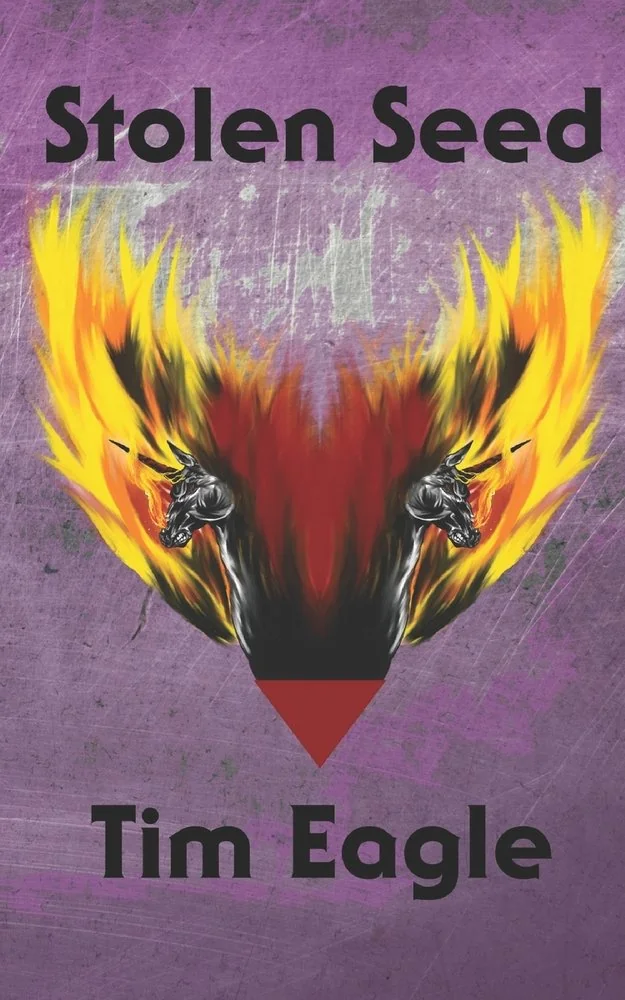
Stolen Seed
A serial killer loses his instinct in a small town with cultish academia.
The story tracks Benson Rhoades as he leaves the city for Stevats to find new challenges. His killing drive disappears mysteriously upon arrival. He navigates a society of academia with deep cultish undercurrents. The narrative focuses on his choice between performing a task or living without violence. Eagle examines urban rot and shattered dreams through this lens. The work explores how environment affects primal instincts. It questions whether rural settings offer fertile ground for evil or its suppression. The plot avoids traditional horror tropes by focusing on psychological stagnation rather than gore.
The narrative situates itself within the tradition of American small-town horror, contrasting urban decay with the deceptive peace of rural communities. It draws on the period of modern psychological thriller development, focusing on the isolation of aging criminals and the hidden corruption beneath polite society.


📝 Description: Stolen Seed
💎 Our verdict on Stolen Seed
📖 Why choose it
Why this book is worth reading
Readers seeking a slow-burn exploration of primal instincts versus environmental influence will find this narrative compelling. It appeals to those interested in the deconstruction of serial killer tropes, offering a unique lens on how rural settings can either suppress or nurture evil. The book is ideal for fans of psychological stagnation over gore, providing a thoughtful examination of urban rot and shattered dreams. Those who enjoy analyzing the tension between institutional corruption and individual agency will appreciate the nuanced portrayal of Benson Rhoades' internal struggle.
⭐ Reader reviews
Reader rating
Tim Eagle’s Stolen Seed offers a refreshing departure from traditional horror by focusing on psychological stagnation rather than visceral gore. The narrative effectively explores whether rural environments offer fertile ground for evil or its suppression, creating a tense atmosphere rooted in institutional corruption. While it lacks fast-paced action, the book excels in its examination of how environment affects primal instincts. It suits readers who prefer nuanced societal critique over jump scares. The depiction of academia with cultish undercurrents adds depth to the protagonist’s existential crisis. For those willing to engage with a slower, more contemplative pace, this work provides a thought-provoking look at the seeds of violence.