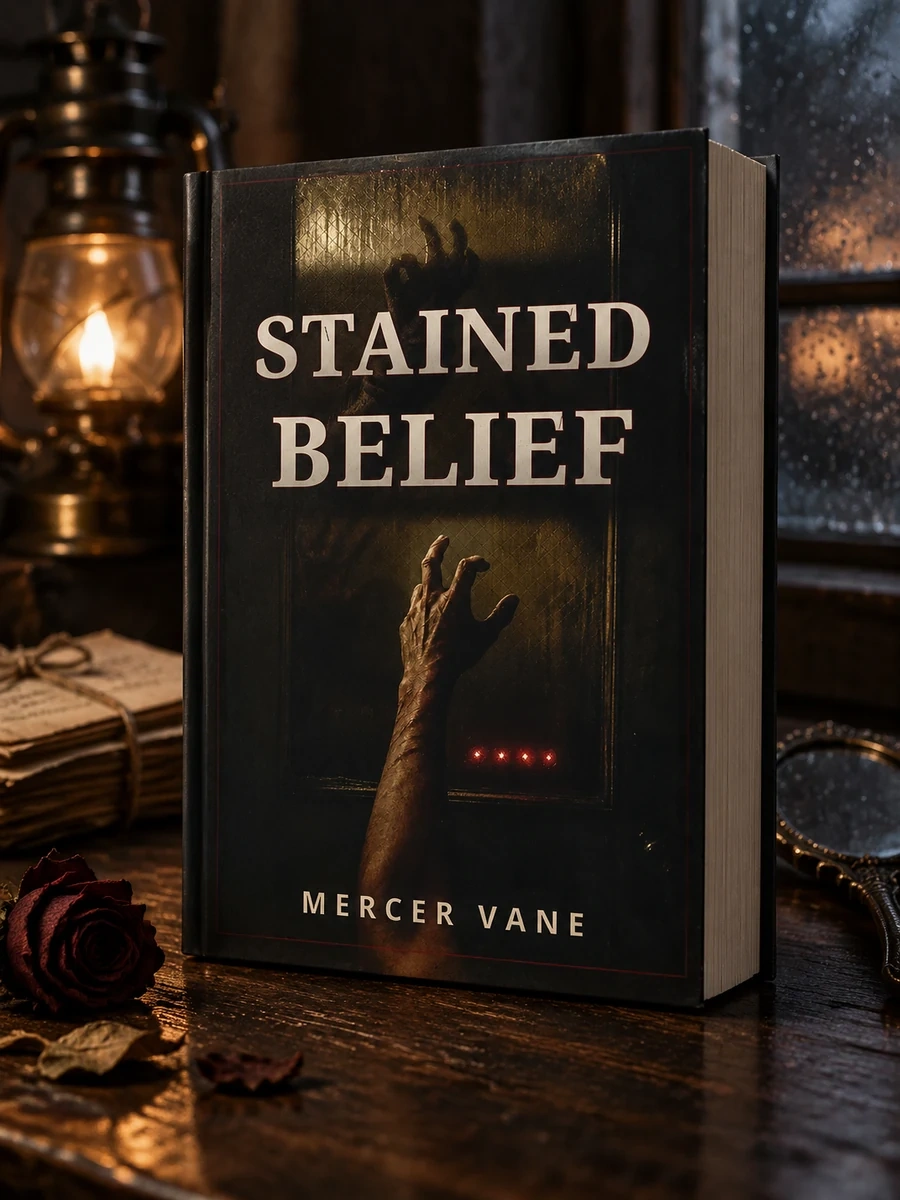
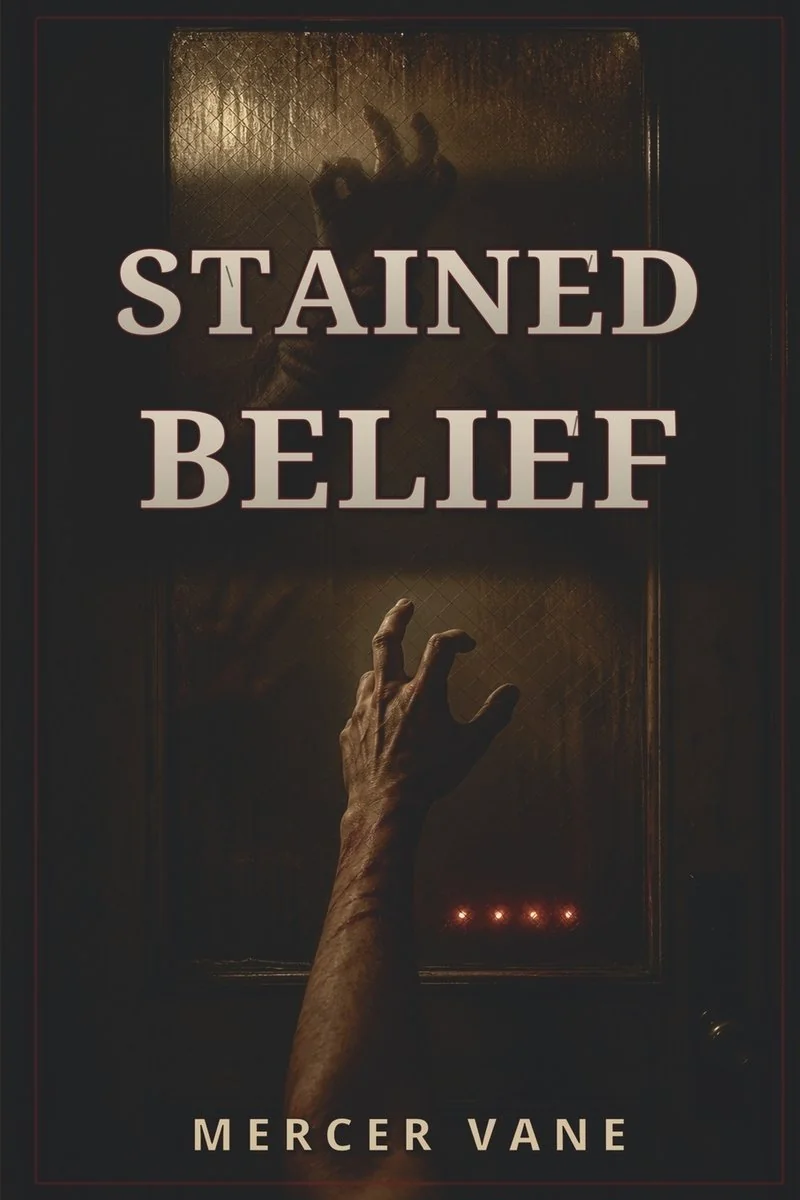
Stained Belief
A thriller where believing a victim transfers the killer's violence to others.
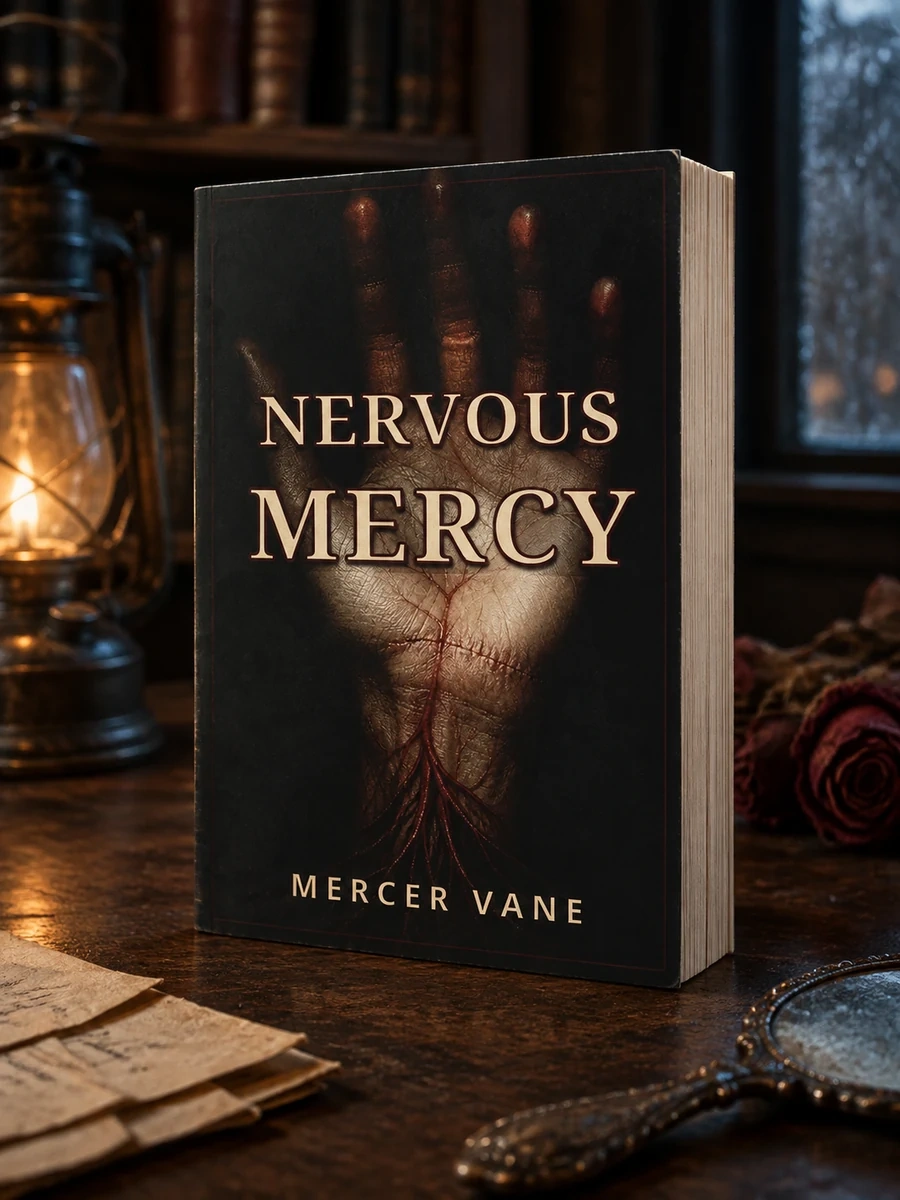
The plot centers on Miriam Orwick and her sister Erin following a home invasion. Miriam’s account of the service technician creates doubt among the police, who turn their attention to Erin’s husband. Gareth believes Miriam and starts feeling phantom pains and pressures from the crime scene. The killer notices this phenomenon and begins using these believers as vessels for his actions. Seventeen-year-old Eden tries to identify the pattern behind these shared experiences. As she gets closer to the truth, her own body becomes a target for the man hunting her. The story explores how doubt can be weaponized and how belief can physically harm the innocent.
This work sits within the contemporary independent publishing landscape of 2026. It engages with American domestic horror, focusing on family dynamics and legal systems. The narrative reflects modern anxieties about truth and perception in a digital age where personal accounts are scrutinized.


📝 Description: Stained Belief
💎 Our verdict on Stained Belief
📖 Why choose it
Why this book is worth reading
Readers who enjoy cerebral horror that prioritizes psychological dread over visceral gore will find this title compelling. It appeals to those fascinated by the mechanics of unreliable narration and the terrifying concept of belief as a physical conduit for violence. Fans of stories where domestic tranquility is shattered by unseen forces, and who appreciate narratives that explore how testimony can be manipulated to harm the innocent, will gain much from Eden’s struggle against a killer who uses validation as a weapon.
⭐ Reader reviews
Reader rating
Vane delivers a unsettling exploration of doubt and physical consequence, crafting a narrative where belief literally transfers trauma. The strength lies in its sensory approach to horror; rather than relying on visual shocks, it induces dread through phantom pains and unexplained pressures. This method creates a persistent sense of unease suitable for the psychological subgenre. It suits readers who prefer atmospheric tension and complex moral ambiguities over clear resolutions or traditional jump scares. While not for everyone, it offers a unique perspective on how survivor accounts can become dangerous vectors in the wrong hands.