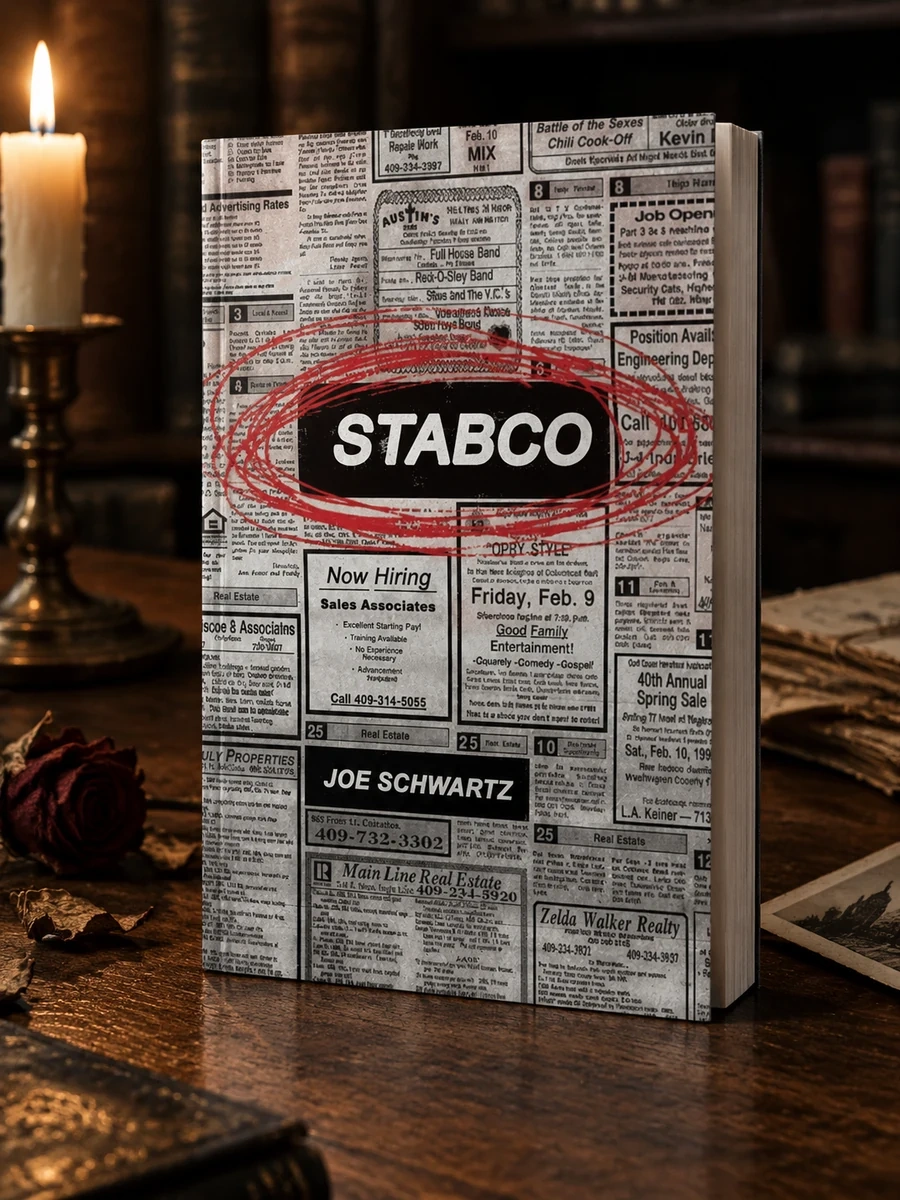

Stabco: You Need Nothing Else
A dark satire about brothers caught between knife sales and a profit-driven cult.
Schwartz examines the intersection of religious devotion and corporate capitalism through the lens of STABCO. The Supreme Master emerges as a singular leader who demands absolute loyalty while generating massive profits. Randy and Raymond serve as the focal point for this exploration, illustrating how desperation can lead to spiritual compromise. The narrative does not shy away from the grim reality that nothing worth having comes free in such environments. By comparing the Supreme Master to Jim Jones and Joseph Smith, Schwartz highlights the cyclical nature of charismatic leadership and its potential for exploitation. The story remains tightly focused on the brothers' struggle for survival within this oppressive structure.
Published in 2016, this work reflects contemporary anxieties about consumerism and spiritual emptiness. It sits within the tradition of American cult literature, drawing on historical precedents set by figures like Jim Jones to critique modern organizational power structures.


📝 Description: Stabco: You Need Nothing Else
💎 Our verdict on Stabco: You Need Nothing Else
📖 Why choose it
Why this book is worth reading
Readers who appreciate incisive social commentary wrapped in horror will find this book rewarding. It appeals to those interested in the intersection of capitalism and religious fervor, offering a sharp critique of how desperation fuels spiritual compromise. The narrative provides a grounded look at systemic exploitation without relying on supernatural tropes, making it ideal for fans of psychological tension and dark satire who want to explore how ordinary individuals become entangled in dangerous belief systems driven by profit.
⭐ Reader reviews
Reader rating
Schwartz delivers a tightly focused exploration of corporate greed masquerading as divine will. By centering the narrative on two brothers forced into servitude, the text effectively illustrates the cyclical nature of charismatic exploitation. The comparison to historical figures grounds the absurdity in recognizable patterns of manipulation. While it lacks traditional monsters, the terror is palpable through its depiction of psychological erosion. This suits readers seeking intellectual engagement over visceral scares, offering a chilling yet satirical view of faith commodified.
📖 Read on the blog
🏛 Books from this publisher Createspace Independent Publishing Platform





You might also like
See more →



Have a question about this item?
Ask about the edition, condition, delivery or anything else — we reply by email or phone, usually within a day.
