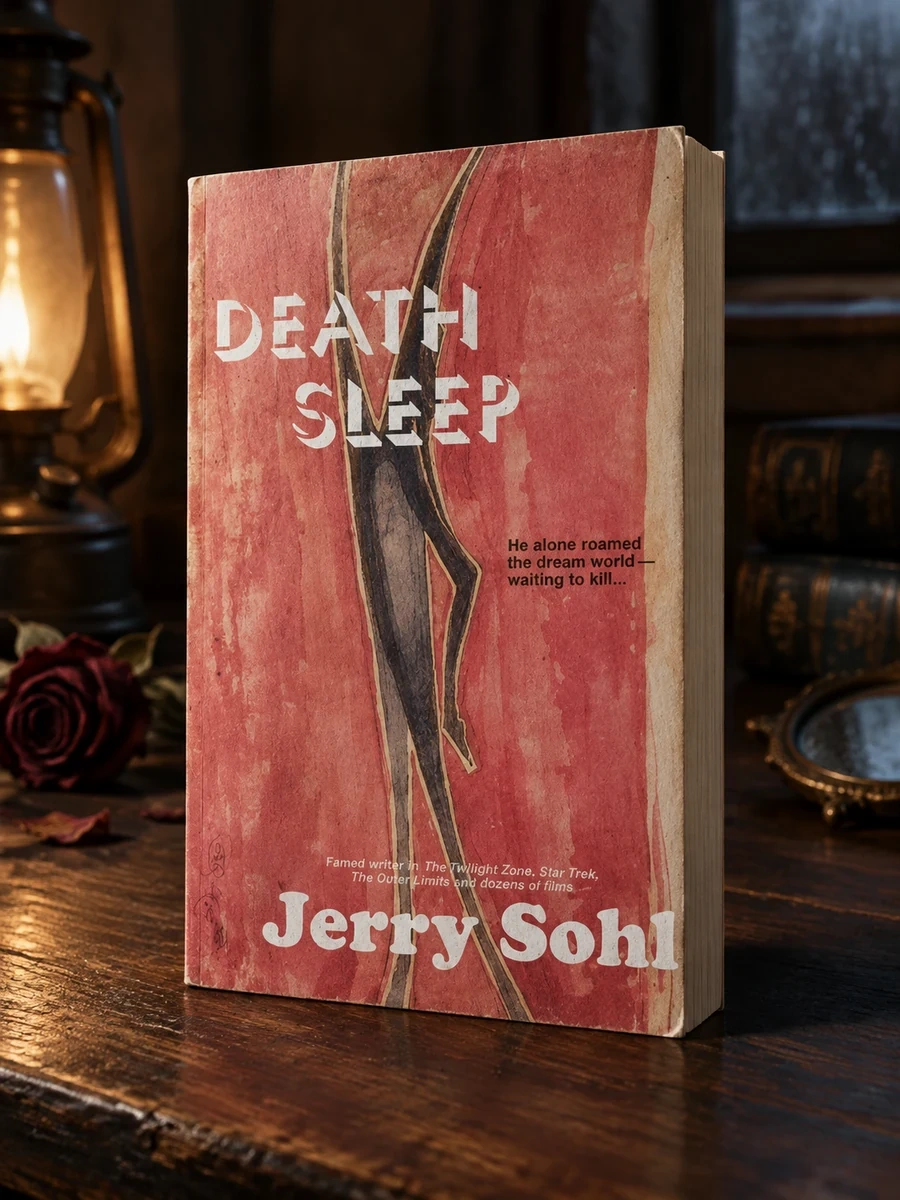

Death Sleep
A brain-dead doctor remains conscious inside his body in this classic sci-fi horror tale.
The narrative centers on Dr. Curtis Sheridan, whose physical death does not stop his awareness. He exists in a liminal state where he can hear and feel every moment while unable to move or speak. This condition creates a unique form of torture, as he must endure the disdain of those who believe him gone. The plot hinges on the mystery of his surviving consciousness and the evil plans forming within his mind. It reflects the era's fascination with technology's role in defining life and death. Sohl uses this premise to examine isolation and the fragility of human connection.
This work emerges from the golden age of American television, where writers like Sohl crafted standalone episodes for anthology series. It reflects the mid-twentieth century's anxiety about medical technology and the definition of life, bridging the gap between literary horror and televised suspense.


📝 Description: Death Sleep
💎 Our verdict on Death Sleep
📖 Why choose it
Why this book is worth reading
Readers who appreciate the psychological tension of mid-century supernatural fiction will find this tale compelling. It offers a unique exploration of isolation and the fragility of human connection through the lens of medical horror. Those intrigued by the concept of consciousness surviving physical failure, as seen in works like I Am Legend or The Body Snatchers, will recognize similar thematic concerns here. The narrative provides a stark look at paranoia and disdain within a clinical setting. It is ideal for audiences seeking tight, scene-by-scene progression informed by scripted drama traditions rather than modern gore or complex romantic subplots.
⭐ Reader reviews
Reader rating
Sohl constructs a nightmare with precise psychological tension, leveraging his background in scripted drama to create a tight narrative. The story effectively examines the terror of being trapped within a paralyzed form while maintaining mental clarity. It draws heavily on the tradition of medical isolation horror, offering a chilling perspective on survival and identity. The book suits readers who enjoy classic television-era supernatural fiction and stories about the limits of technology. While it may not appeal to those seeking visceral gore, its strength lies in the stark contrast between physical paralysis and active consciousness. This approach ensures a lingering sense of dread that defines the best of the genre.