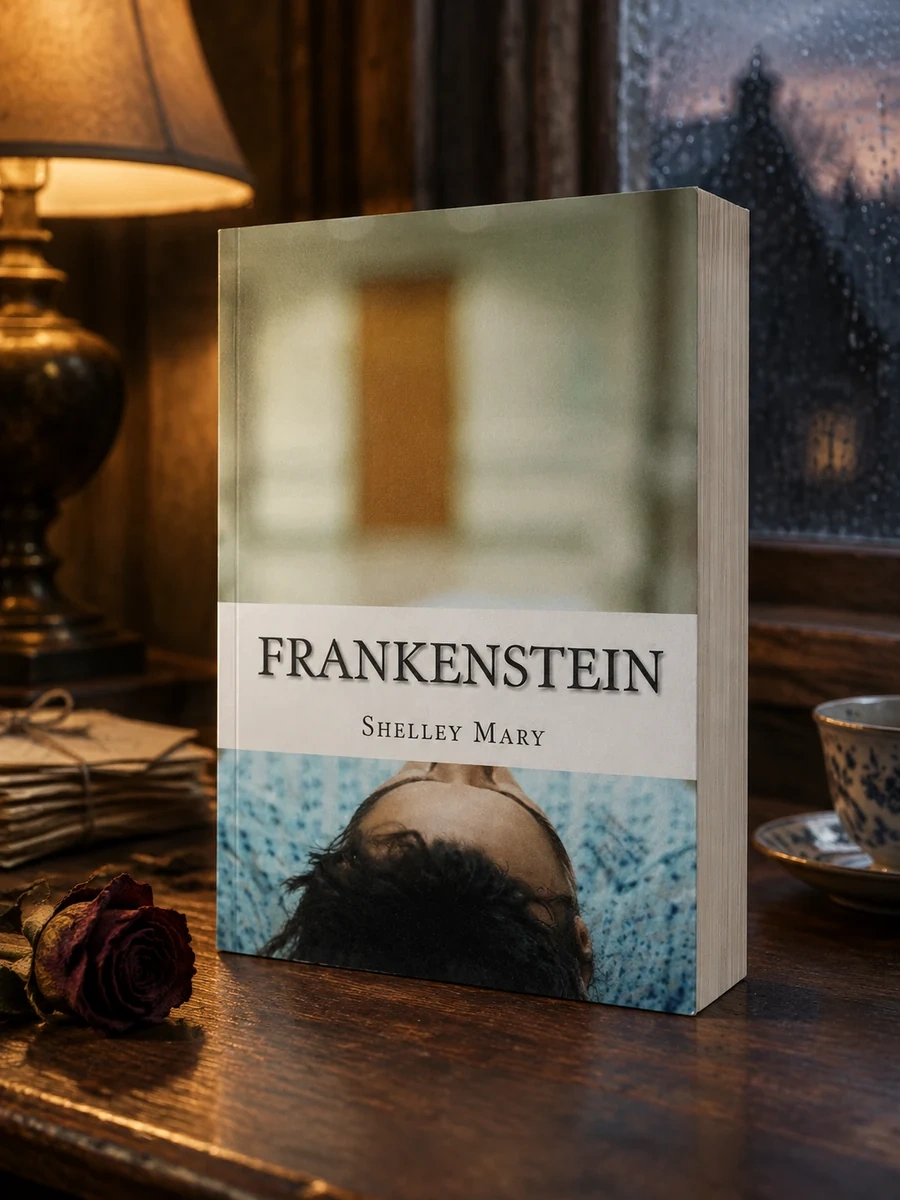
Frankenstein
Mary Shelley's novel about a scientist who creates life and faces its consequences.
Mary Shelley’s Frankenstein follows Victor Frankenstein, a scientist who discovers how to create life. He constructs a being resembling man, though larger and more powerful than average. The narrative examines his hubris and the consequences of his actions. This work blends elements of Gothic fiction with Romantic movement traditions. It serves as a warning against the over-reaching nature of modern man and the Industrial Revolution. The subtitle, The Modern Prometheus, highlights this thematic focus on dangerous ambition. The novel is often cited as the first fully realized science fiction story. Its influence extends across literature and popular culture, spawning numerous horror stories and films. Readers who enjoy complex character studies and philosophical questions about creation will find value here. Those seeking simple monster tales without deeper thematic layers may find it less engaging. The text remains a cornerstone of speculative fiction, exploring the boundary between life and death through Victor’s tragic journey.
Published in 1818, this novel emerged during the Industrial Revolution. It influenced subsequent horror and science fiction genres. The subtitle references Prometheus, linking modern scientific overreach to classical myth. Its cultural impact persists through adaptations in film and literature.


📝 Description: Frankenstein
💎 Our verdict on Frankenstein
📖 Why choose it
Why this book is worth reading
Readers who appreciate complex character studies and philosophical inquiries into the nature of creation will find significant value in this text. It is ideal for those interested in exploring the boundary between life and death through Victor Frankenstein’s tragic journey. The narrative serves as a profound warning against the hubris of modern man and the over-reaching nature associated with the Industrial Revolution. While it may disappoint those seeking simple monster tales without deeper thematic layers, it offers rich intellectual engagement for others. Its influence spans literature and popular culture, making it essential for understanding the roots of horror fiction and its evolution into a genre that questions scientific ethics and human ambition.
⭐ Reader reviews
Reader rating
This work masterfully blends Gothic elements with Romantic traditions to examine the consequences of dangerous ambition. Shelley constructs a narrative that is less about simple horror and more about the tragic hubris of Victor Frankenstein and his creation. The book excels in its philosophical depth, challenging readers to consider the ethical implications of playing god. It suits audiences who enjoy speculative fiction and complex psychological portraits over straightforward monster narratives. By highlighting the dangers of unchecked scientific progress, it remains a vital, thought-provoking classic that continues to resonate across generations, offering a timeless critique of modernity through its enduringly powerful storytelling.