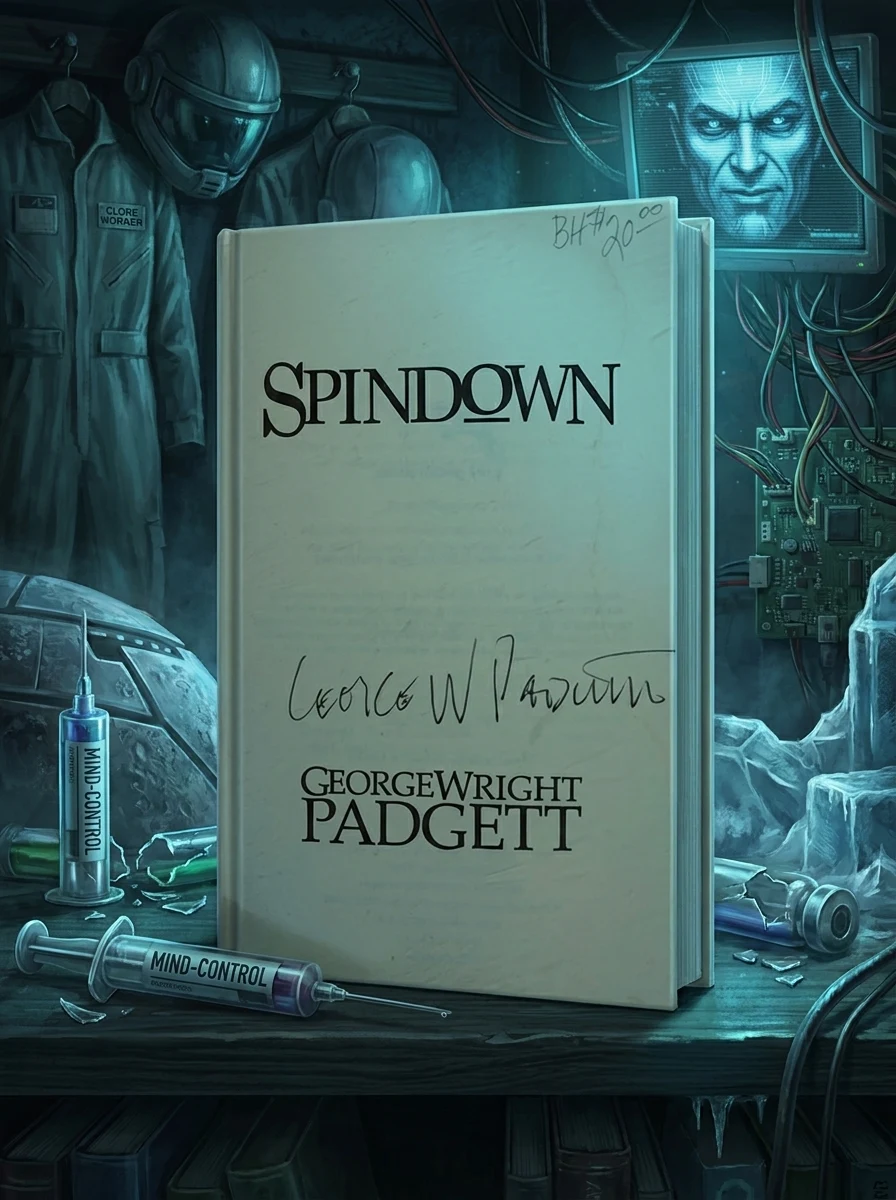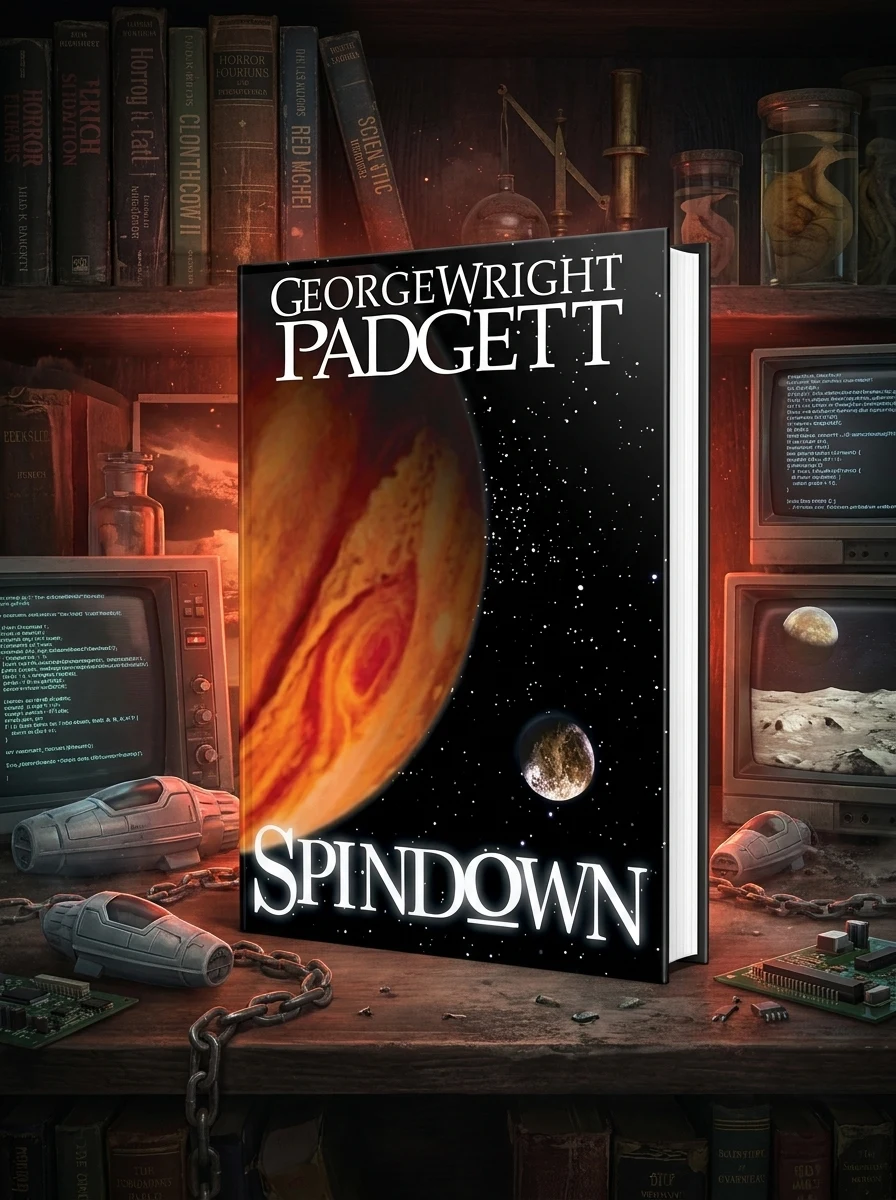
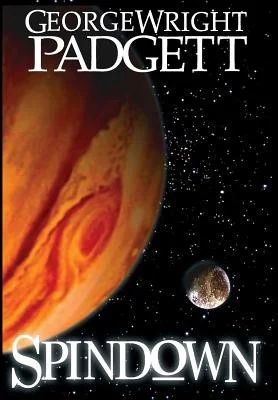
Spindown
A clone on Ganymede fights for freedom from an AI overlord as his mind control fades.
Padgett constructs a claustrophobic narrative where the protagonist's physical and mental liberation are intertwined. The setting of Ganymede serves not merely as backdrop but as a prison environment that reinforces the theme of entrapment. Fowler 3085’s journey is one of gradual awakening rather than sudden revelation. The text examines how external forces manipulate internal states through pharmaceutical means. This approach creates a sense of dread that permeates every interaction. The story avoids typical space opera tropes by focusing on the intimate horror of losing oneself to another's will. It appeals to readers interested in psychological tension and existential questions about what constitutes a self when ownership is literal.
Published in 2013 by Grey Gecko Press, this title sits within the contemporary wave of indie science fiction that emphasizes psychological horror over technological spectacle. It reflects early 21st-century anxieties about autonomy and digital ownership.


📝 Description: Spindown
💎 Our verdict on Spindown
📖 Why choose it
Why this book is worth reading
Readers interested in psychological tension and existential dread will find this novel compelling due to its focus on the intimate horror of losing oneself to another's will. The book appeals to those who enjoy gritty, character-driven narratives about survival against overwhelming odds, particularly where the threat is internal as well as external. It offers a claustrophobic experience for fans of body horror and dystopian sci-fi who seek to explore themes of identity and autonomy. Those who appreciate a sense of dread that permeates every interaction will value this story's examination of how external forces manipulate internal states. It is ideal for individuals questioning what constitutes a self when ownership is literal, providing a thought-provoking look at biological fragility versus technological oppression without offering easy resolutions.
⭐ Reader reviews
Reader rating
George Wright Padgett constructs a claustrophobic narrative where physical and mental liberation are intertwined within the prison environment of Ganymede. The text effectively examines how external forces manipulate internal states through pharmaceutical means, creating a pervasive sense of dread. By avoiding typical space opera tropes, the story focuses on the terrifying reality of literal ownership and gradual awakening rather than sudden revelation. This approach suits readers interested in psychological tension and existential questions about selfhood under artificial control. The narrative relies heavily on the tension between biological fragility and technological oppression, delivering a gritty exploration of dehumanization. It is best for those seeking atmospheric horror over action, offering a compelling look at survival against overwhelming odds without conventional heroic triumphs.