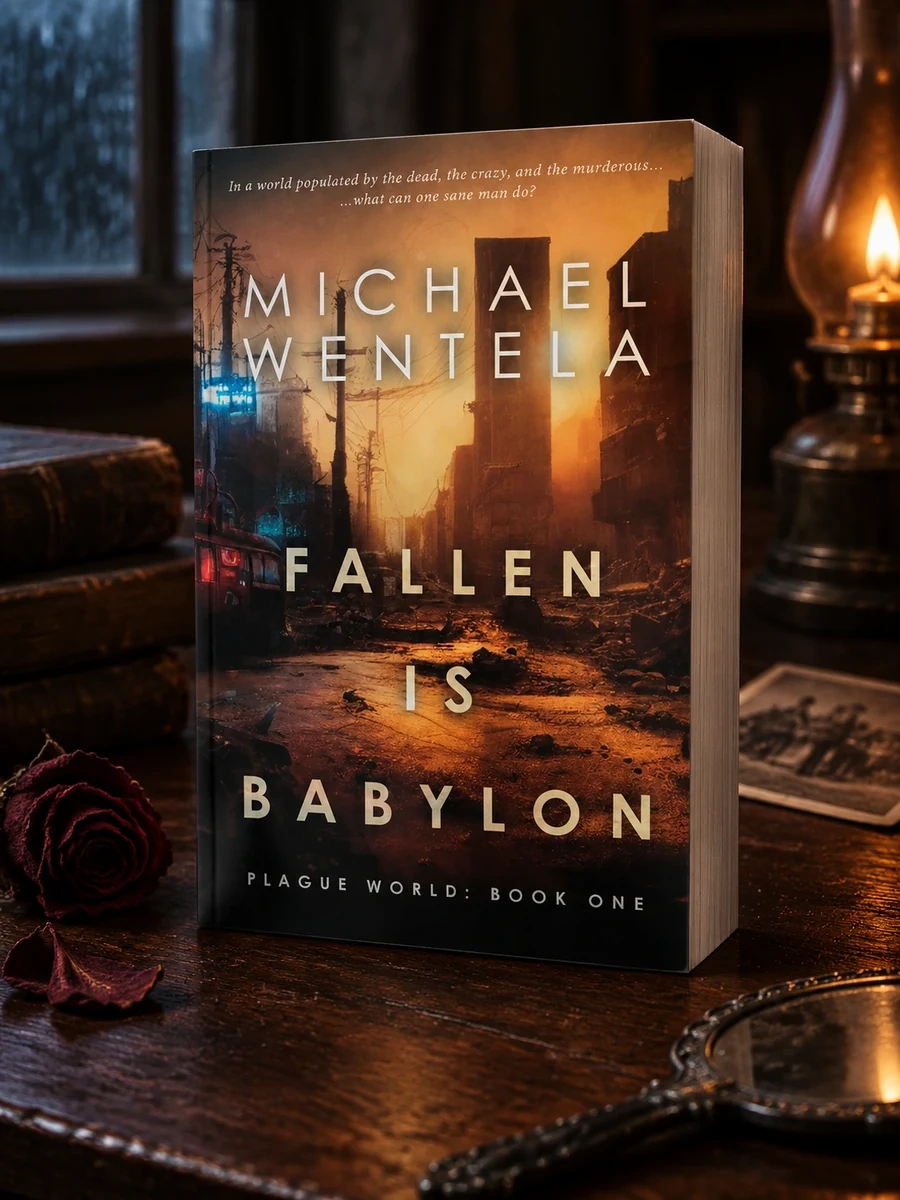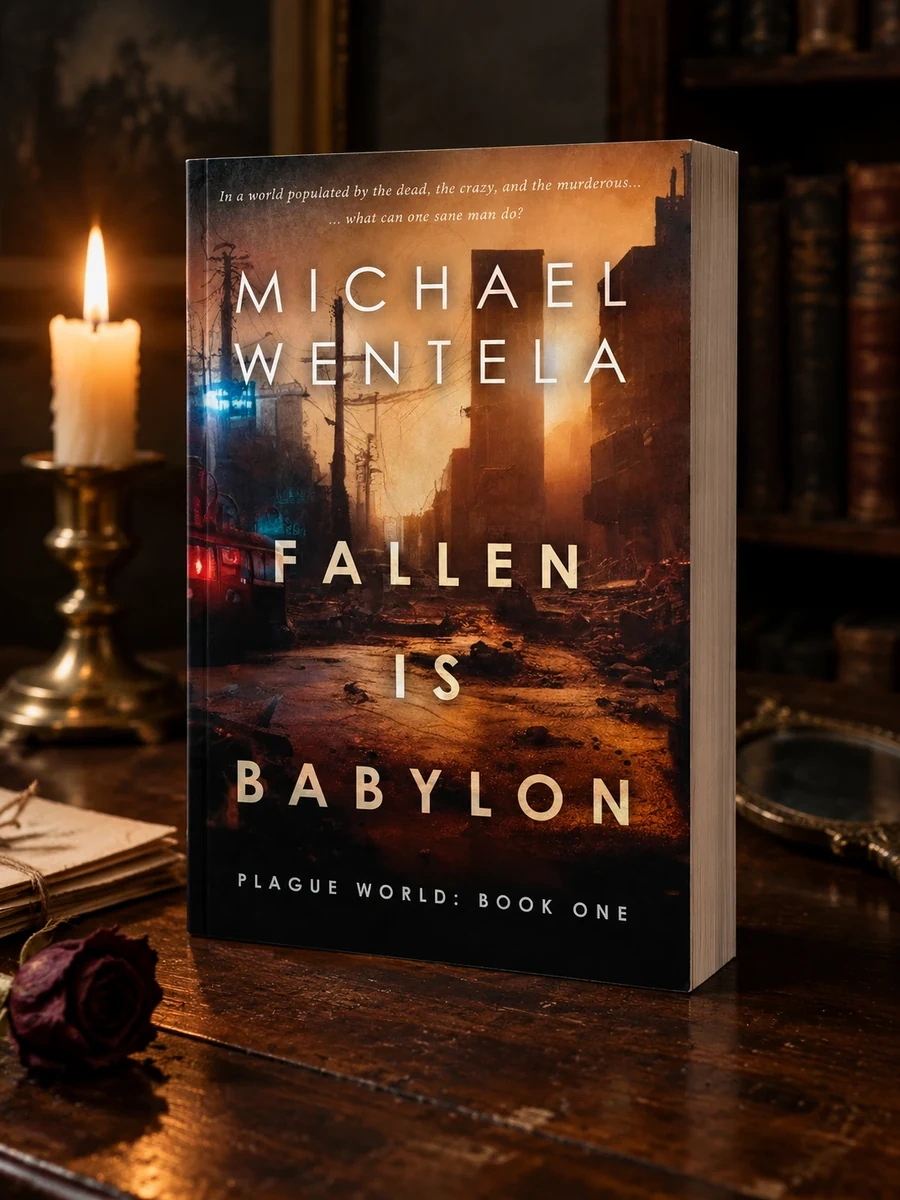
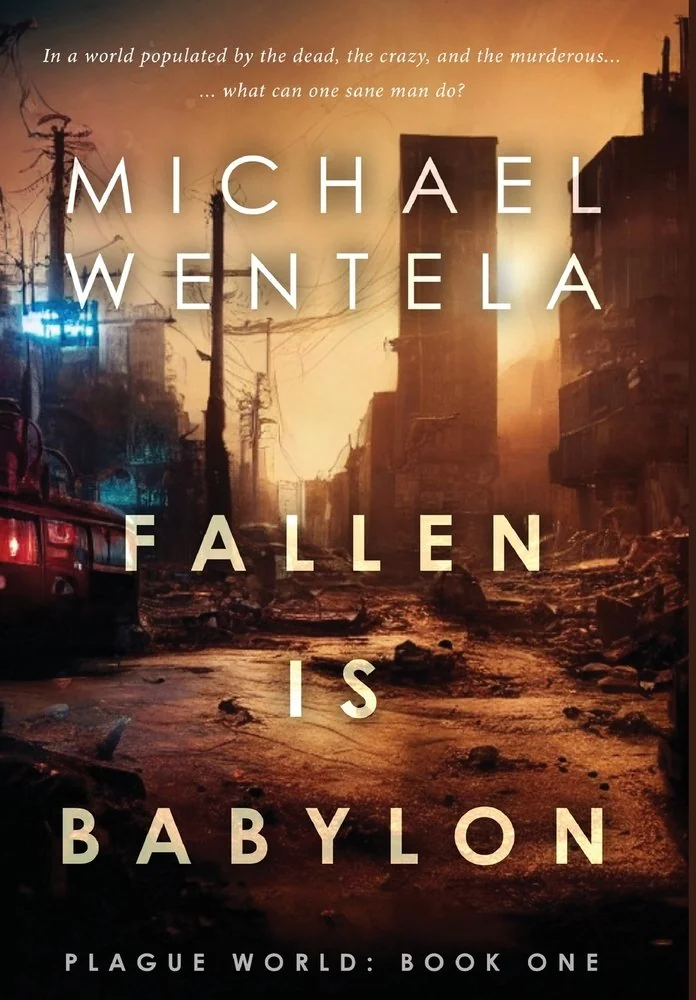
Fallen Is Babylon
A lone survivor faces military betrayal and vampire society in underground tunnels.
The novel examines the aftermath of a global plague that creates a new vampire class. Vann Arnett endures eighteen months of solitude while his former life crumbles around him. The arrival of soldiers introduces conflict, not salvation. Their expedition into the city’s subterranean networks provokes a violent response from the established vampire community. Wentela uses this setup to critique the concept of heroism when faced with complex moral realities. The narrative does not offer clear distinctions between good and evil. Instead, it portrays the soldiers as agents of chaos who disrupt a stable, albeit dark, social order. The story remains grounded in the immediate physical and emotional struggles of its protagonist.
Published by Grey Gecko Press in 2013, this work fits within the contemporary horror genre. It draws on the tradition of urban fantasy and post-apocalyptic fiction. The setting relies on the trope of a fortified mansion as a last refuge against a transformed world.


📝 Description: Fallen Is Babylon
💎 Our verdict on Fallen Is Babylon
📖 Why choose it
Why this book is worth reading
Readers seeking a grim, atmospheric tale of urban decay and military failure will find this book compelling. It appeals to those interested in complex moral realities rather than simple good-versus-evil narratives. The story offers a deep dive into the psychological toll of isolation and the blurred lines between monster and savior. Those who enjoy critiques of heroism and dark fantasy elements where traditional monster hunting tropes are subverted will appreciate the nuanced portrayal of vampire society. It is ideal for fans of cosmic and psychological horror who prefer grounded, immediate physical struggles over hopeful endings.
⭐ Reader reviews
Reader rating
Wentela delivers a tense siege narrative that effectively critiques the concept of heroism through military betrayal and vampire society dynamics. The book excels in portraying the moral ambiguity of survival, where soldiers act as agents of chaos rather than salvation. Its strength lies in the grounded emotional struggles of the protagonist amidst urban decay. This work suits readers who appreciate grim atmospheres and complex social orders disrupted by external forces. It avoids traditional tropes, offering instead a dark exploration of humanity within the undead. The narrative remains focused on immediate physical and emotional realities, making it a solid choice for those weary of clear moral distinctions in horror fiction.