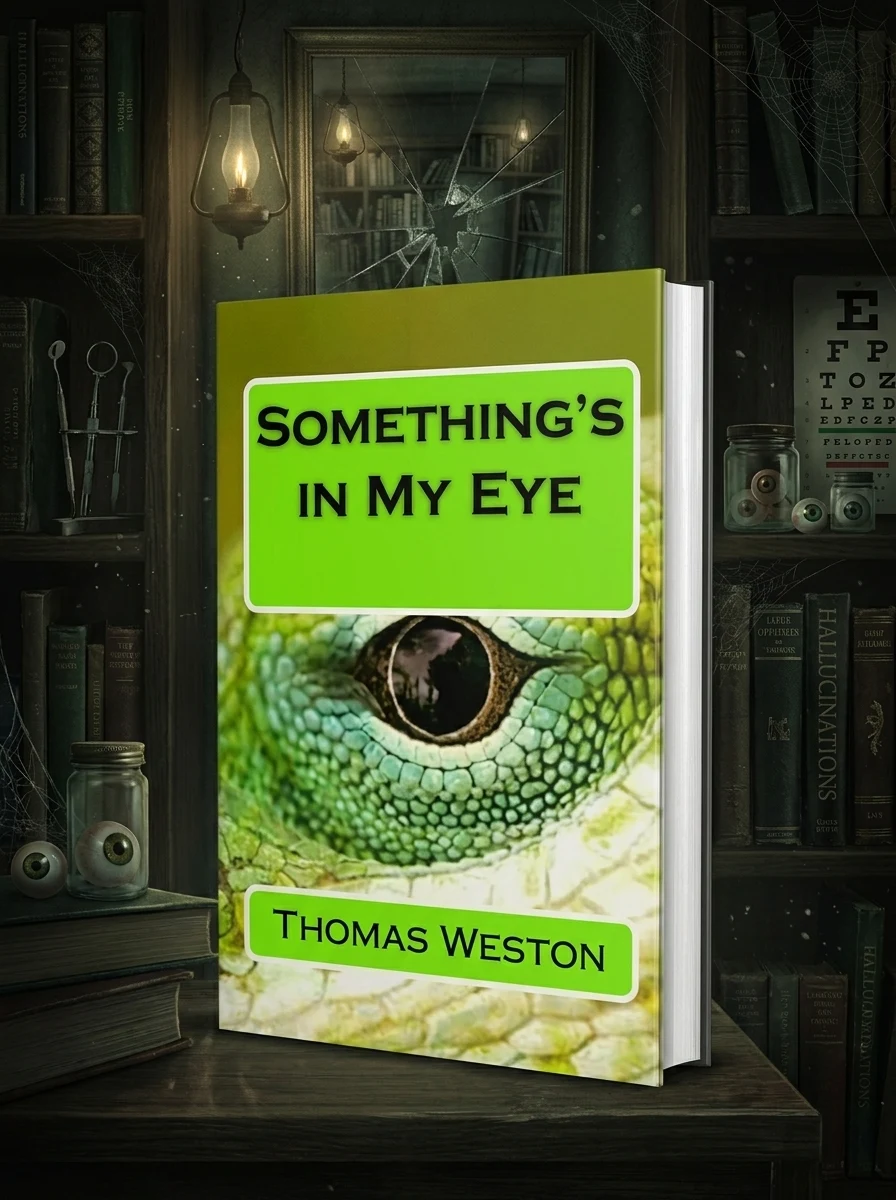
Something's in My Eye
A sequel exploring a man's descent into madness after free eye surgery blurs reality and illusion.
Eric thought he was cured after leaving Quiet Waters mental hospital. His life changes when he sees an ad for free eye surgery. The procedure traps him in a state where he cannot tell what is real. Thomas Weston writes this as a direct follow-up to Hallucinations. The story focuses on Eric’s psychological decline rather than external events. It examines how medical interventions can sometimes worsen mental instability. The narrative style is broad and unflinching, showing the protagonist's loss of control. This approach appeals to readers who like slow-burn psychological terror.
Published in 2013 by Createspace Independent Publishing Platform, this book sits within the tradition of American horror fiction. It draws on gothic and supernatural themes to explore mental health. The work continues the narrative established in Hallucinations, catering to readers interested in psychological dread.


📝 Description: Something's in My Eye
💎 Our verdict on Something's in My Eye
📖 Why choose it
Why this book is worth reading
Readers seeking a slow-burn psychological terror will find this narrative compelling, particularly those interested in stories about mental health and supernatural dread. It is ideal for fans of Thomas Weston’s previous work who appreciate the lingering effects of institutionalization on the psyche. The book offers a disturbing look at how a single choice can shatter one’s grasp on reality, focusing on the blurred lines between medical treatment and psychological trauma. Those who enjoy ambiguous endings and unflinching examinations of the protagonist's internal experience will gain from this close-up view of deteriorating sanity without external resolution.
⭐ Reader reviews
Reader rating
Thomas Weston delivers a broad, unflinching narrative that traces Eric’s descent into madness after free eye surgery blurs the line between reality and illusion. The book excels in its focus on psychological unraveling rather than external events, offering a grounded view of deteriorating sanity. It suits readers who appreciate ambiguity and do not seek clear plots or happy endings. While those preferring straightforward adventures may find the lack of resolution frustrating, fans of gothic fiction and psychological horror will find the exploration of mental instability and sensory loss deeply engaging and intellectually stimulating.