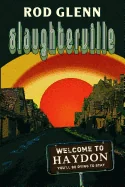
Slaughterville
A novelist researches a serial killer in Northumberland, only for his fiction to become deadly reality.
A man comes to Haydon intending to document local killings for a non-fiction project. His arrival disrupts the peaceful routine of the town. Glenn uses this backdrop to build feelings of distrust and anxiety. The way the story is told reflects the main character's mental decline. Every section reveals more lies and hidden motives. We are left unsure whether the murderer exists or is just an idea in the writer's head. This focus on psychology distinguishes it from standard horror genres. It targets readers who appreciate complex, intellectual scare tactics.
Published in 2017 by Wild Wolf Publishing, this book sits within the contemporary horror genre. It draws on the tradition of rural gothic fiction where isolated communities face supernatural or criminal threats. The setting in Northumberland adds a specific regional flavor to the universal theme of outsider danger.


📝 Description: Slaughterville
💎 Our verdict on Slaughterville
📖 Why choose it
Why this book is worth reading
Readers who appreciate complex, intellectual scare tactics and tricky plots with unreliable narrators will find significant value in this work. The book offers a gripping examination of how obsession warps truth, appealing to those who enjoy having their perception of reality challenged. It is ideal for audiences comfortable with uncertainty who seek a slow-building tension rather than simple action or clear answers. By blurring the lines between fiction and fact, it provides a disturbingly authentic experience that lingers long after reading, satisfying those who prefer psychological depth over conventional horror tropes.
⭐ Reader reviews
Reader rating
Rod Glenn crafts an unsettling narrative that effectively dismantles the boundary between creative invention and actual events. The novel excels in its layered storytelling, using a writer’s descent into madness to explore how easily truth can be distorted by obsession. Glenn’s approach avoids sudden shocks, opting instead for a slow burn of distrust and anxiety that reflects the protagonist’s mental decline. This focus on psychological horror distinguishes it from standard genre fare, making it particularly suitable for readers who enjoy gothic themes of loneliness and rural isolation. While those seeking straightforward action may struggle with its ambiguity, the book succeeds as a sophisticated look at creativity turning dangerous.
📖 Read on the blog
✍️ More books by this author Rod Glenn




🏛 Books from this publisher Wild Wolf Publishing
You might also like
See more →


Have a question about this item?
Ask about the edition, condition, delivery or anything else — we reply by email or phone, usually within a day.
