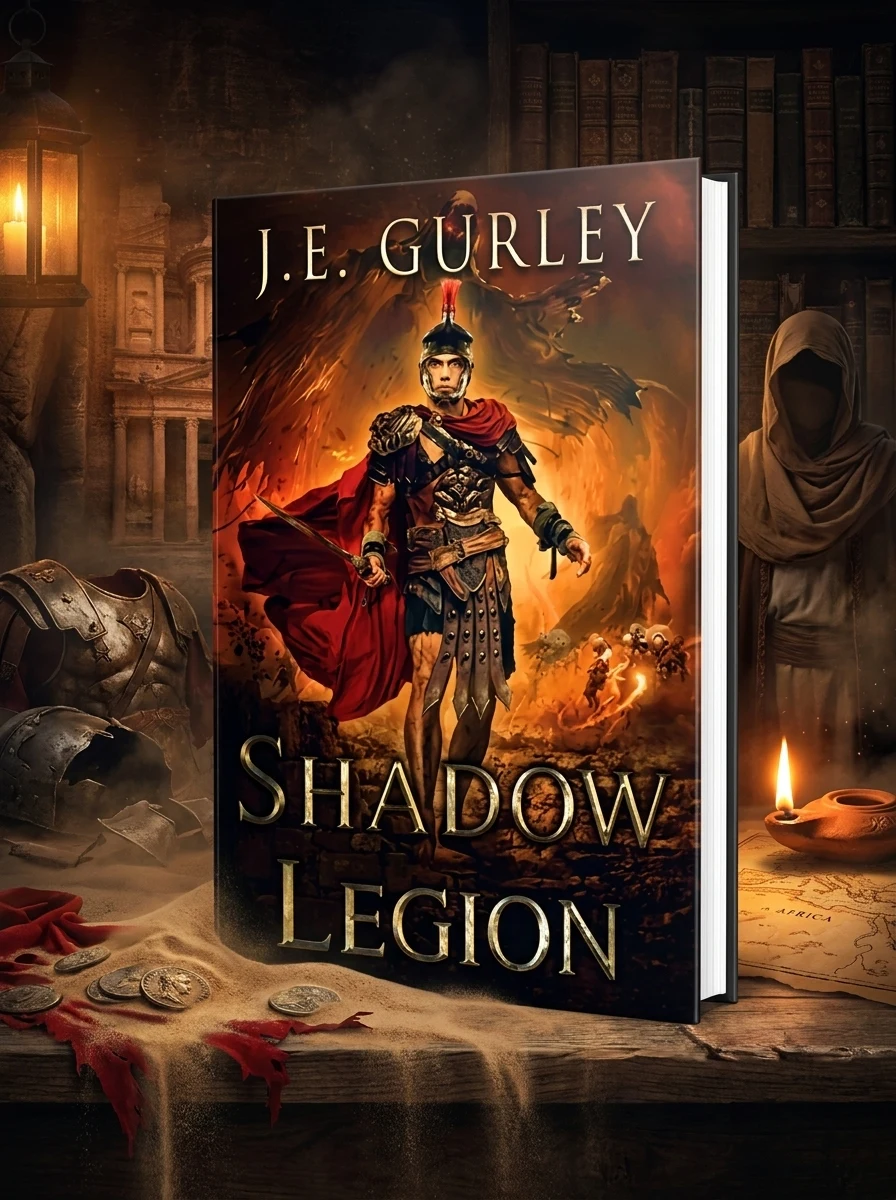
Shadow Legion
A demoted Roman centurion fights ancient wraiths in the Sahara desert.
Gurley combines historical fiction with supernatural horror. The plot tracks Gaius Marcus Linneus as he moves from political disgrace to a deadly frontier command. He encounters Rashid, who explains the origin of the threat. The Kashites and Inyosh conflict forms the mythological backbone. The author uses these legends to explain the current attacks on Castra-Augustus. This approach grounds the horror in specific ancient rivalries rather than generic evil. Readers interested in how Roman military structures interact with occult threats will find this structure engaging. The story does not rely on modern technology or contemporary settings.
The narrative is set in Northern Africa during the reign of Emperor Marcus Aurelius. It references Roman legions, Berber merchants, and ancient cities like Hamad Rus. The story blends historical Roman geography with mythological elements involving Nergal and Lilith.


📝 Description: Shadow Legion
💎 Our verdict on Shadow Legion
📖 Why choose it
Why this book is worth reading
Readers who appreciate the meticulous texture of historical fiction will find this novel compelling for its grounded approach to supernatural horror. The book appeals to those fascinated by Roman military structures and the psychological weight of political disgrace, as it details a demoted centurion’s struggle against ancient, mythological threats. By utilizing specific legends of the Kashites and Inyosh rather than generic evil, the story offers a rich intellectual framework for its terror. It is ideal for audiences who enjoy slow-burn atmospheric dread and wish to see how occult traditions can be woven into the fabric of historical reality without relying on modern conveniences or contemporary settings.
⭐ Reader reviews
Reader rating
Gurley successfully blends historical rigor with cosmic dread, creating a unique subgenre experience. The narrative excels in establishing atmosphere through the isolation of Castra-Augustus and the enigmatic lore of Rashid, grounding the horror in tangible ancient rivalries. This structure avoids the pitfalls of generic ghost stories by providing a mythological backbone that feels earned and specific. However, the deliberate pacing and extensive exposition may deter readers seeking immediate action. The book is best suited for those who value world-building and historical accuracy over fast-paced thrills. It stands as a thoughtful exploration of fear in antiquity, rewarding patience with a deeply immersive encounter with the uncanny.
You might also like
See more →


Have a question about this item?
Ask about the edition, condition, delivery or anything else — we reply by email or phone, usually within a day.
