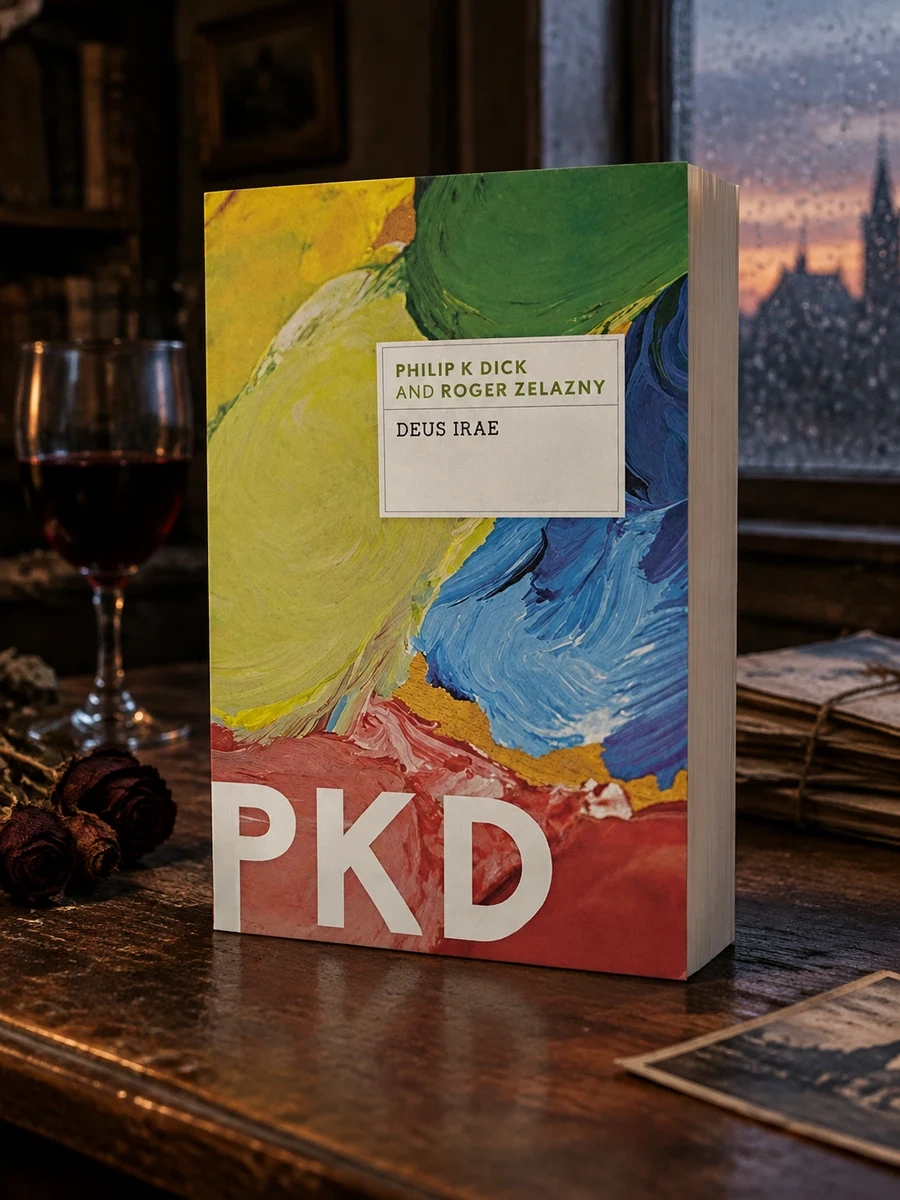

Deus Irae
A disabled painter journeys through nuclear ruins to paint God.
The novel emerged from a difficult creative process involving multiple authors and a feline incident. Dick started the project but stalled due to religious knowledge gaps. Ted White was approached first but did nothing. Zelazny discovered the manuscript years later and joined the effort. The pair worked sporadically until financial pressure from the publisher forced them to finish in 1975. The resulting text is a post-apocalyptic tale where an armless and legless artist seeks a divine subject. The story relies on Dick’s earlier work "The Great C" for its core ideas. Zelazny’s involvement added structure to the unfinished draft. The cat urine incident remains a curious footnote in the book's history, showing the chaotic nature of its creation.
Published in 1976, this work sits at the intersection of post-apocalyptic science fiction and theological speculation. It reflects mid-century American anxieties about nuclear war and religious judgment. The collaboration between Dick and Zelazny highlights the era’s experimental approach to genre blending.


📝 Description: Deus Irae
💎 Our verdict on Deus Irae
📖 Why choose it
Why this book is worth reading
Readers drawn to the intersection of cosmic horror and theological inquiry will find this text uniquely compelling. It appeals to those fascinated by the chaotic origins of literary works, specifically the unusual collaboration between Philip K. Dick and Roger Zelazny. The narrative offers a profound exploration of faith and creation through the lens of a disabled protagonist traversing nuclear ruins. Those interested in the physical and spiritual journey of an artist seeking to depict the divine amidst destruction will appreciate the depth of its themes. It is ideal for audiences who enjoy complex, brooding atmospheres over straightforward action, offering a meditative engagement with judgment and survival.
⭐ Reader reviews
Reader rating
The novel succeeds in weaving a dense tapestry of post-apocalyptic dread with theological speculation, anchored by Dick’s foundational ideas from 'The Great C'. Zelazny’s structural contributions provide necessary coherence to the fragmented draft, creating a unique hybrid of horror and science fiction. The protagonist’s physical limitations contrast sharply with his spiritual quest, generating intense psychological tension. It best suits readers who appreciate atmospheric brooding and intellectual challenges within the horror genre. While it lacks traditional action, its exploration of faith, creation, and the divine wrath resonates deeply with fans of gothic and cosmic horror traditions.
📖 Read on the blog
✍️ More books by this author Philip K Dick


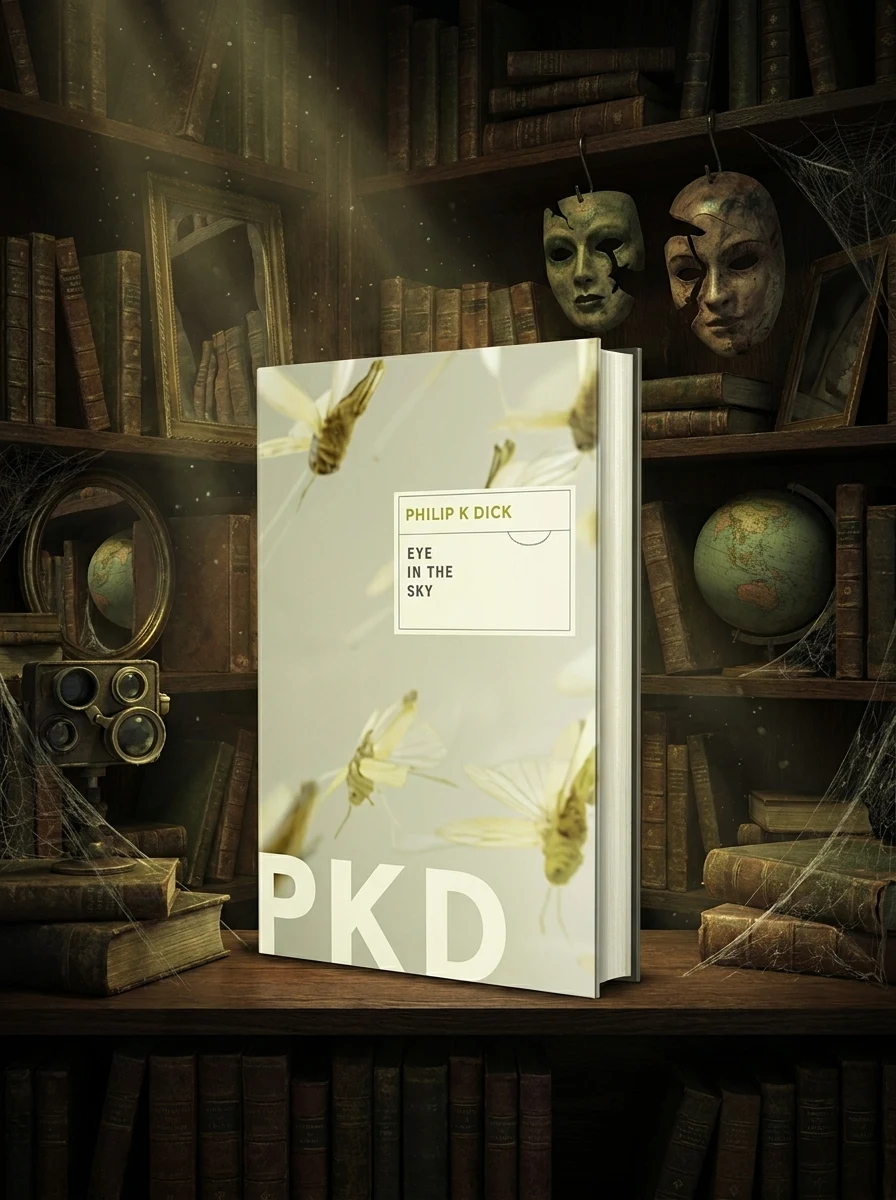
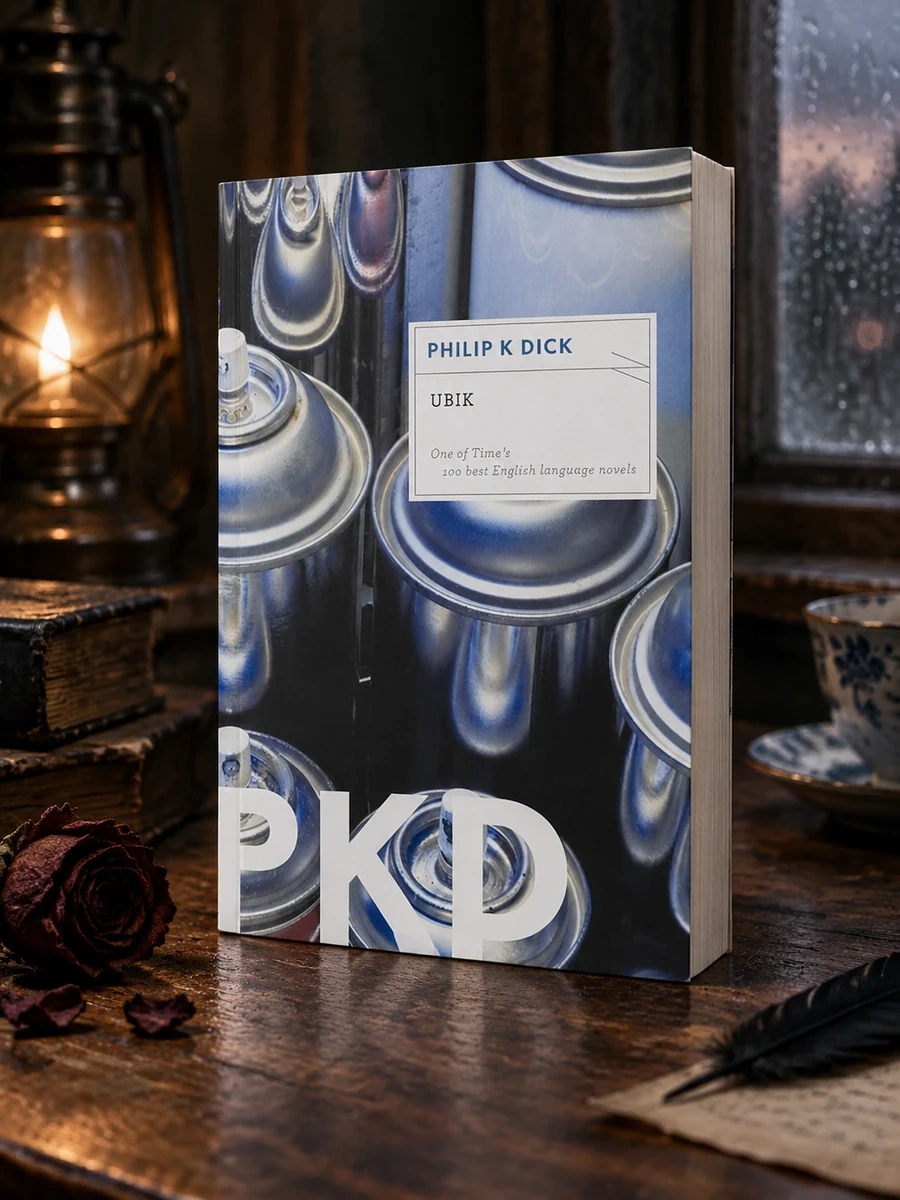
🏛 Books from this publisher Mariner Books Classics
You might also like
See more →

Have a question about this item?
Ask about the edition, condition, delivery or anything else — we reply by email or phone, usually within a day.
