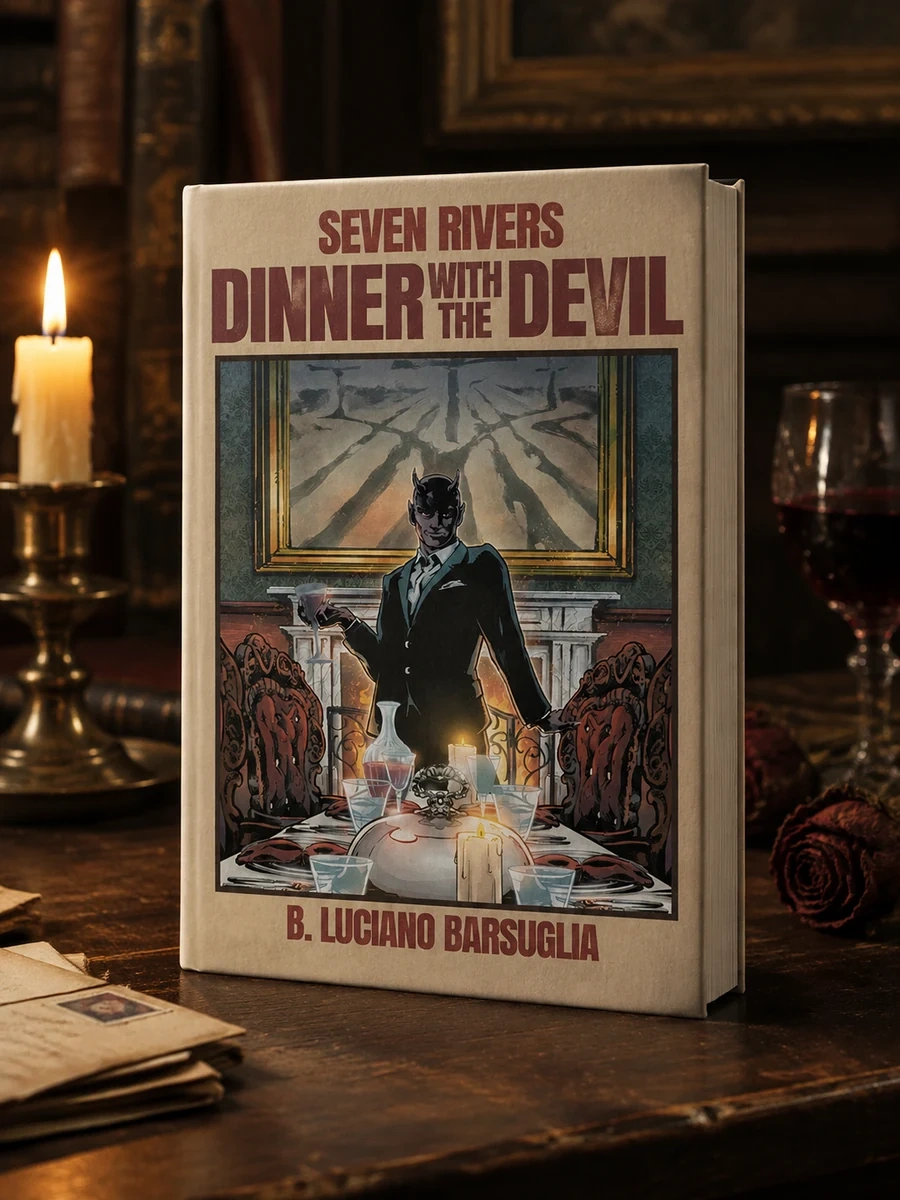
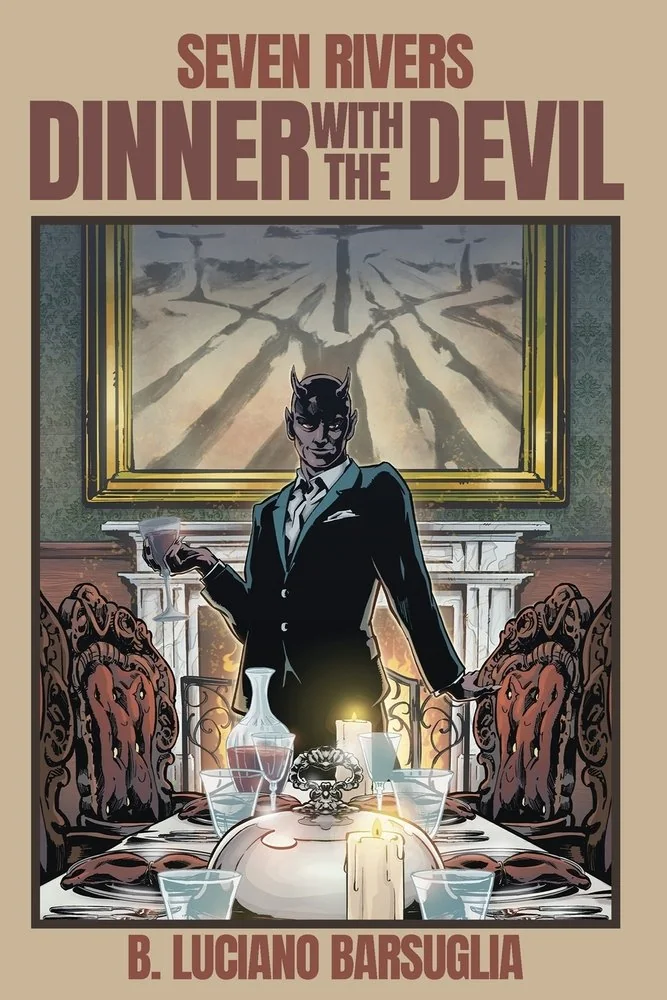
Seven Rivers: Dinner with the Devil: Book Two of Seven Rivers Tales of Supernatural Horror
Six strangers dine with Satan in an isolated house where eternity hangs in the balance.
This second installment in the Seven Rivers series shifts focus from external threats to internal moral decay. Barsuglia uses the setting of a single room to amplify tension among the six guests. The host claims multiple names for the devil, including Beelzebub and Lucifer. This creates a layered conflict between identity and accountability. The story does not rely on jump scares but on the dread of inevitable judgment. It suits readers who appreciate slow-burn horror and philosophical questions about sin and redemption.
This 2025 release from Independently Published fits within the modern revival of gothic horror. It engages with traditional Christian demonology by listing specific titles like Lord of the Flies. The work reflects a contemporary interest in personal damnation rather than societal collapse.


📝 Description: Seven Rivers: Dinner with the Devil: Book Two of Seven Rivers Tales of Supernatural Horror
💎 Our verdict on Seven Rivers: Dinner with the Devil: Book Two of Seven Rivers Tales of Supernatural Horror
📖 Why choose it
Why this book is worth reading
Readers who appreciate slow-burn horror and philosophical inquiries into the nature of sin will find this volume compelling. The narrative eschews jump scares in favor of the dread inherent in inevitable judgment, making it ideal for those seeking psychological depth over action. Fans of gothic fiction and dark fantasy will engage with the layered conflict between identity and accountability presented through dialogue and internal reflection. Those interested in theological debates and the mechanics of temptation within a static setting will discover a rich exploration of demonic figures from established religious traditions. It offers a stark, timeless examination of moral decay without relying on modern slang or fleeting trends.
⭐ Reader reviews
Reader rating
Barsuglia effectively utilizes a single room to amplify tension among six strangers facing an entity claiming divine authority. By focusing on internal moral decay rather than external threats, the text creates a profound sense of dread regarding judgment and redemption. The reliance on dialogue and theological debate suits readers who enjoy psychological horror more than fast-paced monster hunts. While the static setting may feel tedious to some, it serves the narrative’s purpose of forcing characters to confront their histories. This volume is a thoughtful addition for enthusiasts of gothic fiction and dark fantasy who value eternal moral dilemmas over contemporary commentary.