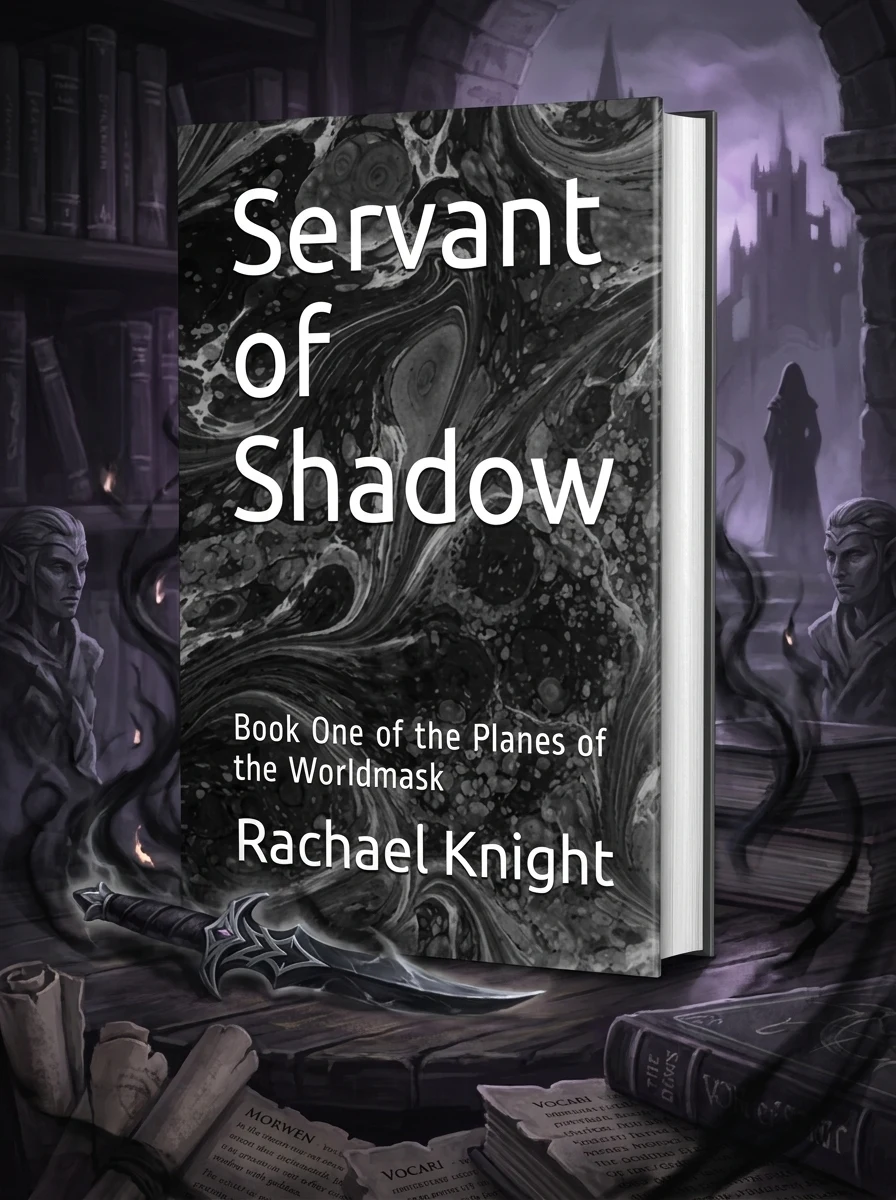
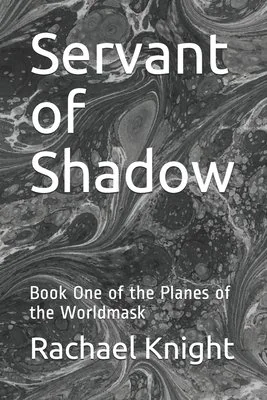
Servant of Shadow: Book One of the Planes of the Worldmask
A Dark Elf priestess follows her goddess's bloody commands in a political fantasy.
The narrative centers on Gzifa Zhamar, who transitions from commoner status to a position of influence within a noble house through divine intervention. Her primary goal involves restoring the Deep elves to the surface world of Vocari. This ambition brings her into direct conflict with the Grey elves and their Crown Prince. The plot follows her internal struggle against a prophesied death and her external maneuvering to secure power. Knight explores themes of religious devotion, political ambition, and the brutal realities of war. The story is driven by Gzifa’s willingness to endure any cost for her deity’s will.
The work draws on traditions of high fantasy involving distinct elven subraces and noble houses. It sits within the genre of dark supernatural fiction, focusing on the interaction between mortal agents and powerful deities like Morwen. The setting involves a world called Vocari with a history of peace that is now ending.


📝 Description: Servant of Shadow: Book One of the Planes of the Worldmask
💎 Our verdict on Servant of Shadow: Book One of the Planes of the Worldmask
📖 Why choose it
Why this book is worth reading
Readers seeking a complex protagonist driven by absolute religious devotion will find this narrative compelling. Gzifa’s journey from commoner to influential noble offers a unique perspective on power dynamics within a fantasy setting. The book appeals to those who enjoy political maneuvering intertwined with cosmic horror themes, where divine commands dictate earthly actions. It is ideal for audiences comfortable with mature content, including explicit descriptions of violence and sexuality, as these elements are integral to the story's tone and character development. Fans of dark elves and shadow magic will appreciate the detailed exploration of a culture seeking restoration through brutal means.
⭐ Reader reviews
Reader rating
Knight delivers a gritty entry into dark fantasy, focusing intensely on Gzifa’s internal conflict between survival and divine duty. The narrative excels in establishing the oppressive atmosphere of a world where political tension masks impending war. By centering the plot on a priestess bound by a bloody goddess, the author creates immediate stakes and moral ambiguity. The integration of religious undertones with political intrigue provides a rich texture for readers who appreciate layered world-building. While the mature content may alienate some, it serves the story’s dark tone effectively. This book suits fans of morally gray protagonists and those who enjoy high-stakes fantasy where faith is both a weapon and a curse, offering a visceral reading experience.