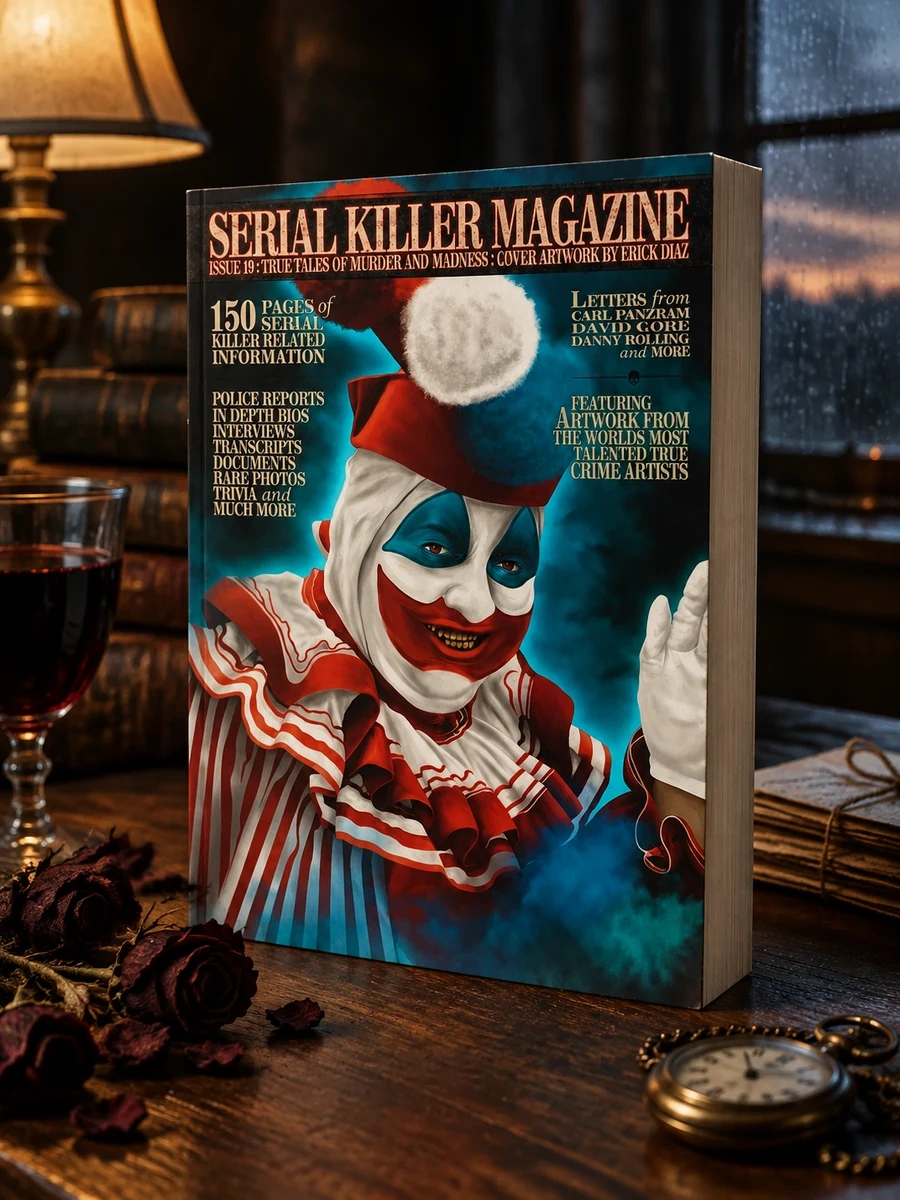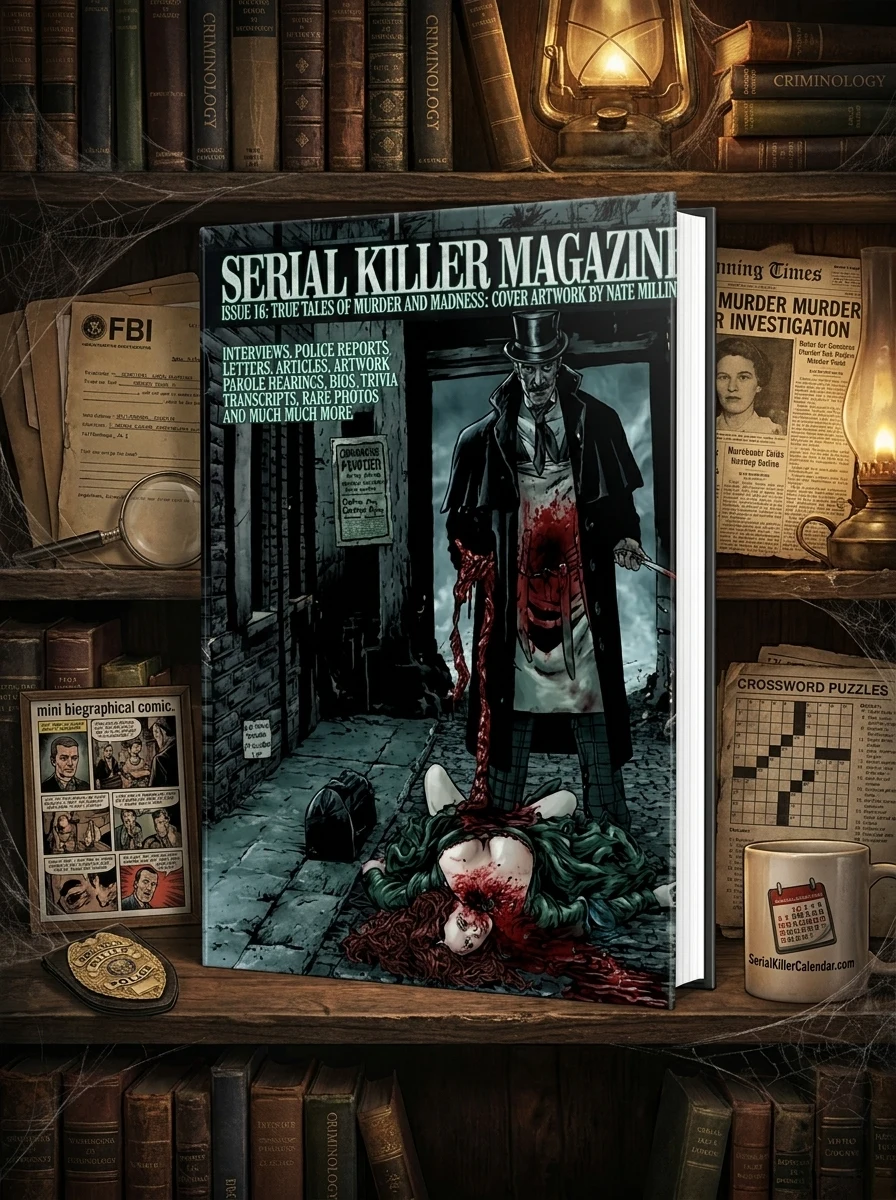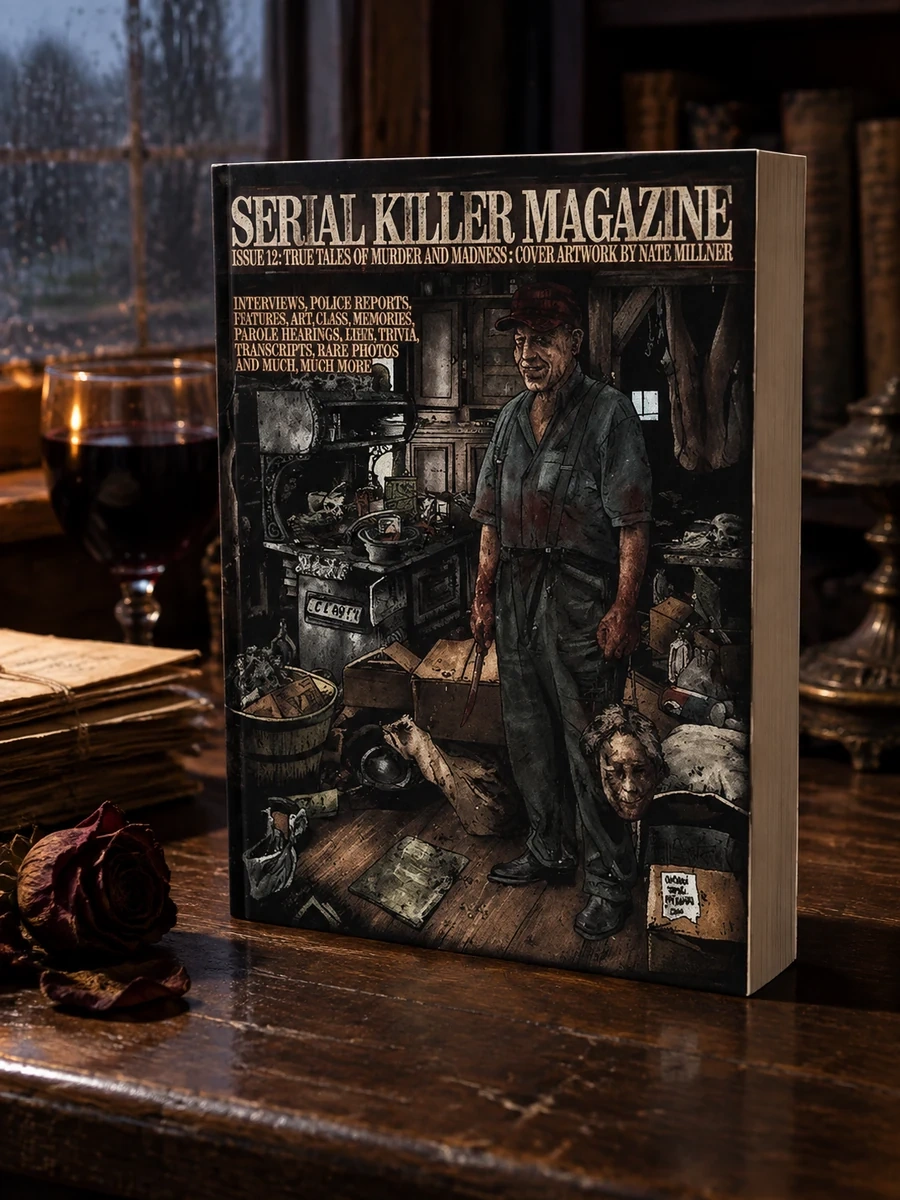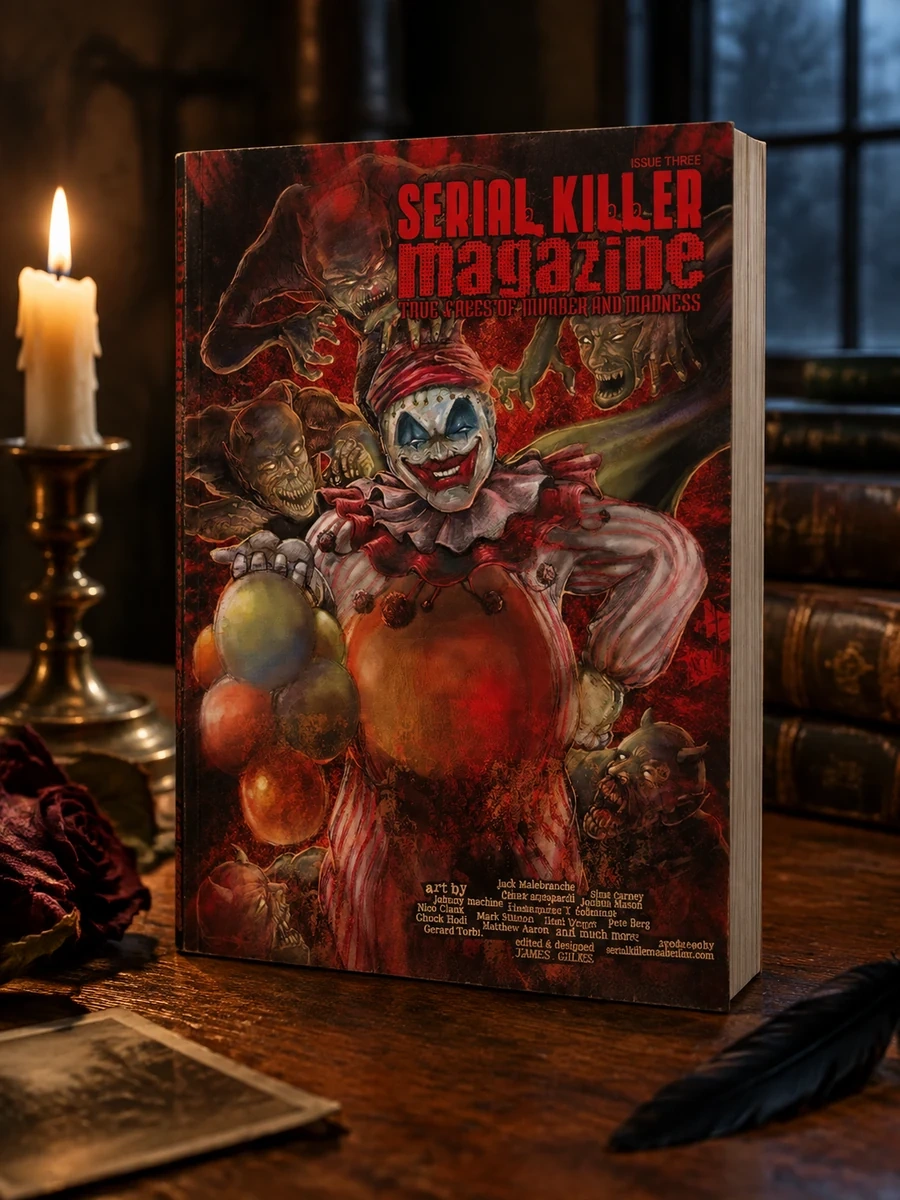

Serial Killer Magazine Issue 3
A 2013 collection of true crime articles, FBI files, and interviews by James Gilks.
This volume stands apart from standard true crime books by blending factual reporting with lighter entertainment elements. The inclusion of crossword puzzles and mini comics offers a break from the heavy subject matter. Interviews provide direct perspectives from killers and experts, adding depth to the analysis. The use of rare documents and FBI files grounds the content in historical reality. This approach creates a varied reading experience that appeals to diverse interests within the true crime community.
Published in 2013 by Lulu.com, this work reflects the early digital era of niche publishing. It draws on content from SerialKillerCalendar.com, bridging online true crime communities with physical book formats. The focus on murderabilia and prison art highlights a specific subculture interested in the tangible artifacts of criminal history.


📝 Description: Serial Killer Magazine Issue 3
💎 Our verdict on Serial Killer Magazine Issue 3
📖 Why choose it
Why this book is worth reading
This volume serves collectors of macabre memorabilia and students of criminal history who value primary sources over sensationalism. Readers gain access to rare FBI files and exclusive interviews that provide direct perspectives on serial murder without glorifying the violence. The blend of serious examination with lighter elements like crosswords and mini-comics offers a varied experience, making dense historical reality more digestible. It appeals to those seeking depth in analysis rather than just shock value, providing a unique mix of informational content and entertainment for fans of true crime and prison art.
⭐ Reader reviews
Reader rating
James Gilks curates a distinct artifact that stands apart from standard true crime narratives by integrating factual reporting with entertaining interludes. The inclusion of rare documents and FBI files grounds the work in historical reality, offering serious enthusiasts tangible connections to criminal history. While the heavy subject matter is balanced by trivia quizzes and comics, the tone remains respectful and analytical rather than exploitative. This approach creates a varied reading experience suitable for diverse interests within the genre. It succeeds as a collector’s item for those who appreciate the intersection of forensic detail and artistic expression found in prison art.