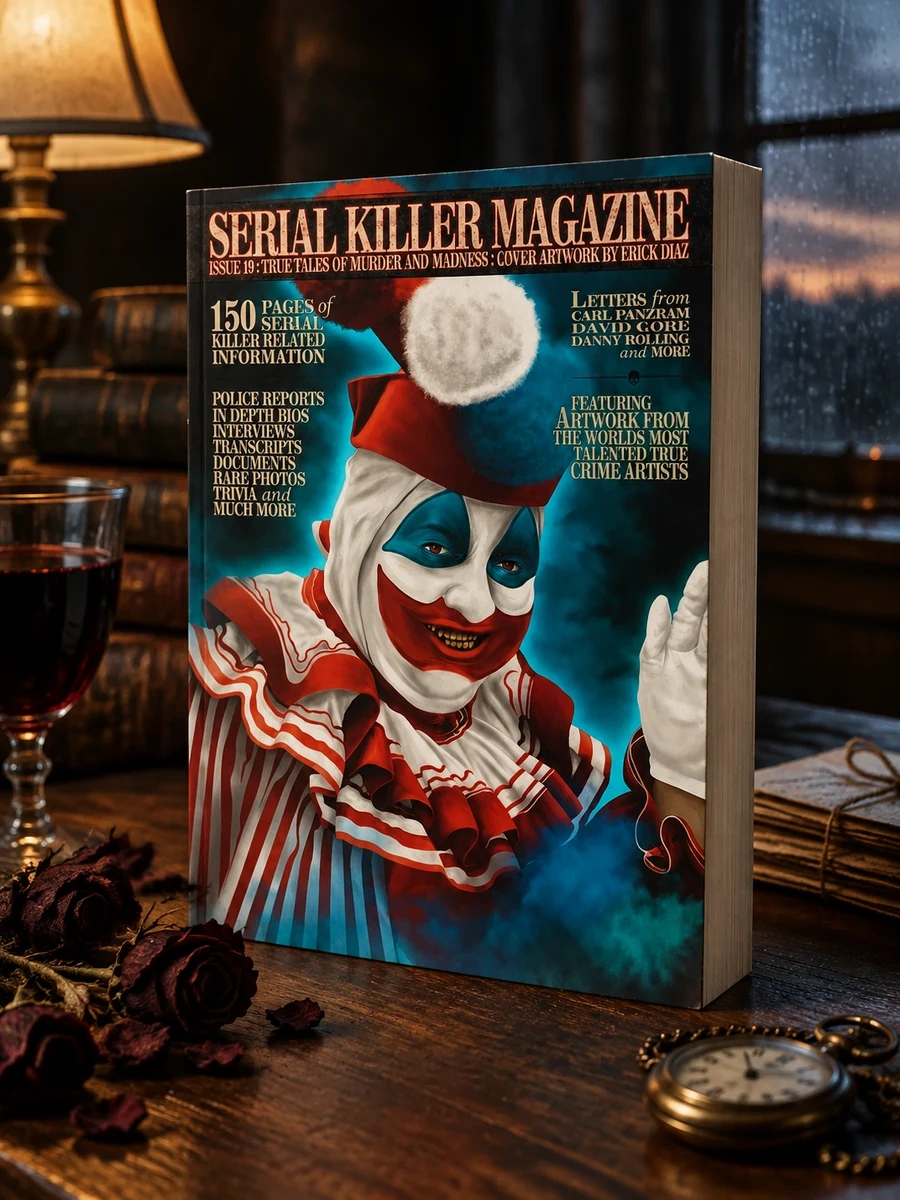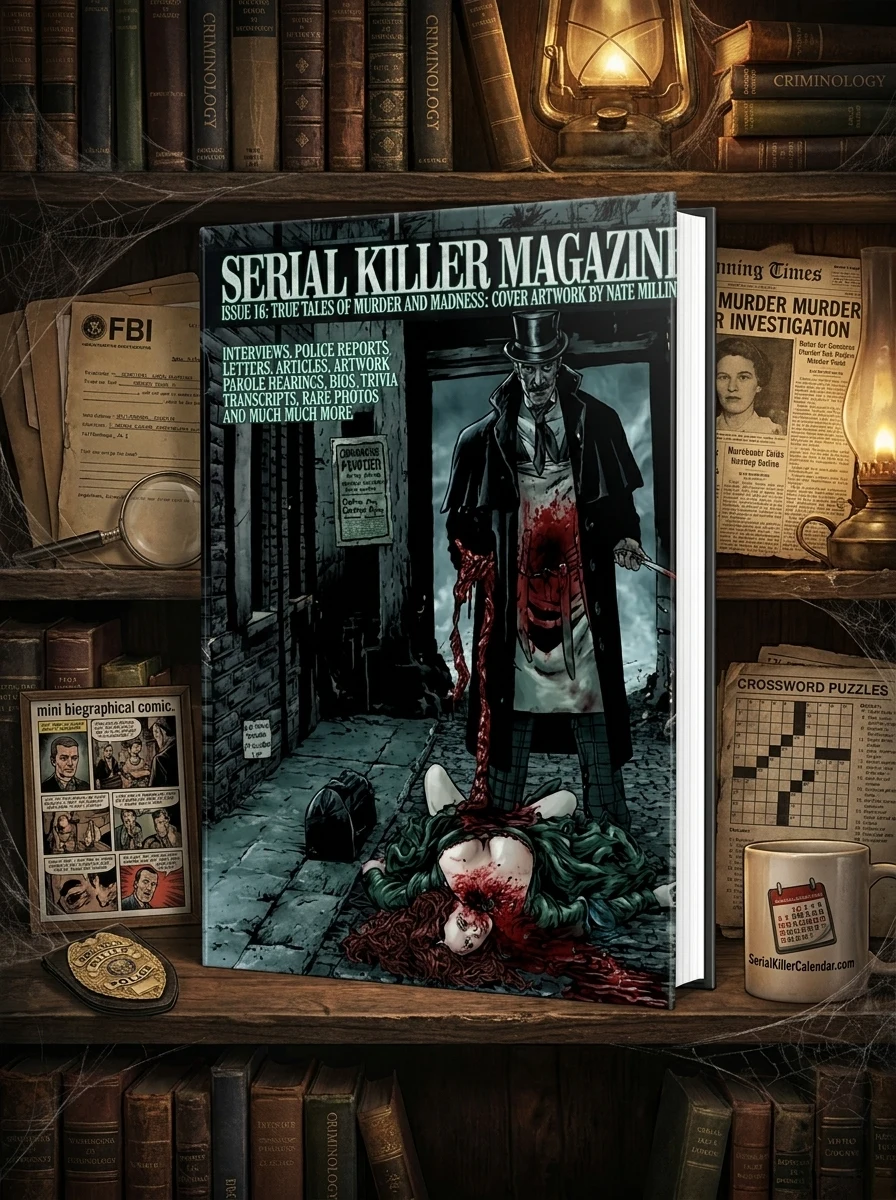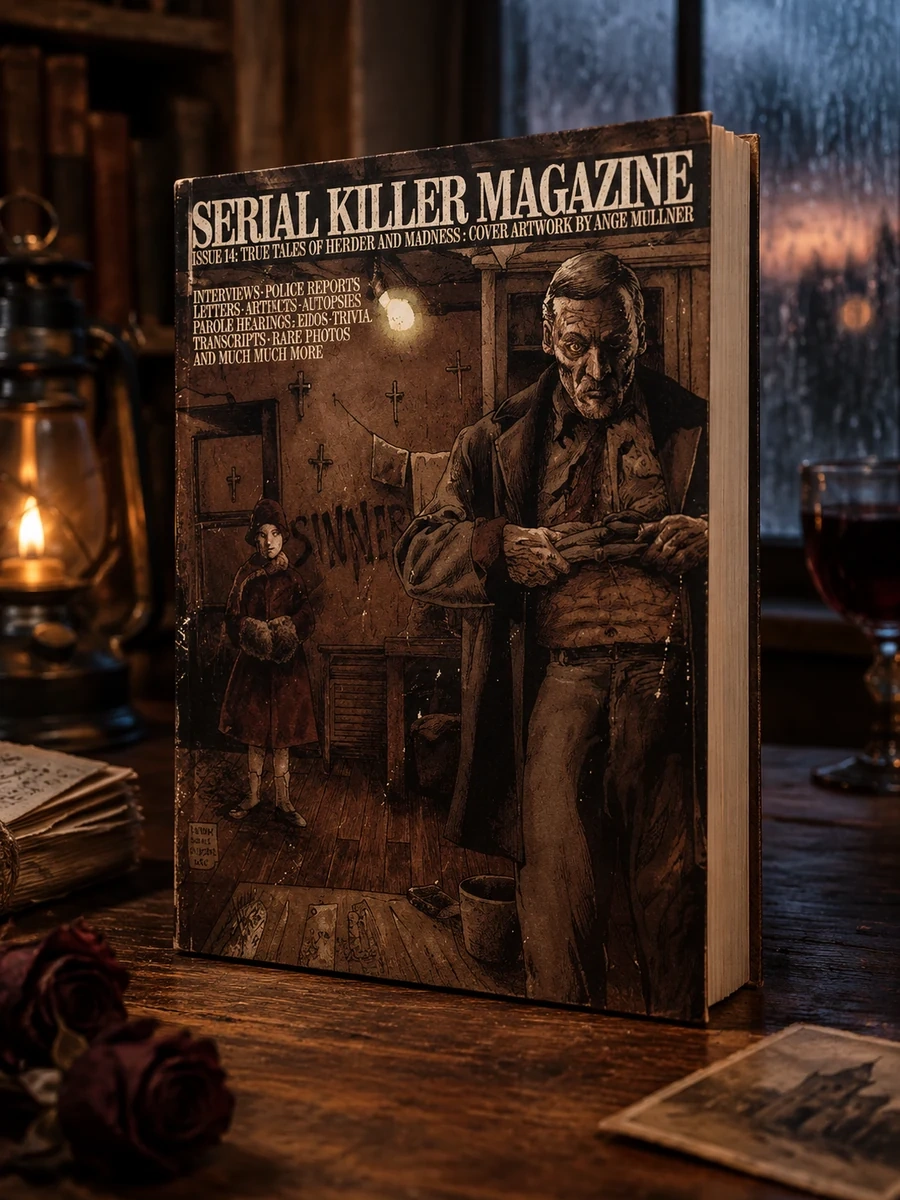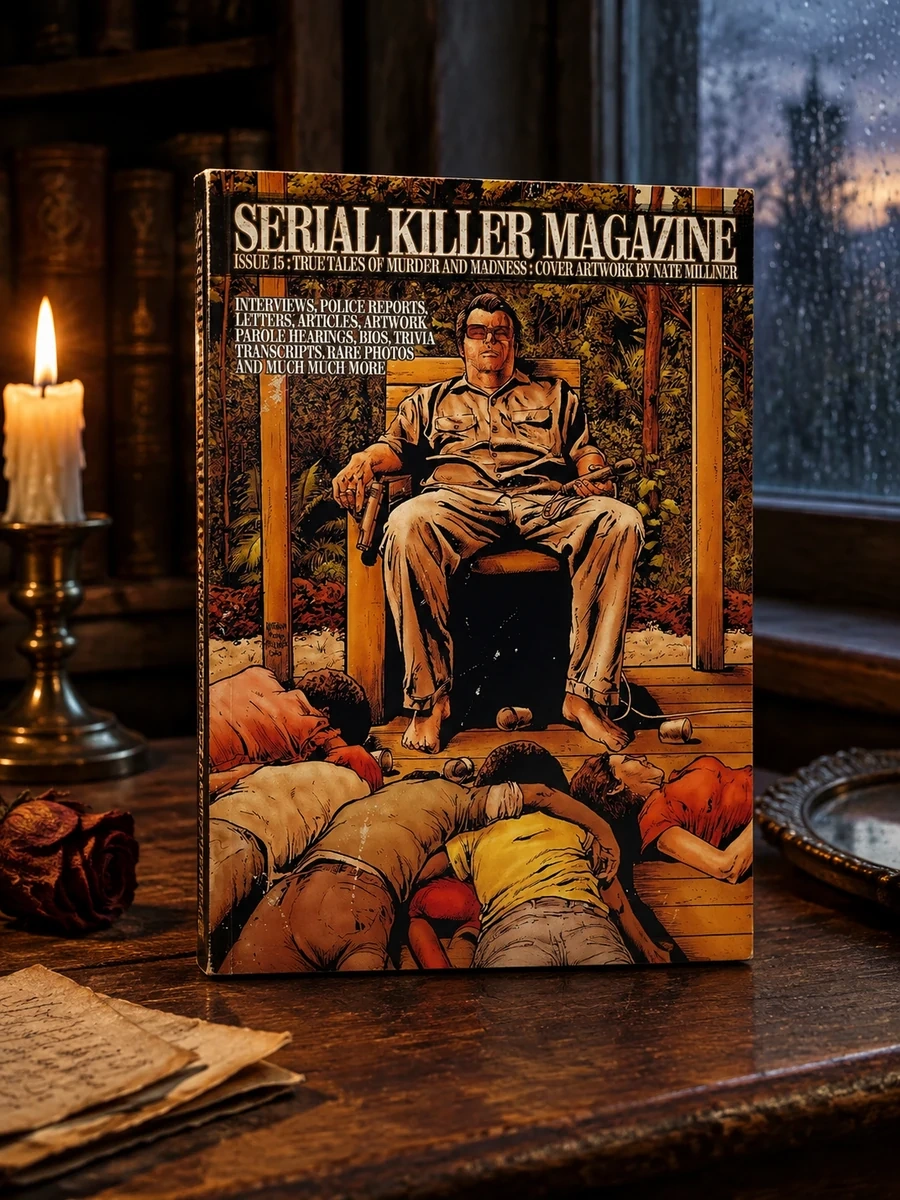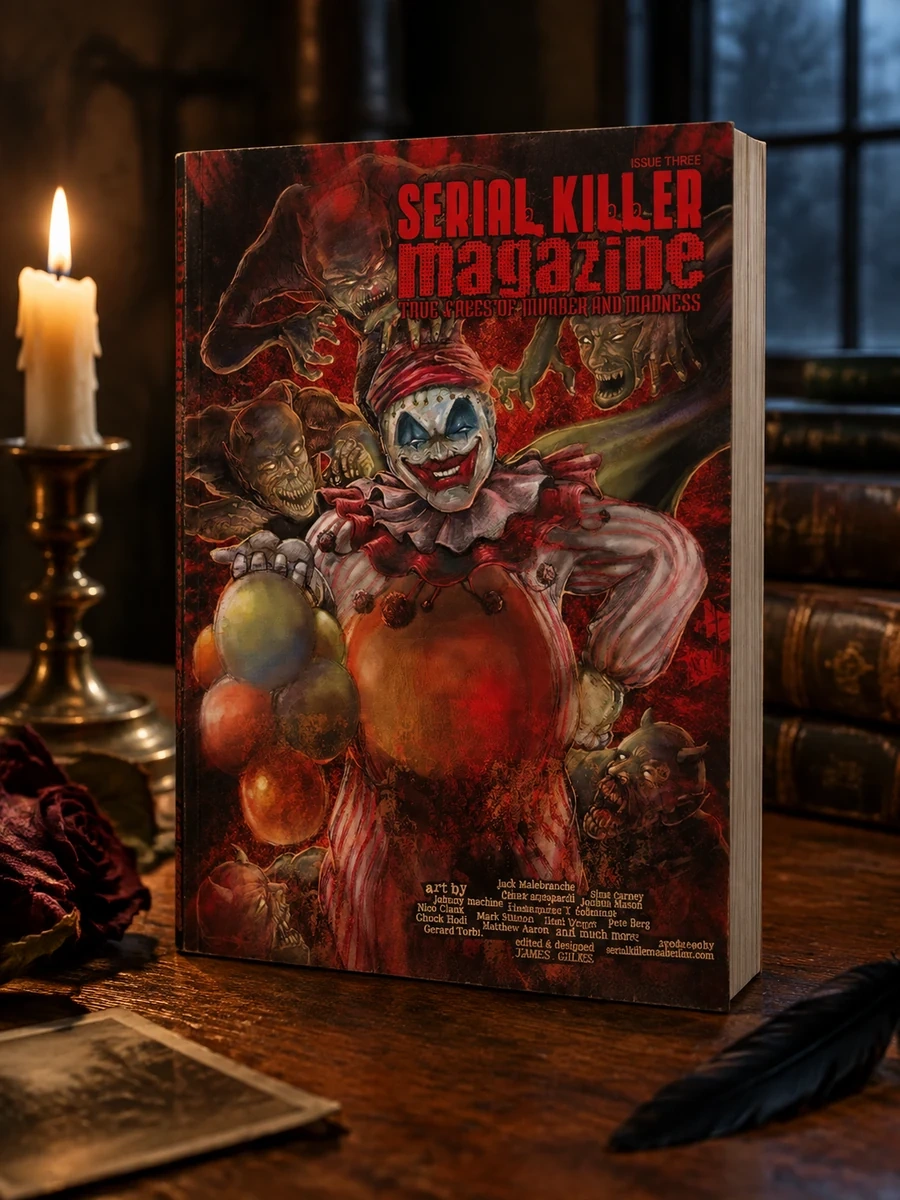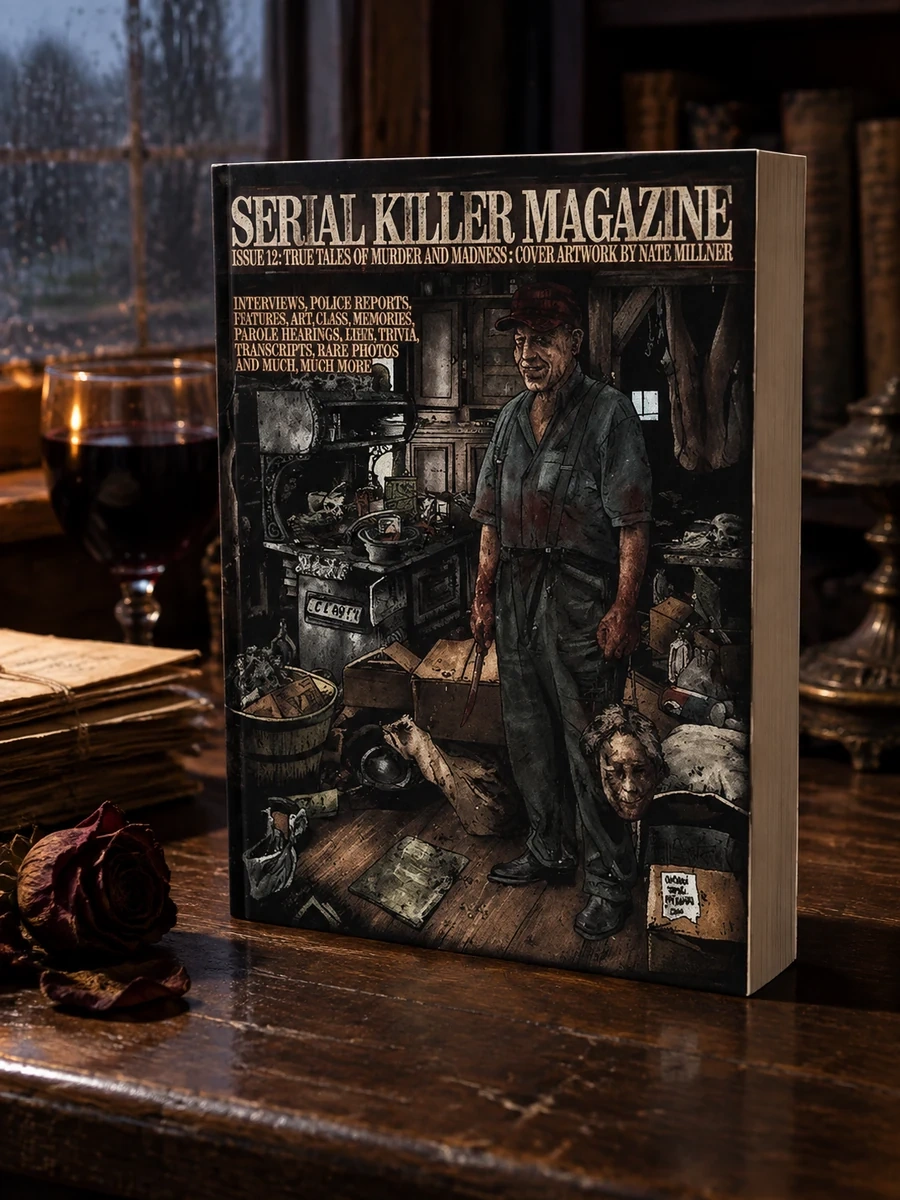
Serial Killer Magazine Issue 13
A curated collection of true crime art, interviews, and trivia by James Gilks.
This volume functions as a specialized archive for fans of the macabre. It combines serious investigative material with lighter entertainment elements like puzzles and comics. The inclusion of FBI files and rare documents provides historical context for serial murder cases. Interviews offer direct perspectives from experts and those involved in criminal history. The focus remains on documentation and artistic representation rather than sensationalism. This approach creates a balanced resource for study or casual interest in the subject.
Published in 2014 by Lulu.com, this item reflects the early digital age trend of niche true crime publishing. It bridges the gap between academic interest in FBI files and the collector market for murderabilia. The work represents a specific moment in the popularization of serial killer studies outside traditional media channels.


📝 Description: Serial Killer Magazine Issue 13
💎 Our verdict on Serial Killer Magazine Issue 13
📖 Why choose it
Why this book is worth reading
This book serves as a distinct artifact for those who appreciate the intersection of serious investigative journalism and macabre artistic expression. It is ideal for collectors of true crime history and readers fascinated by the specific subculture of murderabilia. The volume offers a balanced resource that combines rare FBI files and historical context with engaging leisure activities like puzzles and comics. Those seeking to understand prison art traditions or gain expert perspectives on criminal history will find value in its curated approach. It provides factual records alongside unique visual media without glorifying the subjects, making it suitable for study or casual interest in the macabre.
⭐ Reader reviews
Reader rating
James Gilks delivers a specialized archive that successfully balances serious investigative material with lighter entertainment elements. The inclusion of FBI files and rare documents provides necessary historical context for serial murder cases, while interviews offer direct perspectives from experts. The work stands out for its documentation and artistic representation rather than sensationalism. It suits individuals who appreciate detailed historical accounts and niche artistic expressions within the horror genre. However, it may not appeal to those seeking fictional narratives or uncomfortable with graphic true crime details. This collection remains a distinct artifact for enthusiasts of the field, offering both factual records and engaging leisure activities related to the topic.