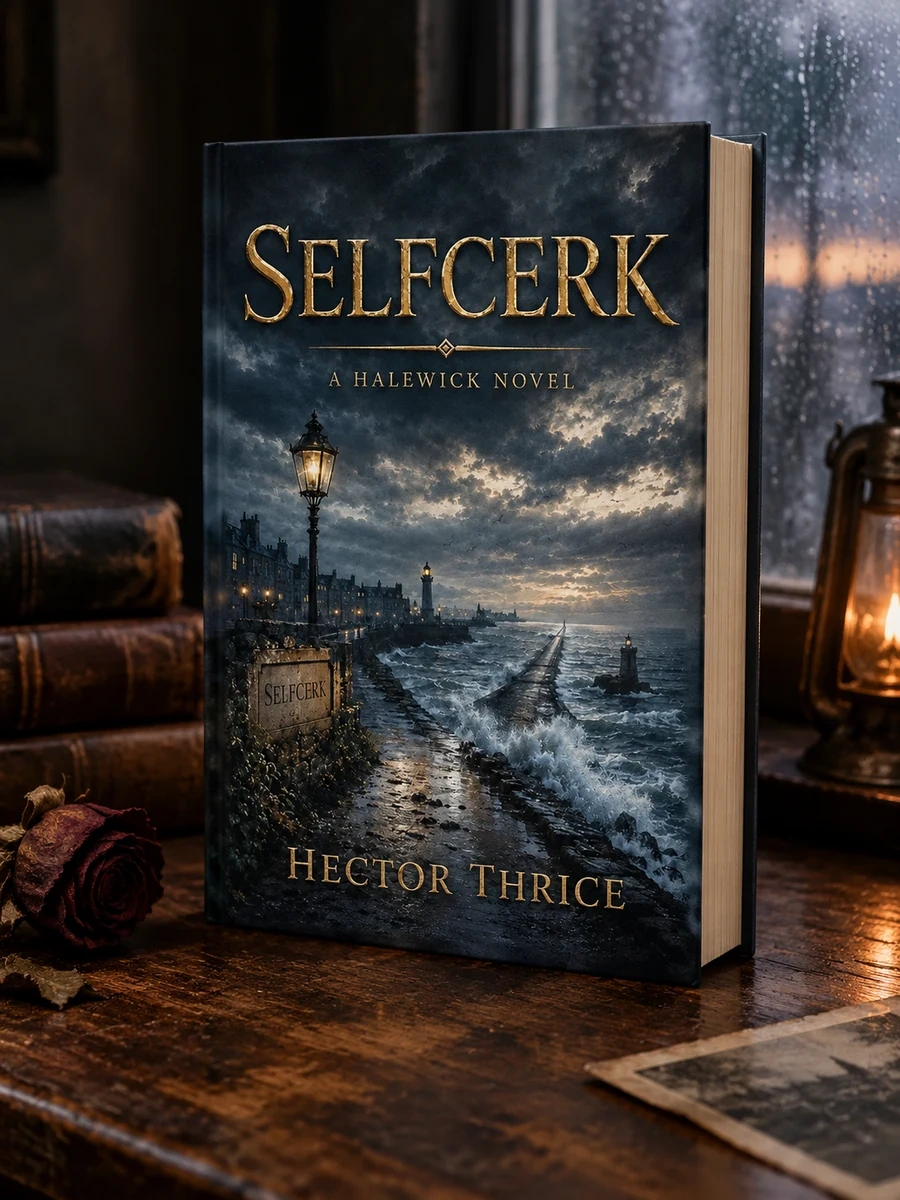
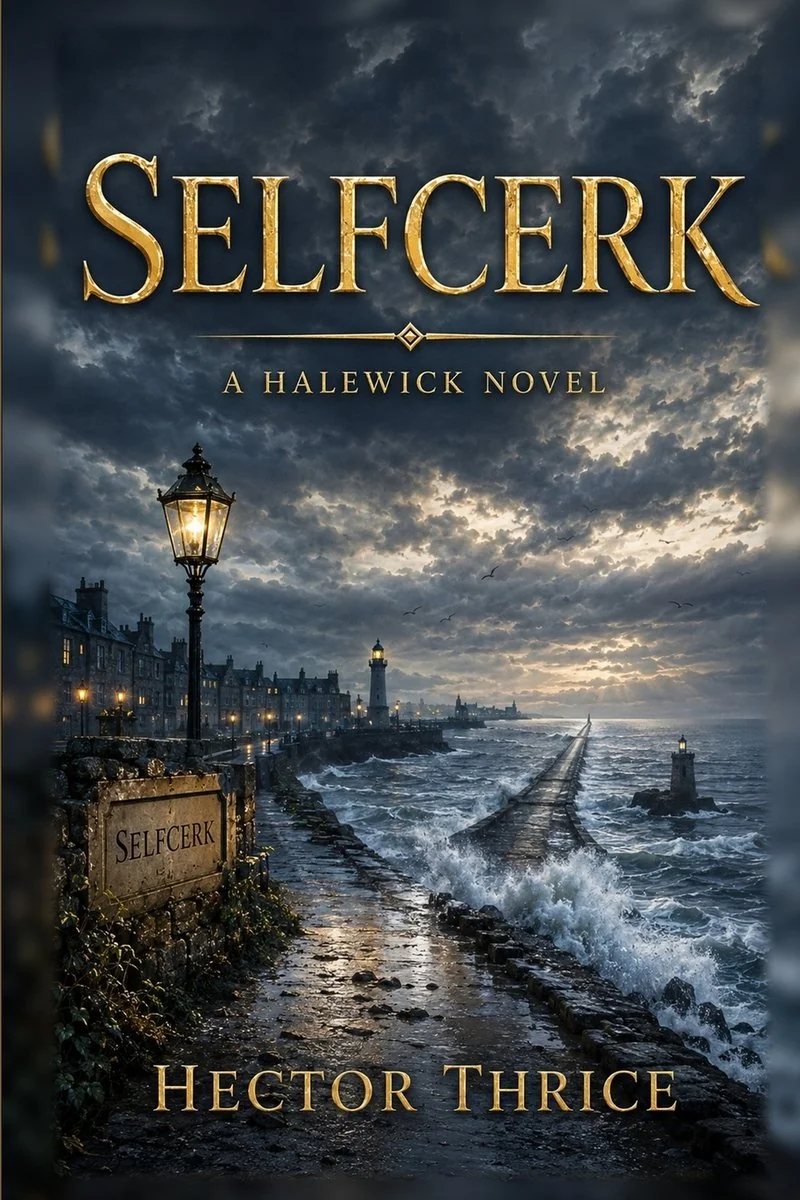
Selfcerk: A Halewick Novel
A novel about a town where the tide remembers names and distorts reality.
The story centers on Marnie, Flynn, and companions who carry damage from the Library into Selfcerk. They encounter a community where tourist history sounds too clean and truth vanishes with the turning water. The narrative explores how old decades bleed through streets and how locals know more than they say. The sea determines which names are left out of collective memory. Roads appear where they should not exist, creating a labyrinthine experience for the characters. The town waits to see who notices what it has stolen. This setup creates a tense atmosphere where the environment itself is the primary source of horror and mystery.
The work sits within the tradition of gothic and supernatural fiction, utilizing the setting of a seaside town to explore themes of memory loss and historical erasure. It draws on the trope of the haunted landscape where natural elements like the tide act as agents of supernatural influence rather than mere background scenery.


📝 Description: Selfcerk: A Halewick Novel
💎 Our verdict on Selfcerk: A Halewick Novel
📖 Why choose it
Why this book is worth reading
Readers who crave atmospheric horror that relies on psychological unease rather than visceral gore will find this novel compelling. It appeals to those interested in supernatural fiction where the setting acts as a primary antagonist, creating a tense labyrinthine experience. The book is ideal for audiences who enjoy exploring how collective memory can be manipulated by external forces, specifically here through the mechanism of the tide. Those who appreciate narratives where old decades bleed into the present and locals hold hidden knowledge will engage deeply with the disorientation presented. It suits readers willing to navigate a story without clear resolutions or straightforward adventure plots, focusing instead on the eerie intersection of ordinary seaside elements and distorted truth.
⭐ Reader reviews
Reader rating
Hector Thrice constructs a formidable narrative where the ocean retains memory, serving as both setting and antagonist in Selfcerk. The novel excels in building environmental dread through the distortion of reality and the erasure of names from collective history. By having roads manifest in impossible locations and tide tables cease logical function, Thrice creates a labyrinthine atmosphere that disorients characters and readers alike. This approach effectively utilizes gothic traditions to explore how tourist history becomes clean while truth vanishes with the turning water. The prose captures the eerie intersection of mundane seaside elements like chapel bells with deep psychological horror. It suits fans of cosmic and psychological horror who prefer subtle, creeping terror over explicit violence or jump scares.