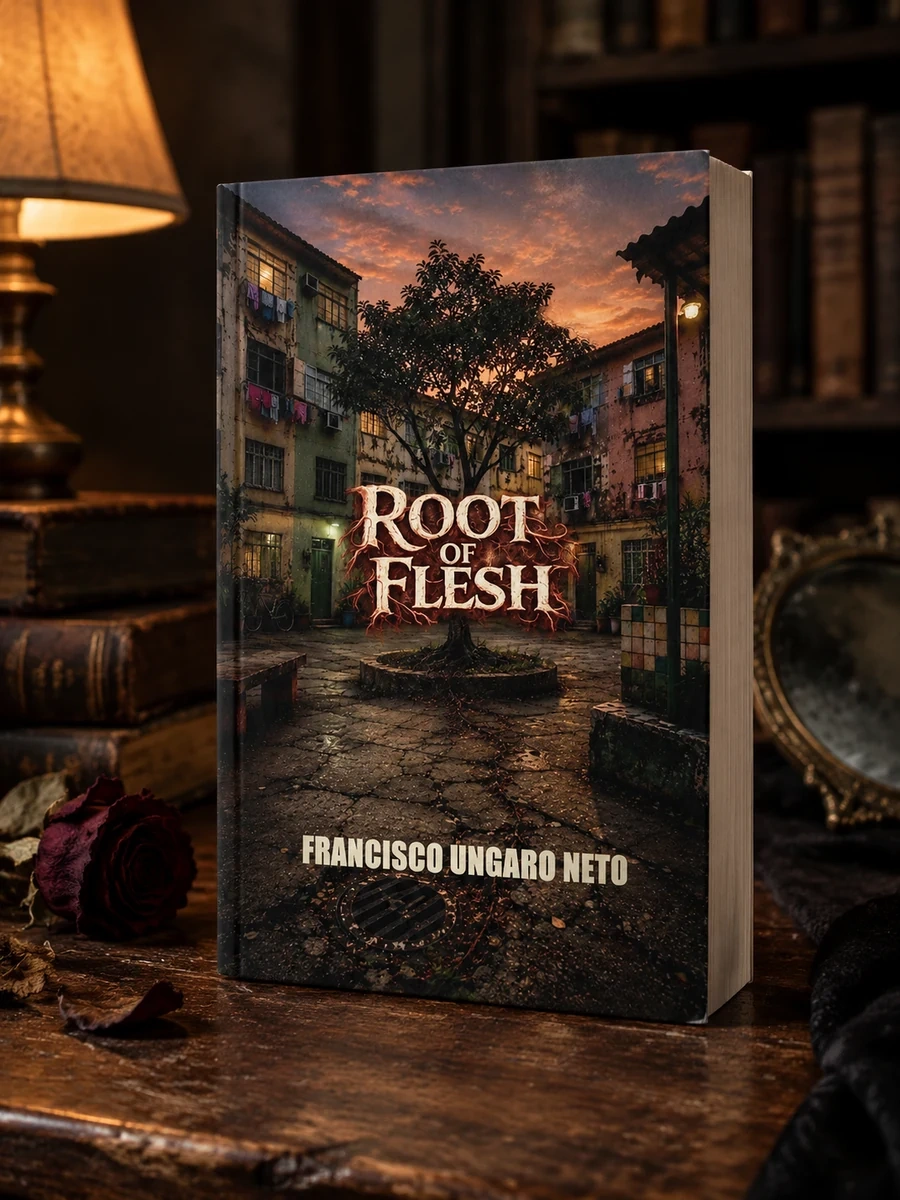
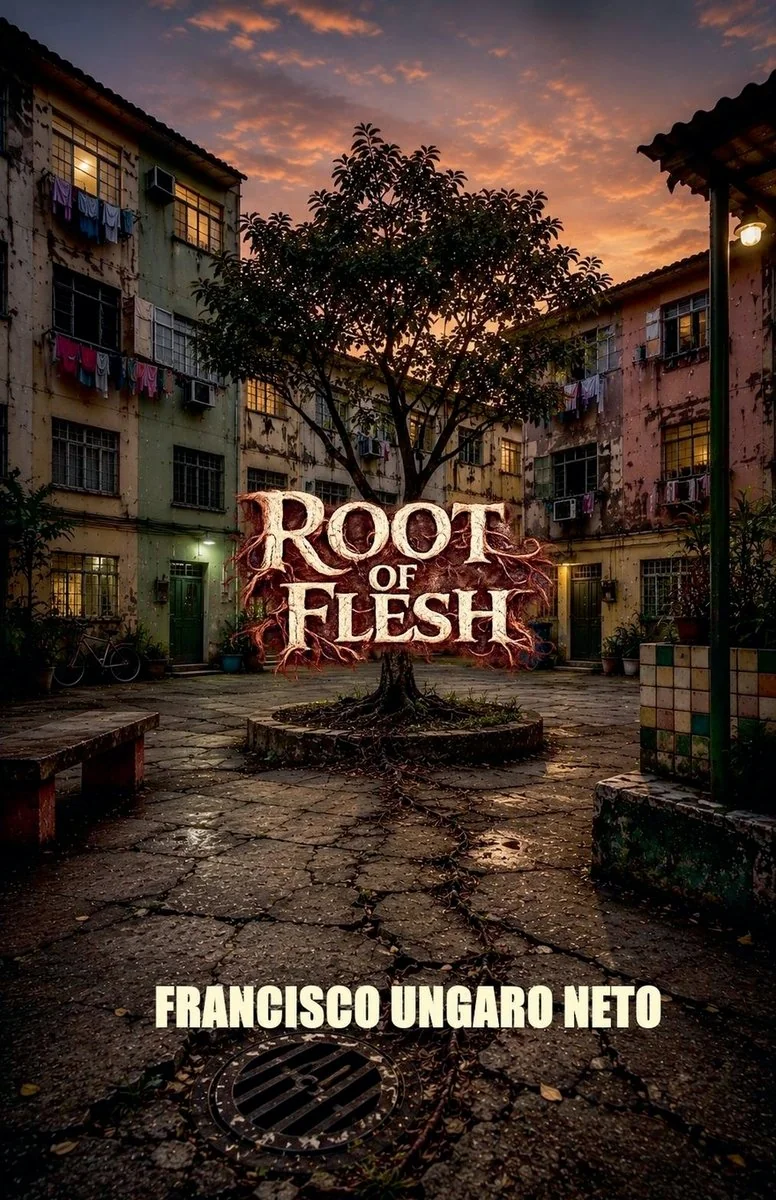
Root of Flesh
A tree offers relief that erodes individual identity in a decaying apartment complex.
The narrative follows an urban community seduced by the tangible benefits of a supernatural presence. Residents find physical and emotional release from their daily struggles, yet this peace demands the loss of personal boundaries. As roots spread through the building’s infrastructure and into their minds, the distinction between self and other dissolves. The story explores the tension between the relief of shared existence and the terror of losing one’s name and separation. It is a study of how comfort can become a mechanism for assimilation, leaving characters to wonder if the end of pain is worth the end of the self.
This work sits within the tradition of urban weird fiction and literary horror. It addresses contemporary anxieties about isolation and the desire for relief in worn-out living spaces. The narrative reflects on the intersection of nature and concrete environments, offering a perspective on how supernatural elements can manifest through everyday struggles and architectural decay.


📝 Description: Root of Flesh
💎 Our verdict on Root of Flesh
📖 Why choose it
Why this book is worth reading
Readers who appreciate atmospheric dread over visceral gore will find profound resonance in this narrative. It appeals to those fascinated by the psychological mechanics of assimilation and the terrifying comfort of losing individual boundaries. The book offers a slow, meditative exploration of how pain and identity are intertwined, making it ideal for audiences seeking literary horror that challenges moral certainty. Those intrigued by the tension between communal relief and personal dissolution will engage deeply with its quiet acceptance of transformation.
⭐ Reader reviews
Reader rating
Neto crafts a compelling study on the cost of relief within decaying urban spaces. By focusing on the intimate desire to surrender rather than external attacks, he creates a unique horror rooted in seduction rather than violence. The narrative effectively examines how comfort becomes a mechanism for erasing selfhood, leaving characters to question the value of their own separation. This approach suits readers interested in atmospheric tension and the breakdown of identity through communal connection. While lacking fast-paced action or clear resolutions, the story delivers a potent critique of shared existence, making it a standout for fans of literary weird fiction that prioritizes psychological unease over traditional scares.
📖 Read on the blog
✍️ More books by this author Francisco Ungaro Neto



🏛 Books from this publisher Francisco Ungaro Neto
You might also like
See more →




Have a question about this item?
Ask about the edition, condition, delivery or anything else — we reply by email or phone, usually within a day.
