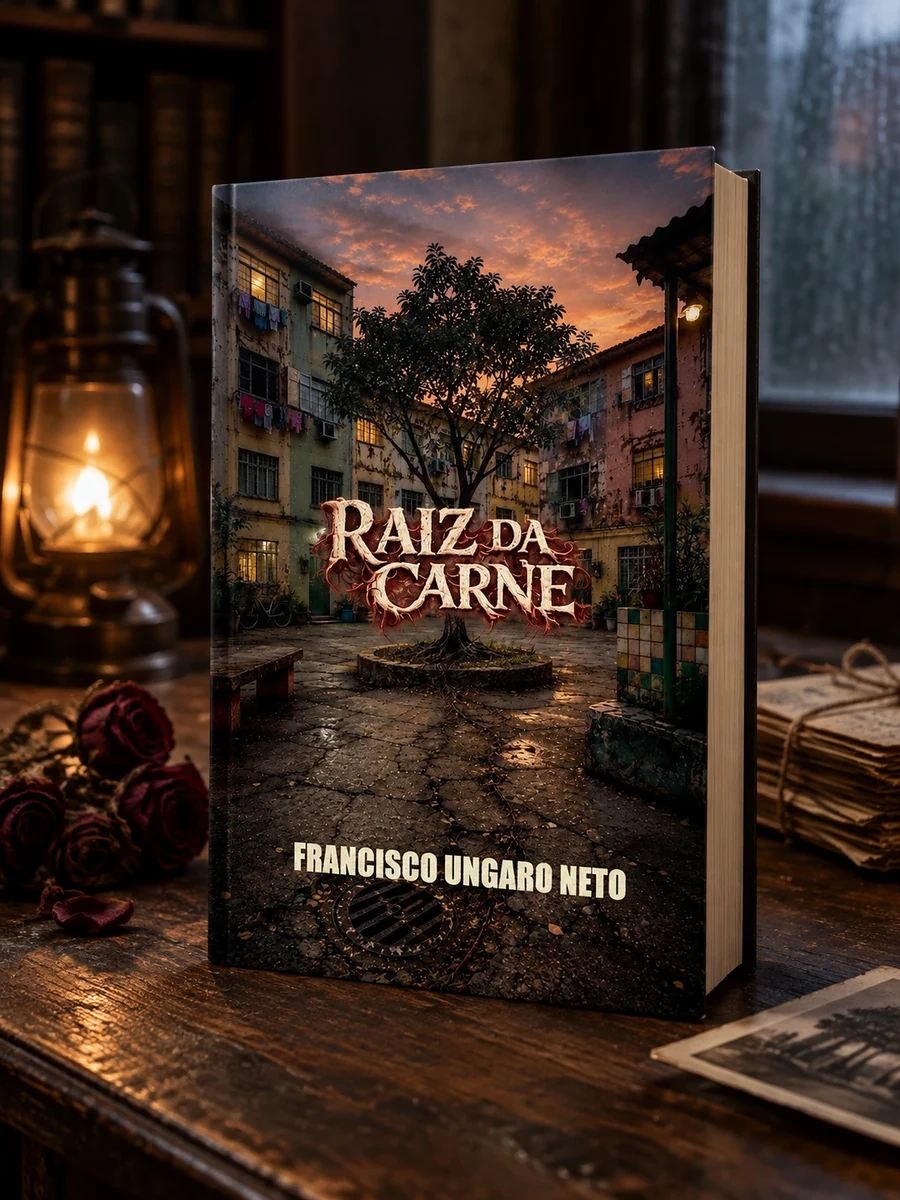
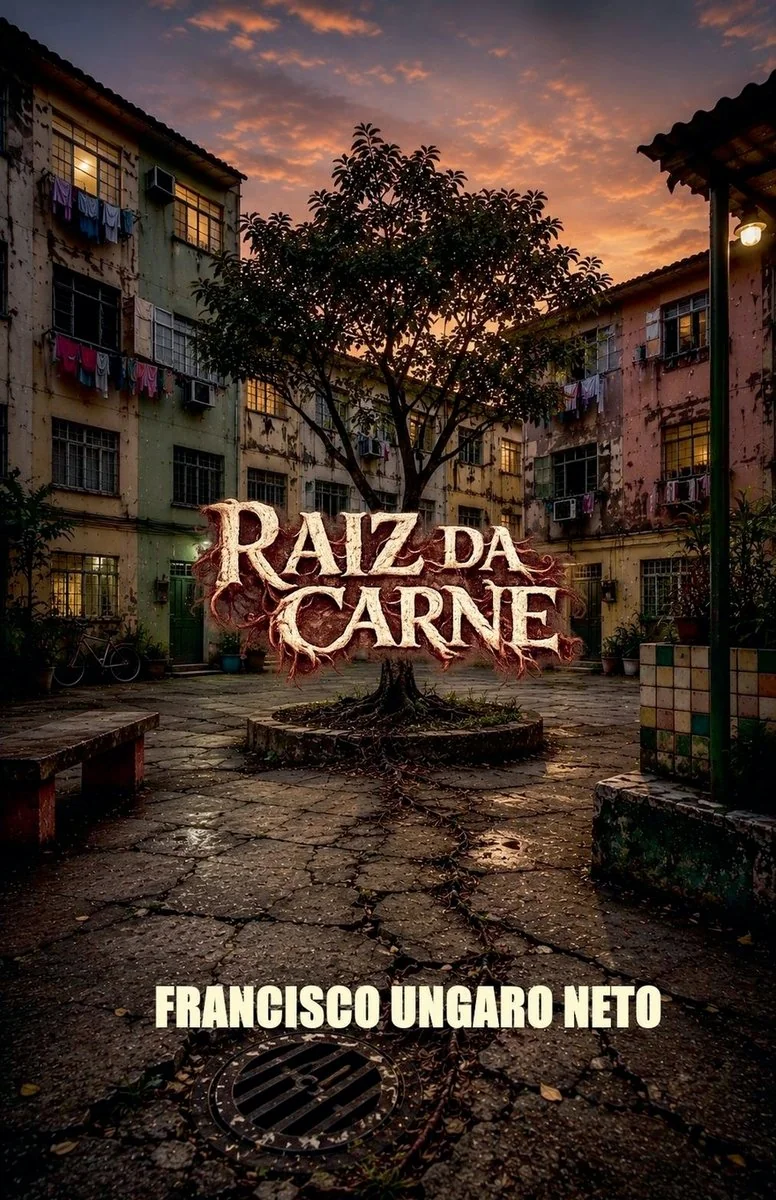
Raiz Da Carne
A tree offers relief to a tired condominium community at the cost of their identity.
The plot centers on a residential complex where an old tree provides tangible comfort. Characters experience physical and mental ease that masks a deeper erosion of self. The roots spread through the environment, connecting the inhabitants in a shared, unsettling existence. The narrative questions the price of peace when it arrives without explanation. It explores how care can become a trap when it removes the boundaries of individual identity. The horror lies in the willingness to accept this change.
This work sits within contemporary Brazilian literature, specifically the genre of urban strange fiction. It reflects modern anxieties about community living and the physical strain of daily routines in a hot climate. The text engages with gothic traditions by placing supernatural elements in a mundane residential setting.


📝 Description: Raiz Da Carne
💎 Our verdict on Raiz Da Carne
📖 Why choose it
Why this book is worth reading
Readers who appreciate psychological horror that prioritizes internal decay over external monsters will find this compelling. The narrative offers a slow, atmospheric dread rather than fast-paced action or traditional jump scares. It is ideal for those interested in urban isolation and the physical toll of modern life. The story explores how care becomes a trap when it removes boundaries of individual identity. Those willing to confront the willingness to accept change will engage deeply with the text. It serves as a study on the cost of comfort demanding surrender of self. Readers seeking literary horror rooted in bodily experience will appreciate its intimate desire to yield. It challenges the reader to consider how much pain and separation they can lose before ceasing to be themselves.
⭐ Reader reviews
Reader rating
Ungaro Neto crafts a haunting exploration of urban isolation where the horror lies in the seduction of relief. The narrative effectively uses an ancient tree as a conduit for identity erosion, creating a shared, unsettling existence among condominium residents. By focusing on the intimate desire to yield rather than immediate attack, the book builds a profound sense of dread. It succeeds in examining the physical toll of modern life and neighborly surveillance. The tone is appropriately slow and atmospheric, appealing to those who favor psychological depth over action. This is a distinctive entry in contemporary horror that questions the price of peace when it arrives without explanation.
📖 Read on the blog
✍️ More books by this author Francisco Ungaro Neto


🏛 Books from this publisher Francisco Ungaro Neto
You might also like
See more →




Have a question about this item?
Ask about the edition, condition, delivery or anything else — we reply by email or phone, usually within a day.
